 Follow Us on Google News


 Follow Us on Google Discover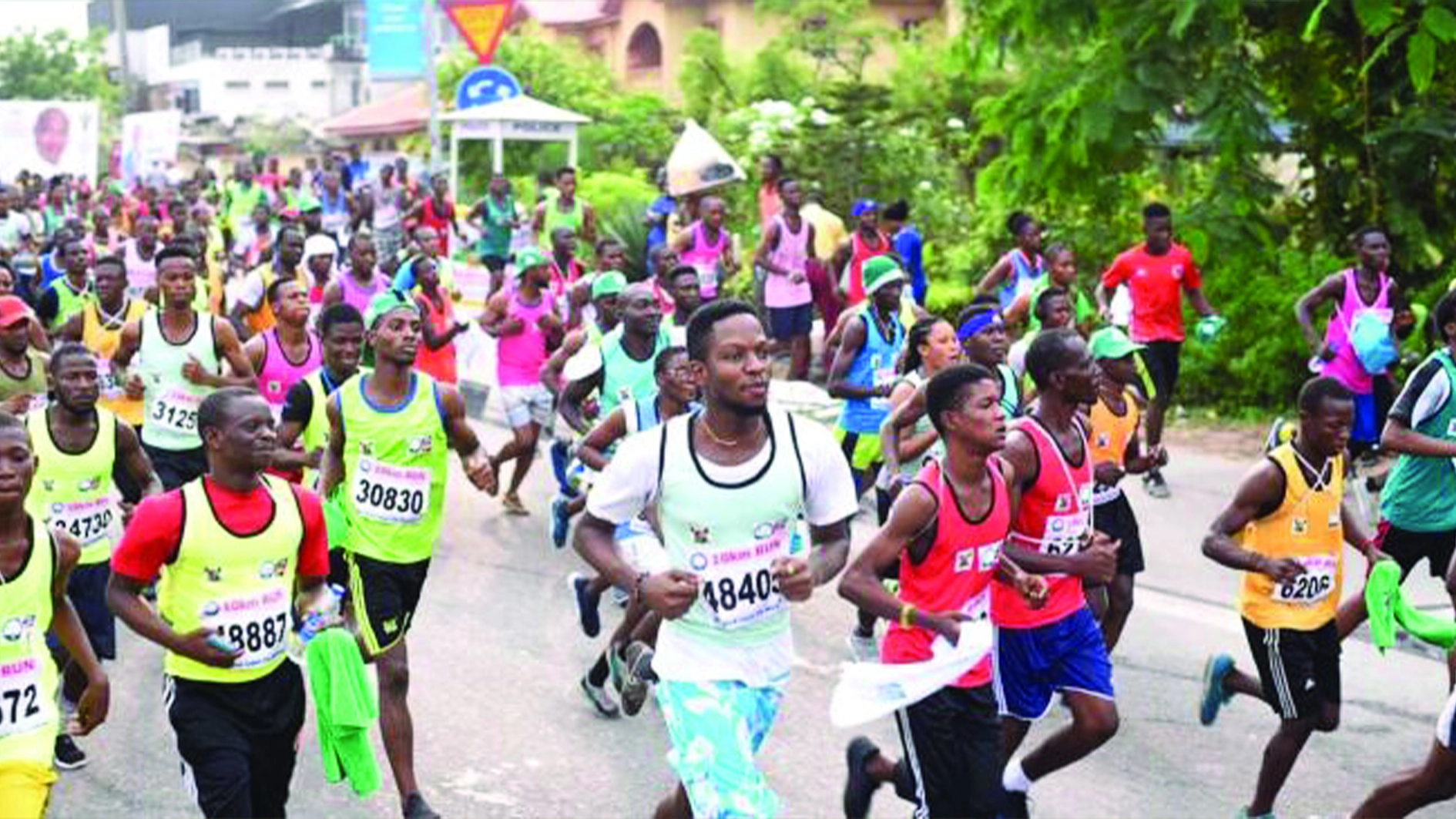
Recent chaotic scenes during medal presentations at the 2026 Access Bank Lagos City Marathon have underscored the need for a thorough review of the marathon, which has crossed the decade mark. To attain the Platinum Label, which organisers have set sights on, stakeholders insist that stone-age conduct by runners and lax organisation by handlers must be jettisoned, GOWON AKPODONOR reports.
Across the globe, marathon races are typically large-scale city-centre festivals that blend competitive elite racing with mass participation. In some cases, it serves as charity-focused community events offering both social and economic benefits.
For instance, the New York City Marathon provides a massive engine for both individual health and the city’s prosperity. For the 2024–2025 period, the event alone generated an economic impact of $692 million, a staggering 139 per cent increase from the 2019 edition.
In Australia, three top marathon events are held yearly. These are the Sydney Marathon, Melbourne Marathon, and the Gold Coast Marathon, all estimated to contribute 119 million Australian dollars to their host cities, underscoring the role that well-managed marathon races play in driving local economic growth and enhancing brand recognition.
In Australian cities, marathon events are not just about the 42.195km race; they also include half-marathons, 10km, 5km, and 3km walks, making them accessible to runners of all fitness levels, including fun-seekers.
In the United Kingdom, Brand Finance data reveals that the London Marathon is the strongest, generating over £100 million in economic activity driven by tourism and hospitality each year.

But there are many ugly sides associated with marathon races across the world, including loss of lives or permanent disabilities resulting from road accidents.
The Melbourne Marathon Festival has faced several operational issues, controversies, and tragic medical incidents throughout its history. A significant tragedy occurred when 20-year-old Xavier O’Grady died from a sudden cardiac arrest at the finish line of the Melbourne half-marathon in October 2022.
The most severe disasters occurred when unforeseen weather hit the 2021 Gansu ultramarathon in China, where freezing rain and extreme winds led to 21 fatalities, often due to hypothermia and a lack of proper safety protocols in remote, mountainous terrain.
For Nigerians, the Access Bank Lagos City Marathon is what the Melbourne Marathon is for Australians, and the New York Marathon is for Americans.
Apart from providing huge financial gains for long-distance runners from across Africa, the Access Bank Lagos City marathon has weathered the storm over the last 11 years through sheer bravery, determination, courage and resilience of the organisers.
At inception in 2016, the partnership between Nilayo Sports Management and Access Bank aimed to provide strategic support to the country’s sports industry and promote a healthy, active lifestyle among citizens.
The maiden edition had 50,000 registered participants and was ranked second in Africa, after the Cape Town Marathon, by All-Athletics.com. It was also ranked 71st among over 1,000 international marathons worldwide.
Soon after, the Lagos City marathon clinched the World Athletics Bronze Label on the heels of its second edition in 2017, becoming the third marathon in the world to accomplish such a feat within that time.
The marathon was awarded the Silver Label two years later (2019), becoming the first ever marathon in the world to attain such after only four editions. And in 2023, the Access Bank Lagos City Marathon earned the World Athletics Gold Label, officially becoming the first full marathon in Africa to achieve such a historic feat and the 25th in the world to be awarded the coveted status.
The World Athletics Gold Label is awarded to races that satisfy the international body’s requirements in terms of quality of organisation and management, among other criteria.
The accolades and landmark achievements notwithstanding, some stakeholders believe there is a need for reforms, given the chaotic scene on February 14, 2026, which led to the suspension of medal distribution at the Eko Atlantic City end. It prompted calls for better, more secure, and organised medal distribution.
The Captain of Milesmashers Run Club, based in Surulere, Lagos, Mathew Anthony, popularly known as “Playfit”, said the ugly incidents at the finish line could have been avoided if only the runners had been taught the basic principle of “Runners Integrity”.
“Any athlete with Runner’s Integrity will understand the basic principle that a medal is the reward for your sweat, and that only those who truly run the marathon race are entitled to it. But it also takes the fear of God for people to adhere to the rules of Runners Integrity,” Anthony told The Guardian.
“The problem is in us, not the organisers. You didn’t take part in a race or finish it, so why struggle to collect the medals?” I rejected a medal during a marathon race in Ekiti last year because I did not finish the race. That is what Runners Integrity means. There is a need for the organisers to engage more of us to enforce the principle of Runners’ Integrity at the finish line. That is one of the ways to prevent this chaotic struggle for medals,” he added.
A former Nigerian jumper, Olu Sule, now a board member of the Athletics Federation of Nigeria (AFN), blamed the chaotic struggle for medals at the finish line on the country’s economic situation.
“The simple reason behind this struggle for medals is that people think the medal is pure gold. They want to grab as many as possible to sell and make a living from it. That is a wrong assumption on their part. The runners need a lot of education on how to go about collecting medals at the end of the race,” Sule said.
The Chief Executive Officer of Nilayo Sports Management, Organisers of the Access Bank Lagos City Marathon, Mrs Yetunde Olopade, told The Guardian that every marathon is a learning process.
“What happened at the finish line this year was a result of greed on the part of some of the runners. So many individuals were attempting to access medals even before the 10km race officially began,” she said. “There were also cases of unauthorised participants using bibs from previous marathon editions.
“We had over 14,000 medals loaded in various cartons at the finish point, but our officials were beaten up, with some sustaining injuries. A majority of those struggling for the medals did not even run. They thought it was pure gold.”
“From the next edition, everybody will have to pay to register for the marathon. That is the practice worldwide. I am sure if runners pay to register, they will become more responsible in their attitude, and the scramble for medals at the finish line will be eliminated. It will guarantee the needed seamless or exceptional organisation of the marathon. That is part of our robust plans for the 12th edition because we aim to get the Platinum Label next year. We also plan to increase the prize money from $50,000 to $75,000 to attract, at least, the best 20 marathon runners in the world,” she stated.
Olopade rolled out some of the benefits of the Access Bank Lagos City Marathon, including partnering with the UN Refugee Agency (UNHCR) to provide a platform for fundraising and awareness for refugees across Africa.
According to her, the partnership was executed for the first time in the 2023 edition, when over 16 refugees from across Africa and Syria participated in the enthralling road race.
“We also collaborated with The Nigeria Business Coalition Against Aids (NiBUCAA) to launch a massive HIV/AIDS awareness initiative, including informative sessions to educate people about HIV/AIDS, and counselling services to 5,486 participants. We have empowered several people in the hospitality industry, including food and drink vendors, fashion designers, advertisers, communication agencies and experts, technical officers, and volunteers, who were all engaged from the planning stage to the completion of the marathon. The entertainment industry is not left out,” Olopade stated.
But while organisers of Melbourne, New York, and London marathons post financial gains that accrue to their host cities, things are different with organisers of the Access Bank Lagos City Marathon, going by the explanation of the Project Manager of Nilayo Sports Management, Seyi Johnson, who revealed that every agreement entered into with sponsors on the Access Bank Lagos City Marathon is a Non-Disclosure Agreement (NDA).
“Everyone knows that Nilayo Sports Management is a profit-making organisation,” he said. “But we can’t speak on any finance issue as far as the Access Bank Lagos City Marathon is concerned because it is a Non-Disclosure Agreement.
An NDA is a legally binding contract that establishes a confidential relationship between parties to protect sensitive information, such as trade secrets, intellectual property, or business strategies, from unauthorised disclosure to third parties. It is commonly used to ensure that shared data remains confidential.
“You can see the long list of sponsors joining the marathon race every year, and that is an indication that everyone involved is happy with what we are doing. But as I said, I want all Nigerians to respect the NDA for the marathon to grow bigger.”
Speaking further, Johnson said: “I don’t know the type of agreement organisers of Melbourne Marathon and others operate with their sponsors, but some of these economic gains of the Access Bank Lagos City Marathon are visible in the hotel businesses, airlines, restaurants, entertainment industries, small-scale businesses and others that are associated with it. Don’t forget that people don’t pay to register in our marathon, unlike the practice in other parts of the world. We are trying to introduce payment next year to reduce some of the incidents at the finish line.
“This marathon offers over $370,000 in total prize money. Winners receive $50,000 in the 42km, with cash prizes extending to the top eight finishers, and in the Nigerian category, the top male and female finishers in the 42km race each earn N2 million, with prizes for the top 10 positions. The top finishers in the 10km receive significant rewards, including N1 million in sponsored prizes. All I can say is that the total prize money for the event is approximately $370,000 for 2026. It is boosting our local economy and promoting tourism,” Johnson said.
Former Nigerian jumper, Yusuf Ali, says marathons are not only beneficial to the participants but also to the host cities.
“Lagos, as a cosmopolitan city, has been a destination point for many tourists across the globe. The route for the Access Bank Lagos City Marathon was excellently planned to show off some of the city’s finest landmarks, including the Lagos-Calabar Coastal Highway and Eko Atlantic.”
QUOTE:

