 Follow Us on Google News


 Follow Us on Google Discover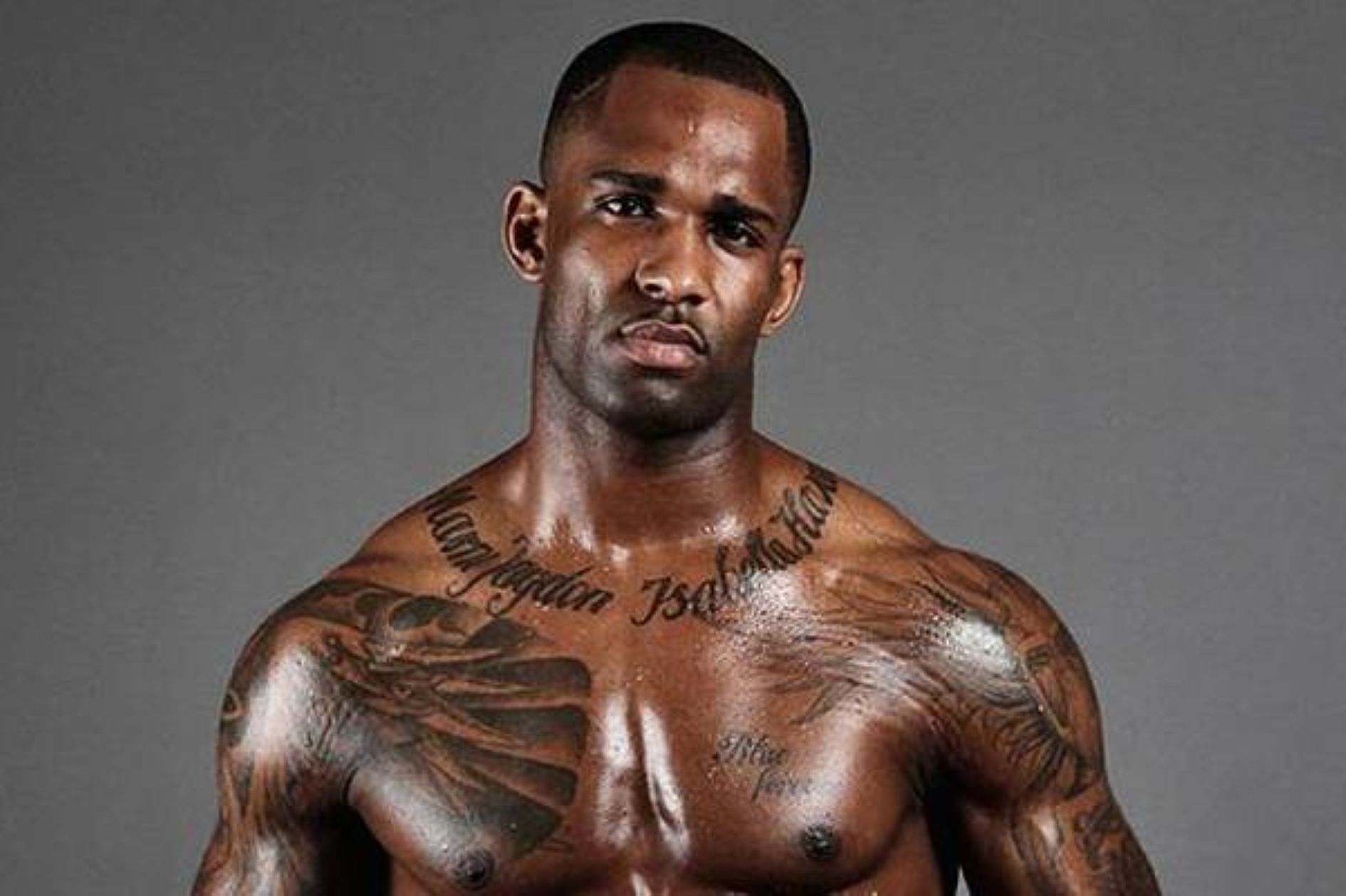
Determined to reach the pinnacle of success in sports, Jimmy ‘The Posterboy’ Manuwa weathered the bumpy road of life to emerge as one of the biggest UFC fighters of all time. He revealed how growing up in Lagos shaped his future as mixed martial arts star in this exclusive, homecoming interview with David Meshioye.
Hi Jimmy, nice to have you here today
Nice to meet you.
You started your career a bit late. What really led to that?
Um, well, I think it was just a natural transition into mixed martial arts. My friend started to fight a few years before I started, and so we used to go and watch him fight, but everyone kind of knew that I was a natural fighter, and then, like, everyone would say, ” Oh, when are you going to start? This is your style. But at the time, I was into weightlifting and those kinds of things. Unfortunately, I had an injury when I tore a muscle while doing my maximum lift.
During that recovery, I asked my friends if I could try mixed martial arts and everything. So I went on a Monday. I liked it. We did kickboxing and stuff. I liked the physical aspect of it and that. I went on a Tuesday, and we did wrestling. Yeah. And I also liked that as well.

So, I went on a Wednesday, Thursday, and then on Friday, I said to my friend, ” Get me a fight. I like this. Get me a fight. So he came back on the weekend and said, ” Okay, I’ve got your fight, it’s in two weeks.
So I didn’t really have much training, so when I knew I had a fight coming up, I trained every day for the next two weeks until my fight. And then everyone was excited for my fight. I went to my debut. It was a professional fight.
I went with about 20 cars full of all my friends, and everyone just to cheer me up. Yeah. Just to cheer me on because they knew that it was my kind of stuff. I won that fight, and it was a great experience.
You were born in the United States of America, raised in Lagos. How much have those things impacted your career so far, going to MMA?
I think growing up in Lagos, I was very active. I’ve got nothing but good memories; from growing up in Lagos, going to school and living in Surulere, I’ve got nothing but good memories. I was a very active child and everything. So I think that impacted my upbringing. My auntie, my mom, and my dad can tell you loads of stories about me riding my bike and getting into mischief. So, I think that adventurous streak in my nature led to my fearless mentality. That really shaped me into what I am today.
You were known as the knockout king. How did you come up with that nickname?
My nickname was the poster boy. And that came from, I think, my first fight when they gave me
the posters to go and promote my fight and everything. But moving on from that, I wanted to be the poster boy of mixed martial arts.
And that, you know, all the knockouts translated into that name as well because everyone knew that when they come to see me fight, that is nothing but excitement. I’ve got 17 wins, 15 of which are knockouts. I only went to the decision twice.
You were on a roller-coaster at the early stage of your career, but when you started meeting top opposition from the top-tier competitors, things changed a little bit. What really happened? Were there things you’re not doing right then?
No, because I think when you get to the UFC, everyone knows how to do everything right. And so it’s just the little details that separate the winner from the loser. I think a lot of the time, it’s the mental aspect of training. And that’s something that I never took very seriously. The psychological training, the mental training and stuff like that. So I think that’s what separates the top-tier fighters, it’s just the mental aspect of it, because everyone knows how to do everything well before every fight.
One of the biggest fights that you had there was with Anthony Johnson. What are the things that will remain vivid in your memory even if you live to be 100 years old?
I think that was at the MGM in Las Vegas. And, um, it was very daunting after being shipped from London to Vegas to go on the main stage and fight. We were both knockout specialists. He’s a knockout specialist, and I was also a knockout specialist at the time. I think it was just nerves. Anthony Johnson was a great athlete, and I respect him very much. We became good friends after the fight.
When did you ever get so close to a title shot in UFC? And what actually held you back?
I was ranked number three in the world. And my fight with Corey Anderson in the O2 arena in London was probably one of my best, one of my favourite knockouts. It was the main event in my then hometown of London, and I knocked him out in the first round.
And then that led me to a title shot with Daniel Cormier. Okay. And so I flew to Boston, where Daniel Cormier and I had a showdown after his fight with Anthony Johnson. Yeah. I was next in line to fight Daniel Cormier because Jon Jones had been suspended from competing due to his drug tests and all that. At that time, Jon Jones was coming back, so he was automatically put ahead of me to fight Daniel Cormier. So they scheduled me to fight with Volkan Oezdemir on the same night in California.
If I had won that fight, I would have fought against the winner of Jon Jones and Daniel Cormier. Unfortunately, I lost that fight in the first round, so then I was put back, and then Volkan Ozdemir was put forward to fight the winner of that fight. That was the story. So I was very close. I was very close. But, it is what it is.
Now, talking about losses in UFC, it’s one of the biggest things that fighters have to battle with. How do you cope with losses later in the end of a career? How did you manage losses mentally?
Well, this is something that I missed in my career, because I just went off of instincts and natural talent throughout my career.
I relied just on my natural abilities because I didn’t have any mental coaches. I just went on training, training hard, getting as fit as I can and then just going on the night and that. I just dealt with all my losses myself. But that’s something that I should have really worked on professionally, because being one of the top fighters in the world, what separates the winners from the losers is having that mental advantage.
But talking about mental advantage, what was your toughest mental challenge in and outside the cage?
Maybe my losses, and having another fight to come back, knowing that I have to win. So leading up to every fight, I was very nervous; I didn’t talk to any mental coaches or anything like that. I just dealt with everything myself. I think that’s something that I want to help fighters with: the mental aspect of fighting. I think my biggest mental challenge was dealing with my losses, because they say you have the highest highs and the lowest lows in martial arts.
So when you win, there’s no other feeling like it. But when you lose, there’s no other feeling like it either.
So, you know, in losses, one of the biggest challenges for you as a fighter is having to come back
again, which is one of the biggest aspects of the game.
How did that shape your mentality as a fighter? How did it shape you?
In the beginning, my first loss was against Alex Gustafsson, and I kind of took it hard because I was like 13 or 14 fights unbeaten, all with knockouts and everything. So I always expect to win. It was tough losing. But then, we started training together after he beat me. And then it made me a better fighter because I went to a better training camp in Sweden, and the camp was terrific. And I learned a lot from those guys, so it pushed my career forward.
Talking about the future of UFC, what has really changed between then and now? Is there more money? Is there more preparation?
The fighters have become a lot more versatile. And so everyone knows how to do everything now. Everyone’s a specialist everywhere now, and probably the money’s changed as well.
There’s a lot more money in it now. It’s a bigger growing sport and all that. So I think fighters
can make proper careers out of it.
And talking about Kamaru and Adesanya, how close are you guys?
I used to be a fan of him (Israel Adesanya) when he was kickboxing. And when he first moved to Mixed Martial Arts, I invited him over to Sweden to our training camp. I think we’ve been very close. We had the same management as well. We still have the same management now. He is a very good guy. Kamaru is a good friend too, but you know, he had a different path in the UFC and became champion. He’s one of the greatest welterweight fighters in the UFC, you know, he’s a good guy.
Let’s talk about your retirement. So what actually led to your retirement?
Do you know what? It was like I was ranked number three in the world. I had my first loss against Ozdemir. And then I was scheduled to fight. Who was next after Ozdemir? I think it was Jan Blakovic. And I’d already beaten him; he’s the only fighter I defeated based on a decision once.
I also beat him in Poland in the third. So after my fight with Ozdemir, they put me against Blakovic again in London, and he beat me by points. I beat him on points in his hometown in Poland, and then he beat me on points in my hometown in London.
So after that, I faced Thiago Santos in Brazil, although the fight was meant to be in Brazil, but I fought him in Canada, in Toronto. That was a very violent fight, and I lost that fight again. And then I was scheduled to fight Rakic in Sweden, but I lost that fight by knockout. So when I had four losses in a row, coming from one of the top fighters in the world, it was very hard to take.
I think a couple of weeks after the loss, I just put out a post saying, I’m deciding to retire. And so I think it was the losses that affected my decision because I thought that fighting these guys, I should be beating them. I felt I was better than these guys.
My mind was all over the place at the time, and I just decided to retire and hang my gloves up. But a couple of months after that decision, I kind of regretted it. Yeah, I kind of regretted it. I wanted to fight again. So I got back into training and stuff. But then COVID hit, and all the fights were cancelled. We went through COVID, and
then, that’s when I moved to America. So then after that, life just kind of happened. And then a couple of years went past.
But now I’ve still got the hunger to fight and stuff and everything. But I’ve been training in boxing over the last few years. And then I think I want to have a few boxing fights.
How soon should we expect that?
Very soon.
Wow! We’ll be looking forward to that.
Now, looking at Nigeria, do you think the country has the potential to produce top mixed martial arts stars like you?
Nigeria has already proved itself that all the warriors come from this part of the world naturally, without even trying. And this is what I want to give back to the world and give back to Lagos, where I grew up, because there are lots of young kids just like me who can make it in the world.
I want to give them that opportunity, and show them proper training and proper guidance into becoming top athletes that they should be in the world. That’s what I want to give back to Nigeria.
So is that the key behind the upcoming gym that you’re setting up? Nigerians would like to know more about the gym.
I had a gym called Lions Pride MMA that I started shortly after I started my career. We had such great fighters, but I had to close it after about five or six years. I want to reopen that here in Nigeria, and give all the kids from Lagos a fighting chance to make it in the world. And I also want to hold regular MMA shows here in Lagos.
How soon should Nigerians expect that to come into fruition?
We were working on the gym and the location. Well, we’ve got the gym location now. We’re just currently starting work on it and getting it built, and that. But I think this year is the time to start. Now is the time to start.
So what are your final words to Nigerians who are watching us on TV? What is your advice for young guys who want to go into mixed martial arts in the future?
It is to believe in themselves. That’s just seeing it on TV, they can actually do it themselves because that’s what I did. Before I even started fighting or even training for UFC, I used to watch UFC on TV and think, you know what? That’s my style. I literally walked into the gym, started training and had my first fight two weeks later. And then within a year and a half, I was UK number one in my weight division. Within four years, I’d signed for UFC. So it’s not impossible. And you just have to get up and do it and believe in yourself.
Wonderful! Thank you for your time.
You’re welcome
Once again, tell our viewers about yourself
Hi, guys. I’m Jimmy, the poster boy. Manuwa, keep watching Guardian TV. Thank you for your time.

