 Follow Us on Google News


 Follow Us on Google Discover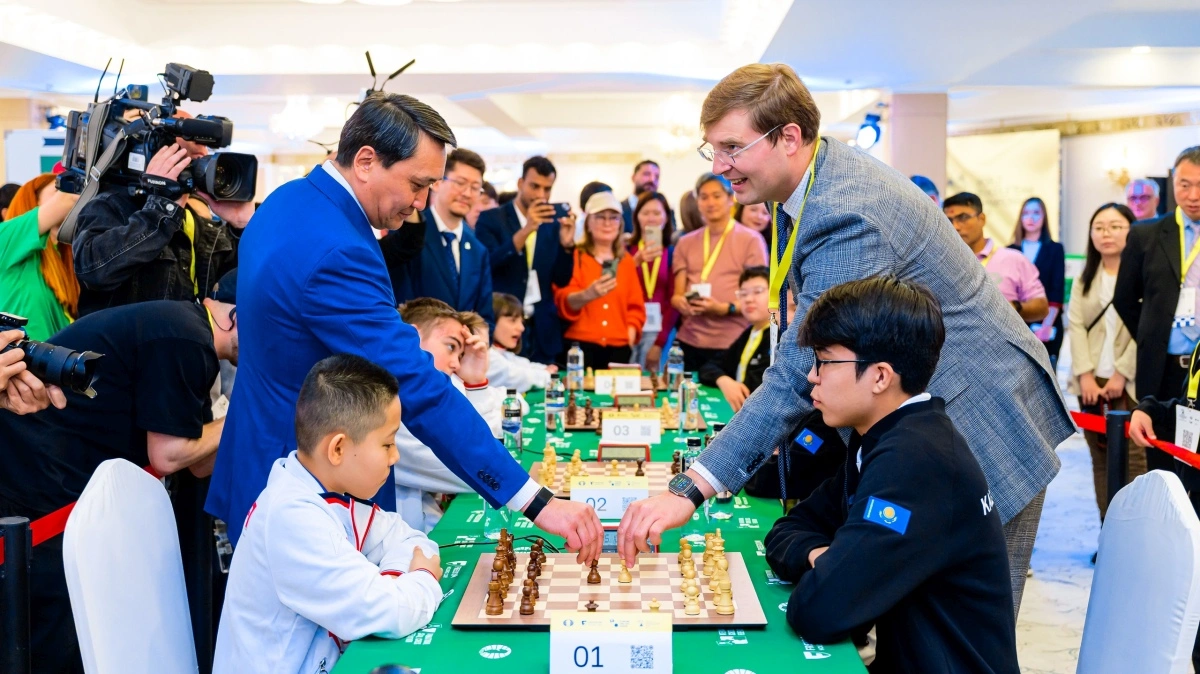
The World Schools Team Championship is adding an African stage to its qualification system. The event will take place from July 6 to 11, 2026, in the Cape Town area of South Africa.
The competition is open to school teams entered by national chess federations across Africa. The winning team will secure a direct place in the Grand Final, scheduled for December.
The African stage is part of the redesigned WSTC format. The championship is moving away from separate international tournaments toward a system of continental qualifiers that links regional competitions to a common Grand Final. Under this model, school teams enter through their national federations and compete for a place in the next stage.
FIDE and ISCF jointly organize the championship under the new format. National federations select and enter teams, while private partners support the competitions and broader projects aimed at developing chess infrastructure.
The Grand Final will bring together four continental champions from Africa, the Americas, Asia and Europe. The first stage of the 2026 cycle was held in Almaty in April and brought together 26 school teams from 19 Asian countries. Wisdom School of Tashkent won the tournament. Kurchatov School of Moscow finished second, followed by Velammal MHS School of Chennai in third.
After the African stage, the cycle will continue in the Americas and Europe. The Americas qualifier is scheduled for August 11–16 in San José, Costa Rica, while the European stage will take place from September 28 to October 3 in Tsaghkadzor, Armenia. The Grand Final will be held in December 2026, although its exact dates and location have yet to be announced.

The current model builds on the first World Schools Team Championship, held in Aktau in the summer of 2023. That tournament attracted more than 400 school-age players from 53 countries. In September 2024, the FIDE General Assembly supported granting ISCF the status of an affiliated organization. In the new cycle, ISCF is organizing the championship jointly with FIDE.
ISCF is chaired by Timur Turlov, founder and CEO of Freedom Holding Corp. He is involved in the championship in two capacities: as ISCF president and as the CEO of Freedom Holding, its general partner.
Freedom Holding Corp. serves as the general partner of the WSTC cycle and supports a broader portfolio of international chess projects. The company is an international fintech group operating in 22 countries and serving around 14 million clients across its digital ecosystem. According to the company, it allocates more than $15 million annually to the development and promotion of chess.
Freedom Holding works with FIDE and supports international chess events, including the World Rapid and Blitz Championships, corporate competitions and school tournaments. This makes the company part of the financial and organizational foundation supporting the expanding school chess calendar.
Another element of this strategy is Freedom Holding Corp.’s acquisition of ChessBase. Founded in Hamburg in 1986, the Germany-based company develops chess databases, analytical software, training products and online services, and also operates a chess news platform. Its products are widely used in professional chess preparation.
Freedom Holding plans to invest approximately €5 million in the further development of ChessBase. According to the company, the funding will be directed toward modernizing the platform, expanding its technology architecture, introducing artificial intelligence and integrating ChessBase into the group’s broader digital ecosystem. The ChessBase acquisition is separate from the WSTC, but reflects the company’s broader investment in chess technology and training infrastructure.
For the WSTC, the African stage represents another step toward building a structured international school chess system. For African teams, it creates a direct route from continental competition to the world final.
The Cape Town event will also show how national federations, schools and partners can operate within the new format. Its long-term value will depend not only on the tournament itself, but also on whether the system can continue supporting the development of school chess after the competition ends.

