 Follow Us on Google News


 Follow Us on Google Discover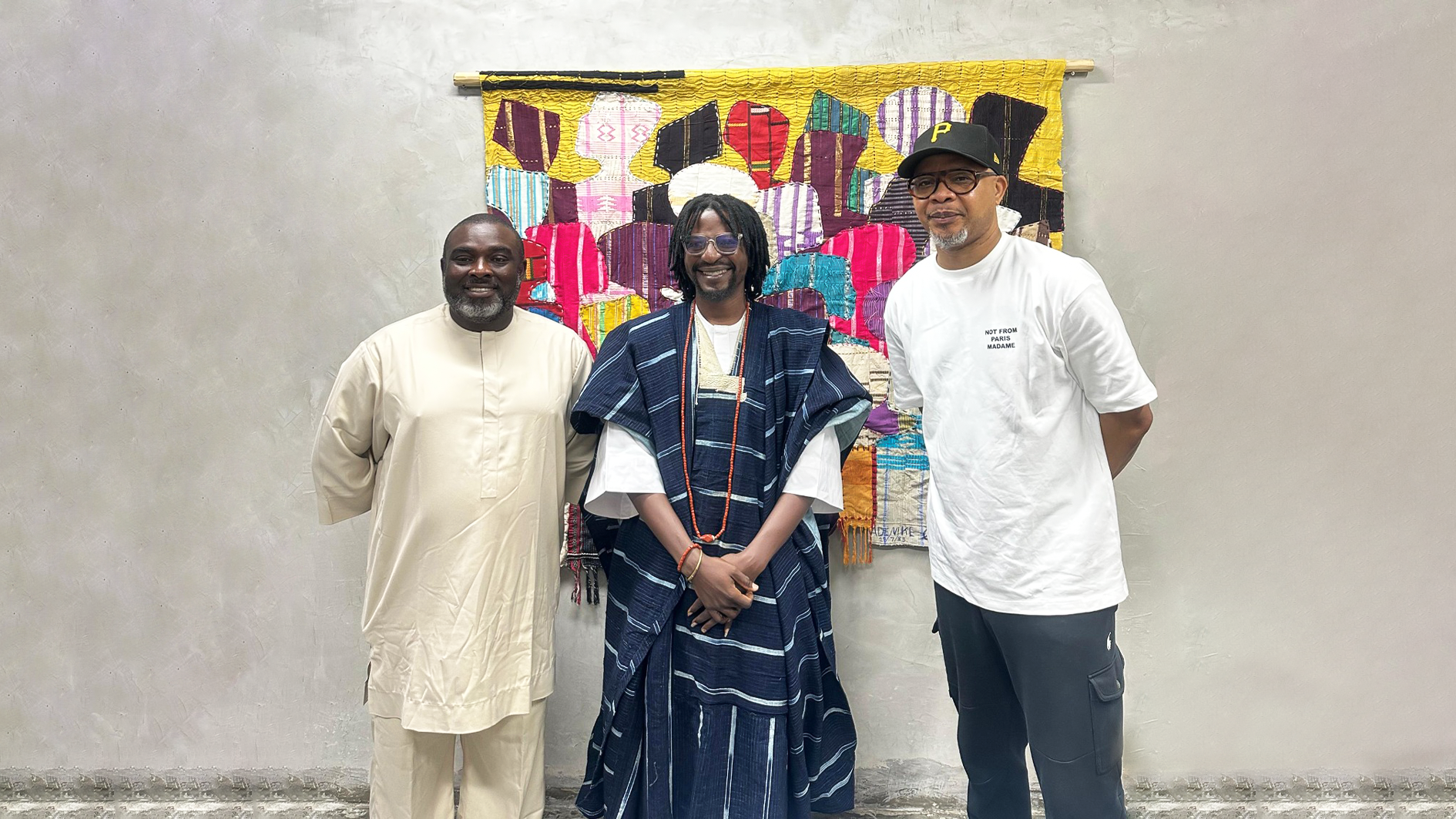
For award winning artist, Taofeek Badru, it was another opportunity to give art lovers in Lagos something to appreciate when he recently showcased his latest collections in a solo exhibition, titled: Clothes Our Parents Wore.
On display at the exhibition were works made with textile material, mostly Aso-Oke, although they were old fabrics.
According to Badru, recycling is a talking point globally so the exhibition is his own way of promoting recycling and reuse of items. He noted: “In this part of the world, we are not used to recycling; we waste things a lot. But if you go outside the country, they do a lot of reusing. Overseas, if you’re going to buy something in the supermarket for instance, you go with your own polythene bag; if you open their fridges, you will see reusable water bottles; quite unlike what we do in Nigeria. Rather than throw away water bottles, they refill them with tap water and store them in their fridges. So the message is to tell us that there is beauty in ashes.”
He disclosed that all the fabric used in creating the art works for the exhibition were all old clothes. “So, this is also to tell people that old things can be put to beautiful use again like you have seen at this exhibition.”
Providing insights about each of the art works, Badru said: “Some of the titles that I explore in this exhibition have to do with Áso.” One of the works is titled ‘Gogowu’. Explaining the idea behind the work, he said:
“There is a proverb that says, ‘Aso to ba kuniku la n pe ni gogowu’, meaning: it is the cloth that you are left with after all said and done that is called gogowu. Gogowu can be translated to something that is important. Most of us have such clothes in our wardrobe that become so important, that we put on everyday maybe because the tailor sewed it uniquely. There are several other proverbs, like ‘Eniyan laso mi’ meaning people are my covering.

Here, Yoruba is not talking of cloth that we use to cover our nakedness; rather, they are likening human beings to clothes that cover nakedness. What that means is that even if you wear ten clothes, if you don’t have people or a community of people supporting you, you will still feel like you’re naked.”

