 Follow Us on Google News


 Follow Us on Google Discover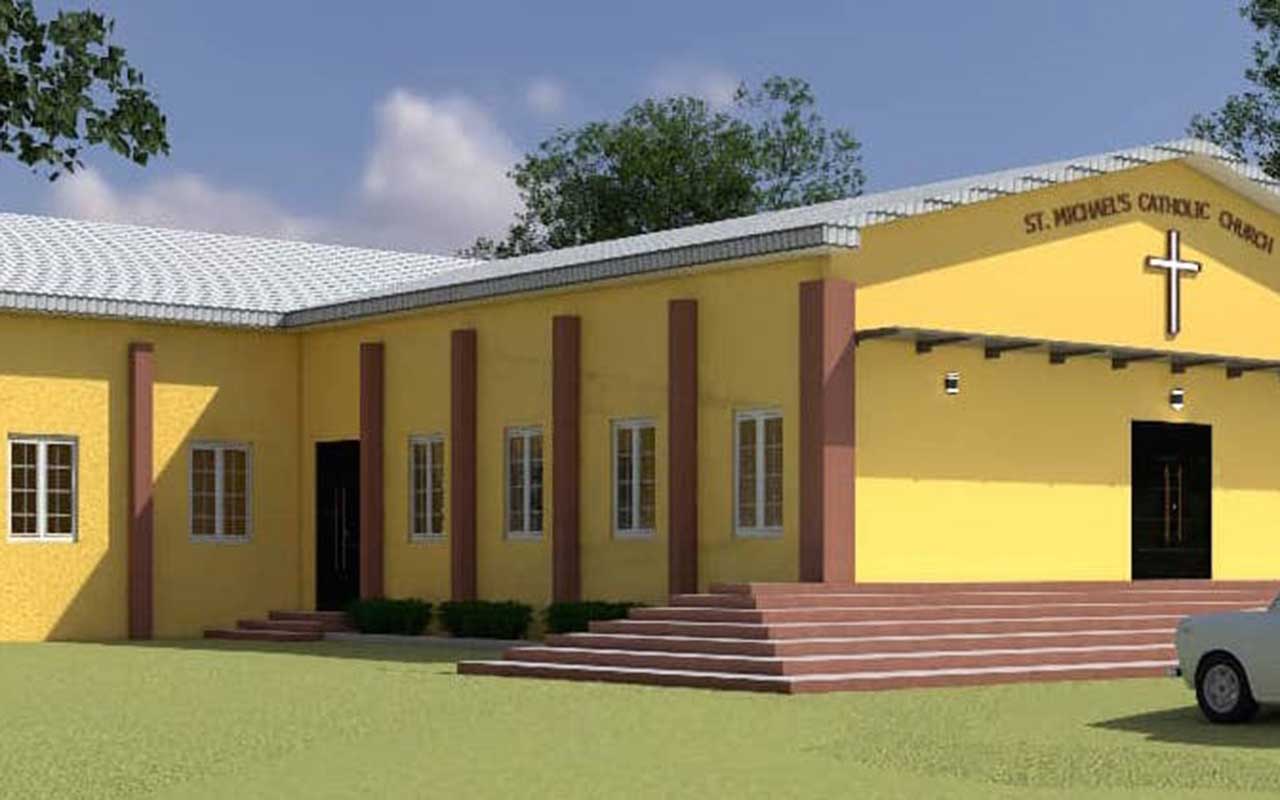
 The Catholic Church took a foothold at Isolo-Opin, in Ekiti local council of Kwara State, in 1924. This year, therefore, marks its 100th existence in the community. This is remarkable. And credit must be given to the priests of the Society of African Missions (SMA Fathers) who came to Nigeria in 1880, for their resilience and audacious missionary efforts.
[ad]
The SMA pioneered the activities leading to the establishment of the Catholic Church in Nigeria with the support and fraternal collaboration of the Sisters of Our Lady of Apostles (OLA Sisters) who arrived in Nigeria later in 1886. The persistent efforts and dogged determination of these organisations served as necessary impetus for numerous lay men and women who gave their best in laying a solid foundation for the church in Nigeria.
The priests in the then apostolic vicariate of the Gulf of Benin were also instrumental to bringing the faith to the ancient city of Abeokuta, from where it spread across the country.
The faith eventually spread to many communities in the hinterland including, but not limited to Onitsha, Benin City, Ondo, Ado-Ekiti, Ilorin, Oro and even to our own Osi Mission, from where, St. Michael’s Catholic, Isolo-Opin Parish came into being, and up to the northern part of the country. Interestingly, the conversion of Isolo compatriots must have been largely influenced by their sojourns to other parts of the country in search of a better life. It is possible that they also introduced their new found-faith to Isolo-Opin.
It is noteworthy that from the time of the first foreign missionaries till now, the Church in Isolo-Opin has experienced dynamic apostolic activities (testimonies) in the spread of the Good News, with the efforts of the clergy and the collaboration of the lay community. Their work, experience and achievements need to be applauded not only for historical purposes, but because their selfless efforts led to the quantum growth of the Church, which has continued to influence the younger generation of the community and the old alike.
Kudos must be given to the pioneer parish priest, Rev. Fr. Emmunel Okami, who did a very good groundwork in the establishment and promotion of the nascent parish for which his successors, Rev. Frs. Anthony Atoyebi, Michael Olaifa Oluwaseun and Thomas Oluwaseun solidly leveraged on.
[ad]
It should be mentioned here, however, that all of the founding members of the faith in Isolo-Opin may have passed to the great beyond, but dead or alive, a few of them should be highlighted for posterity and as an encouragement to the people, especially those generations who came after them for helping in the propagation and stabilisation of the faith. Although not in a chronological order, they include, but not limited to Pa Gabriel Omopariola (Asoju-Ijo); Pa Gabriel Abebayo (Baba-Isale); Mrs. Juliana Ajayi Adesoro-Ojuda (Iya Egbe-Ijo) fondly called Yeye-Elepo; Pa Michael Bamidele (Lay-Reader); Pa Fasusi acclaimed as the first Catechist and Pa Jerome Adewumi, foremost Catechist known to most people of this generation before the emergence of the latest Catechist of the church, Mr. Lawrence Aare. All are now with the Lord. It should be emphasised as well that Messrs William Kumuyi, Lucas Bayo Dada, William Alabi, Emilius Adewumi, the late Michael S. Ayeni and Hon. M. B. Adaramola and others took much of their time and energy to organise sporting activities, as well as drama presentations drawn from scriptural passages to teach children some moral and to entertain and sensitise parents on the import of sending their children/wards to school.
Oba Michael Dada Oyedele of blessed memory championed the cause of community development in Isolo-Opin and later became the Asolo of Isolo-Opin land. The late Chief Joseph D. Olowa is fondly remembered for his activism and enthusiasm as community and educational mobiliser, while the late Elder John Bernard Yusuff (The trailblazer) served as an interpreter to many of the white priests who visited the fledgling station for occasional masses and teaching catechesis and the coaching the Legion of Mary group in the church. This writer was the secretary of Isolo-Opin Student Union at a period, with others like Messrs William Omopariola, Gabriel Afolayan, the late Messrs Thaddeus Obebe and William Bamidele, Mr. Joseph Kumuyi and Sir Michael Oladele, while Mr. John Ayodele and a host of others engaged in business enterprise.

Education has been a major vehicle for evangelism, which is a cardinal objective of the church and the Catholic Church has been at the forefront in this direction and providing educational facilities for the formation and training of the young people. Through this, the church nurtured the spiritual needs and material wellbeing of converts. This contributed immensely to active evangelism and the sustenance of the church.
No wonder the Catholic church took root in Isolo-Opin and has lasted this long and will continue to do so for years to come.
Significantly, the Catholic Church has become a dominant force in Isolo-Opin from the time of its introduction to the community, not only because it was the first church here, but because of the role it played in education, which is a catalyst not only for the purpose of evangelism, but also for national development and integration, nation building and the advancement of the human race in general.
[ad]
The Catholic Church has been known for its passion for holistic Catholic education and the training of its converts, especially in the moulding of young minds. Through this, the Christian Religious Instructions (CRI) classes and Primary schools were established with the famous three Rs — Reading, Writing and Arithmetic — introduced and taught in the schools established by the church. Education of the new converts, especially the youngsters became veritable vehicles for their advancement, which positively impacted Isolo-Opin.
It was in line with this that the Catholic Church built St. Martins Primary school in Isolo-Opin in the 1960s to bring education closer to its indigenes and mark an educational footprint. This writer among many notable compatriots, including Mr. Michael Abolarin was part of the enrollment drive for pupils to populate the school. In spite of the best efforts of the initiative, poor enrolment did not allow the school to endure. Still, Primary schools from Eruku environs, St.John Anglican Central School, Oke- Opin and St. Brigid’s Catholic School, Osi and a host of others from the neighbouring communities thrived and attracted many pupils even from Isolo-Opin.
With the expansion of primary schools, it was only natural that post-primary schools had to be established to absorb the large number of school leavers. Remarkably, Teachers’ Training Colleges sprang up in the vicinity and afar to supply trained teachers for the schools. Many of the young people in Isolo at the time, took advantage of the opportunity, eventually becoming people I will refer to as the leading lights of Isolo-Opin. Prominent among the high schools are: Mt. Carmel Teachers’ College, Ilorin; St. Anthony College, Ilorin; Government Secondary School, Ilorin; Fatima Community Technical College, Ekan-Meje, Bishop Smith College, Ilorin; St. Marlachy Teachers’ College, Minna currently in Niger State and St. John College, Kaduna, Kaduna State.
These institutions became the grooming grounds of the pioneer prominent elite of Isolo-Opin. Some of them went on to universities, polytechnic and other tertiary institutions thus becoming pace setters, role models and icons in Isolo-Opin. They attained great heights and rose to the pinnacle of their careers as administrators, school principals, bankers, nurses, administrators, sportsmen/women, priests, journalists and astute businessmen/women.
Isolo-Opin has through the church, produced influential personalities, including three indigenous priests; Rev. Fr. Lucas Olumuyiwa Ayodele, (ordained for Ekiti Diocese); Rev. Fr. David Shola Ajayi; and Rev. Fr. Emmunel Ayodele, (both ordained for Ilorin Diocese) who impacted the community positively in particular, the state and Nigeria at large. Indeed, until the arrival of the church in Isolo-Opin, the literacy level in the community was very low and some would say, non-existent. Life was dreary with little hope of improvement of the status quo.
The narrative, however, changed dramatically with the church taking the education of the citizenry very seriously for their efforts in grounding the people in Catholic doctrines. It was a win-win for all. With the hindsight of ecumenism, community initiatives began to surface culminating in rapid community development projects making life more bearable, interesting and meaningful. Soon enough, Ire-Wolu Community Development Initiative (now known as Isolo-Opin Development Association, IDA) came into being. It was founded with branches in all the major towns and villages where Isolo-Opin compatriots live. Clubs and associations were also formed by the youths geared towards improving the lots of the community. Some of these clubs such as Club 11 of Isolo-Opin, Morning Star Club, The Africanas, New Light Club, SKOT 4 Club of Isolo-Opin and Araromi Premier Club, galvanised the community by embarking on impressive development projects.
As we celebrate the centenary of catholicism in Isolo-Opin, we must commend those early priests and the individuals who did the heavy lifting to ensure that education came to our door steps and gave unhindered opportunities to our people to be educated at different levels. I can humbly submit that the catholic church has been good to us at Isolo-Opin, as it nurtured our souls and broadened our minds by making education available to us.
Today, Isolo-Opin boasts of a primary and secondary schools (though not church owned), but obviously products of the seeds sown by the visionary Catholic Church which saw tomorrow. Who knows, a university may as well be in the offing….
• Adewumi, an indigene of Isolo-Opin, Kwara State, writes from Abuja
[ad]

