 Follow Us on Google News


 Follow Us on Google Discover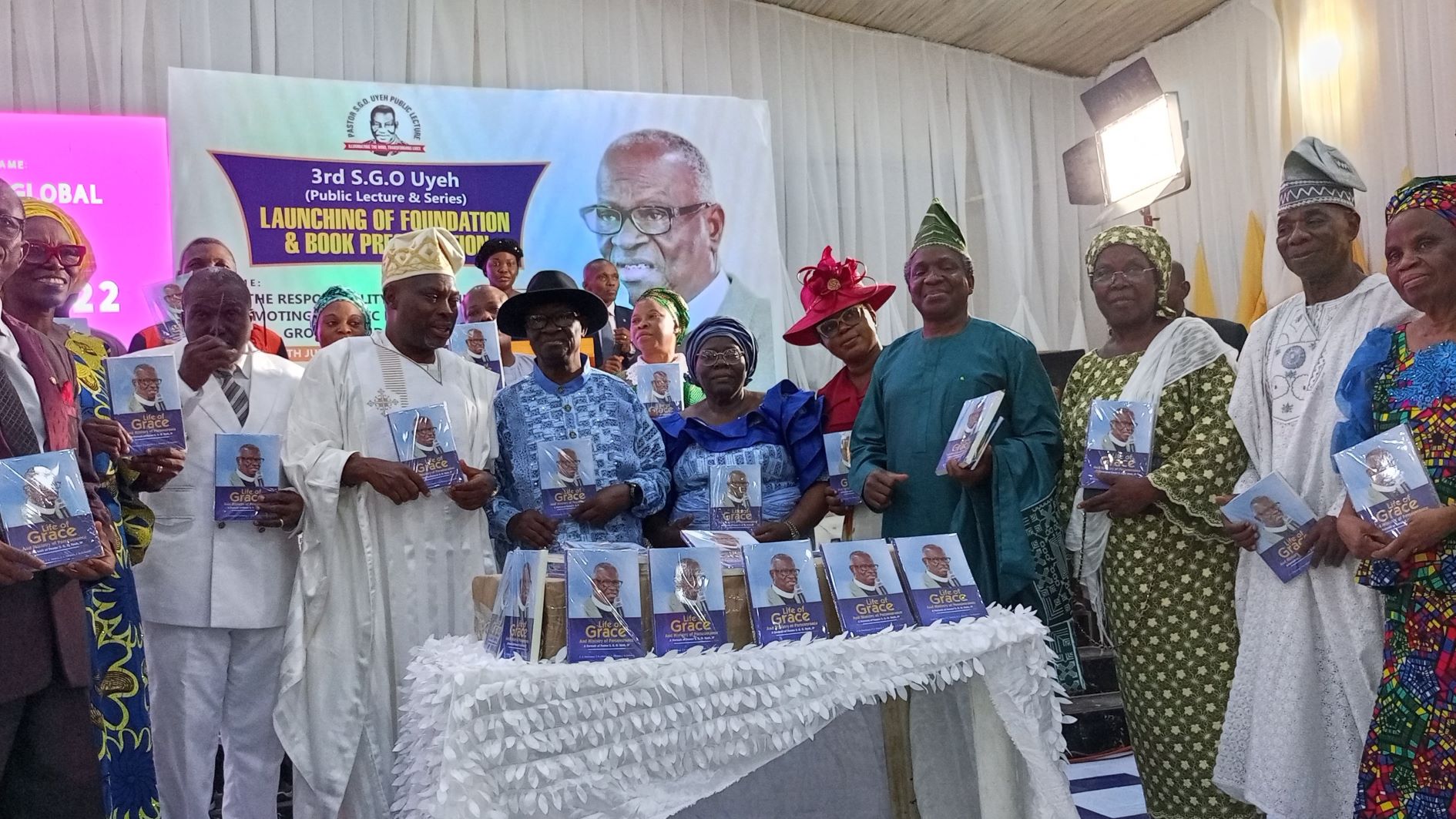
A renowned health and wellness expert, Rev’d Tony Akinyemi and Dr Grace Bajomo of the Federal Medical Centre (FMC), Idi Aba, Abeokuta, have admonished churches in the country not to see faith and medicine as enemies, but rather as collaborators in the preservation of lives.
The duo spoke, last Saturday, during the third edition of the S.G.O. Uyeh Public Lecture Series with theme: “The Responsibility Of The Church In Promoting Holistic Health For National Growth And Development.”
Held at The Apostolic Church Nigeria, headquarters, LAWNA Territory, Ketu, Lagos, the speakers eulogised the leadership and legacy of the celebrant, Pastor Senior Gabriel Okpako Uyeh, one of the longest serving ministers in the church, who retired voluntarily in April 2026, after serving as LAWNA Territorial Chairman for over three years.
Akinyemi, who is also the guest speaker, said the Church must work collaboratively with healthcare organisations and professionals, citing Luke in the Bible, who was a physician and a disciple of Jesus Christ.
Stressing that the Church has played a major role in healthcare development in the country, through mission hospitals, schools and humanitarian interventions, he enjoined church leaders to partner healthcare professionals for members’ good health.
Adeyemi urged the church to use the pulpits as a veritable platform for public health education on different areas, including hypertension, diabetes, malaria prevention, nutrition, maternal health, mental health, HIV/AIDS awareness, family health, and sanitation, adding that the church has access to millions of Nigerians to address. He noted that ignorance is still one of the greatest causes of preventable diseases.
Lead Pastor, The Shepherd’s Flock International Churches, Nigeria/ Overseas, enjoined the body of Christ to organise a free medical screenings, blood pressure checks, eye care programmes, wellness seminars, and rural healthcare outreaches periodically, implored churches to maximise its presence in the communities by mobilising its internal healthcare professionals.
And also fund the procurement of reagents and medications to serve the less privileged in the community. He noted that screening them for diabetes and hypertension among others would provide a frontline defense against silent killers such as hypertension for both church members and the wider community.
Bajomo argued that health is not only a medical matter, but also a subject that affects both the pulpit, family, hospital, school, community and the nation.

According to her, health concerns the whole person — spirit, soul, mind and body — while development concerns the strength of a people, the stability of families, and the moral direction of the society. She disclosed that holistic health is about the future of the nation and that a healthy church helps to build a healthy nation.
Calling on the church to uphold the sanctity and dignity of life, the keynote speaker, identified five responsibilities the church must adhere to. She identify them to include teaching a holistic understanding of health; approaching divine healing with both conviction and wisdom; avoiding any teaching that makes people ashamed to seek help or afraid to report symptoms or condemned for receiving treatment; and educating society on socio-spiritual realities as well as collaborating for the common good.
Drawing examples from Genesis 1:27 and 3 John 2, Bajomo emphasised that man was created in the image of God and that every life carries value, whether for the strong or the weak, the rich and the poor, the healthy and the sick, even the silently burdened. She added that the church cannot be indifferent to human suffering, while preaching on redemption and neglecting human wellbeing.
“Many still think of health only in physical terms, while others see it only in spiritual terms. But real life is not divided that way. A person can be active in worship and still suffer emotional distress. A family can appear stable and still be deeply wounded. A young person can be full of promise and still struggle with anxiety, addiction or confusion,” Bajomo said.
She urged the church to teach that prayer, holiness, obedience and faith matter, as well as nutrition, rest, hygiene, mental wellbeing, family support and timely care too.
Meanwhile, in his opening remarks, LAWMNA Territorial Chairman, TACN, Pastor Moses Oluwole Ogunibe, described holistic health as broadly including spiritual wellbeing, physical health, mental and emotional stability, social responsibility and economic empowerment, adding that a healthy Church produces healthy families, which in turn build healthy communities and that healthy communities contribute to a prosperous and stable nation.
The Territorial Chairman urged the Church to continue to champion sound values, promote healthy lifestyles, encourage access to good healthcare, support mental wellbeing, foster social justice and provide moral leadership for sustainable national development.
Ogunibe said: “Pastor Senior Gabriel Okpako Uyeh stands as one of the notable fathers of our faith whose impact transcended ecclesiastical boundaries and touched lives across generations. Pastor Uyeh distinguished himself through exemplary leadership, spiritual discipline, integrity, humility and dedication to kingdom advancement. His years of service were marked by remarkable contributions to church growth, leadership development, missionary expansion, and the strengthening of the Apostolic heritage entrusted to us.”
The celebrant, Pastor Senior Gabriel Okpako Uyeh, in his closing remarks acknowledged that the church occupies a strategic position in the society as God’s instrument of transformation, noting that the church is not only called to preach salvation, but also to promote healthy living, sound values, community development and compassionate care for humanity.
Apart from bringing church leaders and people of different social statuses together, the event witnessed the unveiling Uyeh’s foundation and the presentation of his biography.

