 Follow Us on Google News


 Follow Us on Google Discover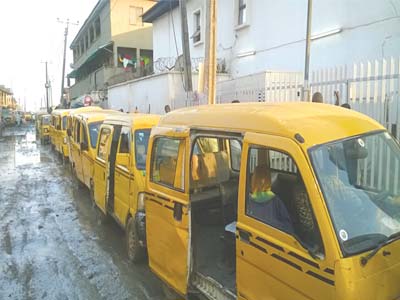
They’re Restricted From
Expressway, Says FRSC Boss<em

THE decision by the Lagos State Government in particular and some states across the country to restrict use of commercial motorcycles (Okada) on major roads unwittingly triggered a boom. Given the zeal with which men of the Nigeria Police and other government agencies enforced the rule that saw hundreds of commercial motorcycles impounded, most Okada riders simply shifted to the popular alternative called Keke NAPEP tricycle.
Without any form of training, their switch to the three-wheeler, after being accustomed to motorbikes for years, explains the recklessness they display on roads. Those who had savings from their former business, bought Keke (N350,000-N400,000), others went for hire purchase, usually financed by commercial/micro finance banks and cooperative societies. Some well-off individuals, including retirees, who saw a moneymaking opportunity, also invested in the spinner.
Though the trend started in major commercial towns with the conveying of commuters to far places, it didn’t take long before Nigerian roads were dotted with tricycles. From inner streets, they gradually migrated to high streets and major roads, often overloaded with four passengers, as against the stipulated three. Even in villages, the Keke is very useful to market men and women, as it usually comes handy and cheaper than taxis and buses.
But the arrival of mini buses into the Nigerian transport sector has seen the Keke economy shrink, as more and more operators now prefer the petit buses to tricycles. Besides Suzuki, which blazed the trail, other brands have since made successful inroads into the country. From the forerunners in Festac Town, Lagos, these seven-seaters are gradually taking over the roads. And without contradiction, they are more lucrative than the good old Keke.
“When I came to Lagos, I started with Okada and then moved to Keke. But later, I switched to this bus because it’s far better in terms of naira and kobo. Unlike Keke, which carries a maximum of four passengers, this bus takes seven, besides a small space for load,” said Mike Ofomata, an operator in Lagos.

Tayo Adebayo, another operator, said: “The mini bus is more comfortable than Keke, especially when it rains. Except for its size, it is like any regular bus; it has everything you can find in a bus. As a result, passengers prefer it to Keke. On Sundays, I use it to carry my family to church. So, for me, it’s better.”
According to one Mary, a passenger who had chartered the bus to convey her goods: “This is more convenient than Keke; I feel comfortable in it. For someone like me, who supplies goods, the mini bus is more like it; it’s quite spacious. Even when it’s raining, you are protected. The boys, though, could be reckless sometimes.”
But for Mrs. Chiamaka Okoye, the rear seat of the mini bus comes with so much discomfort. “Because this bus is small, getting into the rear seat is always difficult, especially for tall people, like me. And when you have one fat passenger on that row, it could be very uncomfortable,” she said.
In Awka, the Anambra State capital, where Okada and Keke have been barred from plying the Awka-Enugu expressway, the mini buses have taken over the major roads, conveying people to and fro. Though the state government eventually relaxed the restriction on Keke and Okada before Xmas, mini buses still enjoy the upper hand.
“If you observe along the expressway, from Aroma Junction to Kwata Junction, you will see signposts by the state government warning Keke and Okada to keep off. You can see that I’m operating on this road now, but Okada and Keke are not allowed; they are restricted to inner streets. So, somehow, it’s better to use the mini bus here,” said Uchenna Ndukwe.
In Onitsha, the commercial nerve centre of Anambra State, the mini bus is fast gaining popularity and has become a major means of transportation around Inland Town and other axes. Currently, the Onitsha North Local Government has adopted the bus in its poverty alleviation scheme for jobless youths.
Though brand new buses are readily available, operators seem to prefer fairly used ones (Tokunbo), which cost N450,000-N600,000. Besides being pocket-friendly, the Tokunbo models look more durable.
“The new ones come from China, but if you can get a good Tokunbo, it’s better. They were originally produced to be used abroad and the specifications are always better than those of new ones, which were built for mass production,” said Kayode Akanni, a roadside mechanic.
Speaking on the legal status of the commercial mini-buses, Assistant Corps Marshal (Zonal Commanding Officer, Federal Road Safety Corps, Zone RS2 Command Headquarters Lagos) Nseobong Charles Akpabio, said they are allowed to operate on major roads, but are barred from using the expressway.
“Since they are bigger than motorcycles, they are allowed to operate on major roads, however, the Vehicle Inspectorate Office (VIO) must certify them. Most importantly, they need to be roadworthy,” he said.
While urging passengers to avoid overloaded vehicles, Akpabio said the FRSC, between December 17, 2015 and January 6, 2016, impounded some commercial vehicles and mini buses for various offenses, including overloading.
“There was a situation where a mini bus, which should take seven passengers had 10, and the roof was loaded with goods; some of them were tried by our mobile courts. Passengers need to take caution and avoid overloaded vehicles. In the case of these mini buses, it is worrisome because they are very light,” he said.
For Keke NAPEP, Akpabio stressed: “They are still limited to inner streets; they are not allowed on major roads. We want to use this opportunity to inform passengers that it’s dangerous to board overloaded vehicles. That you are in a haste is not enough reason to risk your life; students are used to doing that. If the bus is full, please wait for another vehicle; your life is more precious than time.”

