 Follow Us on Google News
 Follow Us on Google Discover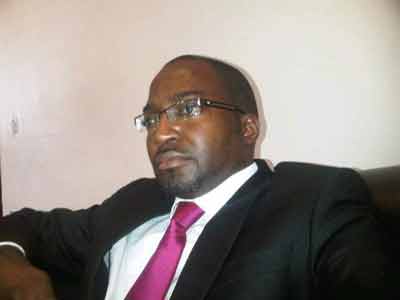
 Mr. Ademola Oshodi is a consultant in the oil and gas sector. He was a member of the advocacy group, Nigerian Natural Resource Charter (NNRC), for good management of the country’s resources. In this interview with TEMILOLUWA ADEOYE, he called on government to create three different companies out of Nigerian National Petroleum Corporation (NNPC), for effective management of the country’s black gold.
How can we harness the potentials of the industry under the new political dispensation?
I THINK we are on the right path now, which is, putting in a government that advocates change in policy direction and implementation. President Buhari has pushed Nigerians to expect more on issues of corruption and transparency in Nigeria government. Over all, there is need to focus on the oil and gas sector. The first reason is that oil revenue is drastically falling in Nigeria. 70 per cent of our foreign exchange revenue is from that product. If it is falling by 60 to 70 per cent, as we have had, it is quite bad for the economy. We need to pay close attention to our cash cow. The second reason is that we need to diversify the economy. It is so important that we move away from dependency on the oil and gas sector. Diversification at this stage is not only necessary, it is basically beyond desperation for us to do so. We need to ensure that the issues of internally Generated Revenue (IGR), taxes are promoted within states and the Federal system. We need to ensure agriculture is enhanced through opening up of rural roads and supporting subsistence and commercial farmers. We need to ensure that there are small-scale businesses opening up around the country, so as to create employment. We need to find a way to improve how people get involved in business without depending too much on the white-collar jobs. It is extremely important that we diversify our economy or we would be in big trouble.
As petroleum minister, what do you think President Buhari should do differently?
It could be quite tasking for him to be leading the country, as well as managing an important ministry as petroleum. He must not only be on top of things, but must have a capable junior minister or minister of state to support him. He has experience in the industry; he was petroleum minister in the past, he was once the chairman of NNPC and had served as chairman of Petroleum Trust Fund; so, he has what it takes to manage that sector. He does not have excuse for his inability to change things, because he is knowledgeable in that sector. What we need is to ensure is that he is, or whoever holds the position, to be held accountable by Nigerians.
What are your expectations from the Petroleum Minister?
He needs to work hard with civil society groups, international community, local and host communities, where oil is being extracted, piped and stored. The civil societies know a lot of what is happening; they have the people on ground; and people that used to work with the oil industry. Many times, they actually furnished the government with information, even the former CBN governor, Sanusi Lamido Sanusi, was provided information by the civil society regarding the N20b allegedly unaccounted for during the Jonathan government. So, civil society groups are important as the international communities.
How do you think government can tackle the menace of oil thieves?
By holding the people accountable, ensure that we can prosecute people. We need to build strong institutions, put honest and fair-minded military on ground in the Niger Delta; intelligence should be put in place, not just military. Communities should also spy for government. We need to hold companies accountable, and we also need the international community to assist us in blocking loopholes. I think the government is the biggest culprit, and the security organisations can also not be exonerated, if we hold them accountable, the theft of oil would reduce.
There is clamour for the unbundling of NNPC, are you in support?
It should be based on what we see in the Petroleum Industry Bill (PIB). There should be an amended version of PIB, not as detailed, but in areas of regulation financing, and management. But basically, the PIB should be changed. We can have have two or three organisations in the NNPC, these organisations would take care of extraction, regulation and financing, and would then be well managed. Eventually, we should then sell the government shares to Nigerians. Like what is happening in Brazil and South Africa, where there is still government interest, but a lot more independent shareholders controlling the national companies. Nigerian government should still have a stake in the NNPC, but not dominant, as we have now. If we open it up to private investment, there will be more accountability. The unbundling of the NNPC into at least three areas; regulating, extraction and financing would help. But in all, if things were managed well, we don’t need to change anything.
What is it about the NNPC that you don’t like?
It is too big. Staffing is not done on merit. It is based on Federal Character System, man know man, nepotism. You can’t have that in a functioning and vital organisation that is so crucial to the Nigerian economy. You need transparency, people with qualification to run it. Of course, because it is government, you have to put everybody from different parts of the country. But that affects performance. If it is eventually unbundled, we should have qualified people from the private sector to manage it. It is quite a big and corrupt organisation, and it is hard to ensure that transparency is enthroned. I think that we are on track now with what government is doing to open up that industry for scrutiny and better management.

