 Follow Us on Google News


 Follow Us on Google Discover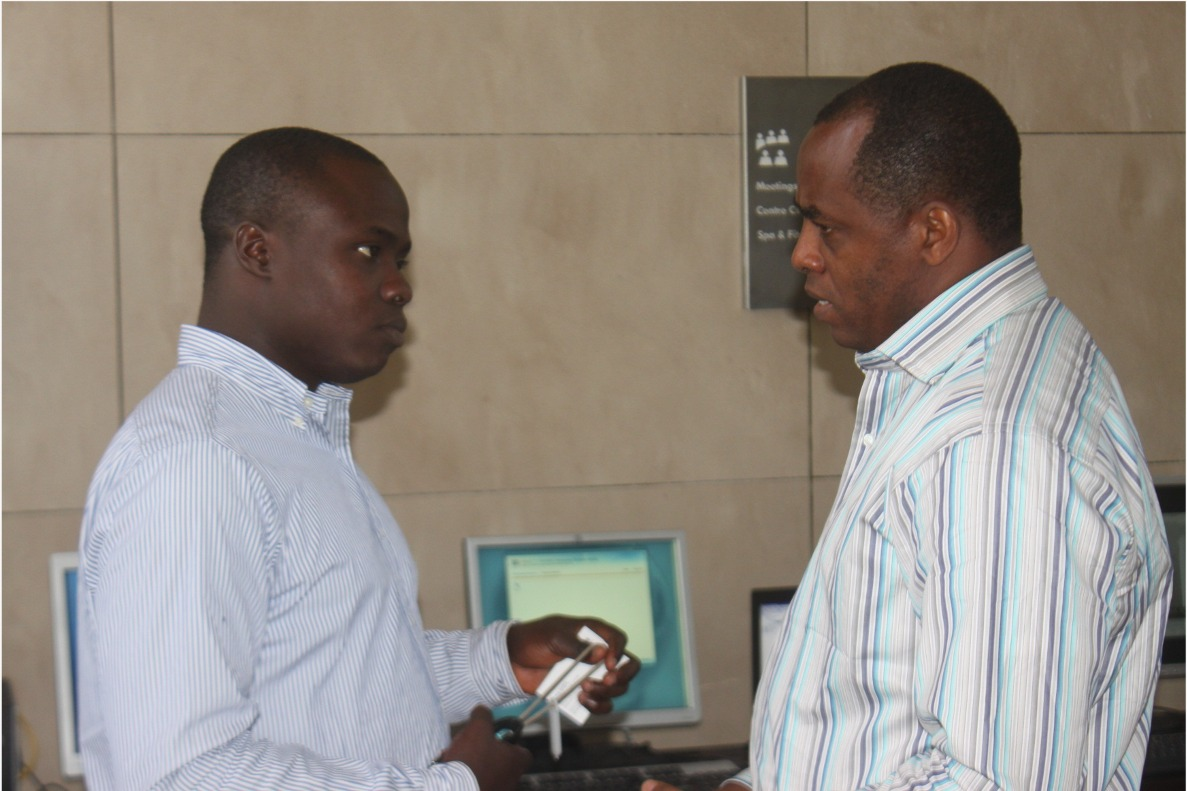
Pioneering in Cloud Tech in Africa – An Interview with Olajide Shobowale on Leading the HP Nigeria’s at Technology Live in Senegal
In 2011, when cloud computing was still an emerging concept in West Africa, few leaders grasped the transformative potential it held for the region. Olajide Shobowale, now a Professional Services Consultant at NetAPP, was then a Technical Consultant at Hewlett-Packard (HP) Nigeria. Not only did he see its potential, but he also actively shaped the conversation around it. As the technical lead for HP Nigeria at the HP Technology Live event in Senegal, he spearheaded discussions that laid the foundation for how cloud technologies and HP thin client and WebOS solutions would be adopted in West Africa.
We sat down with Olajide to explore how his leadership at HP Nigeria and his central role at the Senegal event helped introduce cloud computing to a region hungry for digital progress, and how that experience continues to inform his work today.
Olajide, in 2011, you led HP Nigeria’s presence at the HP Technology Live event in Senegal. What was your vision for the event, and how did you shape it?
When I took on the responsibility of leading HP Nigeria’s technical delegation to the Senegal event, I was very intentional about what I wanted to achieve. I saw this as an opportunity not just to promote HP’s latest offerings but to have a real conversation with African businesses about what these technologies could mean for them. My vision was to bridge the gap between global technology innovation and the practical realities of African enterprises. I took the lead in crafting the technical agenda, ensuring that every session, demonstration, and one-on-one conversation was relevant and actionable for the leaders in attendance.
My approach was first to gain a deep understanding of the landscape—what CIOs and decision-makers in the region were struggling with, whether it was limited budgets, unreliable power supply, or concerns about security and scalability. Then, I focused on demonstrating how HP’s technologies—particularly our thin client solutions and early cloud frameworks—could address those pain points in ways that traditional desktop models could not. It was important to me that we didn’t just talk about features or specs. We needed to talk about impact: how can these solutions enable growth, reduce costs, and open up new possibilities for organizations that might otherwise be stuck in legacy systems?

Cloud computing was still a new idea for many at that time. How was it introduced, and why did you believe it was so important for African businesses?
It’s true—cloud was still seen as something futuristic or even aspirational for many organizations in 2011. But I believed it had the potential to be a game changer precisely because of the challenges we faced in Africa. In my sessions, I emphasized that the cloud wasn’t just about moving data to someone else’s servers; it was about creating a foundation for scalability, flexibility, and cost control—things that are critical in environments where resources are always under pressure.
I remember writing in my notes after the event, “One strong message that came out of this event is ‘Cloud Computing’—the strategic direction for future business.” I said it in my presentations, too, because I wanted to plant that seed of thought in every leader’s mind. It wasn’t enough to just mention it as a buzzword; I wanted them to see it as a path forward. My role was to take what seemed like a distant concept and make it feel urgent and relevant for African businesses.
How did you make these concepts real for your audience, especially given the local challenges?
We were very hands-on. I made sure that we didn’t just stand up there and talk in abstract terms. We set up live demonstrations of HP’s WebOS and thin client solutions, showing exactly how they worked and how they could enable schools to equip dozens of students with digital resources on a single host machine, or how they could help call centers or government offices do more with less. For example, we explained how thin clients can handle power and connectivity issues better than traditional desktops, because there is less hardware to maintain and the computing resources are centralized and more secure.
In addition to the demos, I spent a lot of time inside conversations—meeting with education leaders, telecom executives, and IT directors one-on-one. We discussed their specific pain points and explored together how these solutions could be integrated into their environments. That personal engagement was crucial because it helped build trust and gave people the confidence to take the next step in exploring cloud and virtualization.
Beyond the technology, what was the most important thing you focused on at the event?
It was really about building relationships and trust. At HP Nigeria, I had already learned that no technology solution would succeed unless you had the relationships to support it. So at the event in Senegal, I saw every conversation as an opportunity to create those partnerships. I listened to what people were worried about—like data security, budget constraints, and even staff training—and I showed them that we could help them navigate those challenges, not just sell them a product.
Those relationships were what turned the event from a series of presentations into a genuine catalyst for change. They made it possible for us to move from curiosity, where people were just intrigued by cloud, to commitment, where they were ready to start small projects or pilot deployments. And some of those conversations laid the foundation for cloud adoption efforts that are still ongoing in those organizations today.
How do you envision your role in the Senegal event and your work at HP Nigeria as a significant contribution to cloud adoption in West Africa?
For me, it’s about more than just being early to the conversation. It’s about helping to reframe the conversation altogether. At that time, most people in our region were still focused on hardware—on how to get more powerful servers or faster desktops. But I was saying, “Let’s look at architecture. Let’s look at scalability. Let’s look at how we can use centralized resources and virtual environments to do more with less.” That was a big shift in thinking.
By leading HP Nigeria’s efforts at that event, I helped local decision-makers see that cloud and thin client solutions weren’t just futuristic—they were practical tools that could help them address the specific challenges of operating in Africa. That’s what I see as an original contribution: taking a global idea and translating it into something real, relatable, and actionable for my region.
Now that it’s 2013 and private cloud adoption is really taking off across Africa, how do you feel about the impact of your work back in 2011?
I feel proud of what we started. The conversations we had at that event—about the benefits of centralization, budget stretching, and future-proofing—are the same conversations driving cloud adoption today. I’ve carried those lessons with me in everything I’ve done since, from continuing to work with thin client solutions to now helping organizations migrate massive data sets into their private cloud.
But beyond technology, I’m proud of the mindset shift. Back then, cloud was still “someday.” Now it’s “right now,” and I think the work we did in 2011 played a part in making that possible. It’s a reminder that leadership isn’t just about pushing the latest tech—it’s about helping people see what’s possible and giving them the confidence to take those first steps.
What advice would you give to young tech leaders in Africa who want to drive change in their communities?
My biggest advice is never to be afraid to lead conversations that might feel ahead of their time. When I began discussing cloud computing in 2011, not everyone was ready to hear it. But if you believe in the potential of a technology—if you know it can solve real problems—then you have a responsibility to advocate for it.
And always stay grounded in the human side of technology. Listen to people, understand their challenges, and ensure that whatever solution you propose truly addresses those needs. If you do that, you’ll not only introduce new ideas—you’ll help people own them and make them their own. That’s how real change happens.
Olajide Shobowale’s leadership at HP Nigeria and his role in the HP Technology Live event in Senegal in 2011 were about more than technology—they were about creating a pathway for real, sustainable digital transformation in West Africa. His ability to connect global ideas to local realities and to build the relationships that make adoption possible stands as a powerful example of how visionary leadership can turn possibility into progress. Olajide continues to deliver value and share Africa’s cloud and data space.

