 Follow Us on Google News


 Follow Us on Google Discover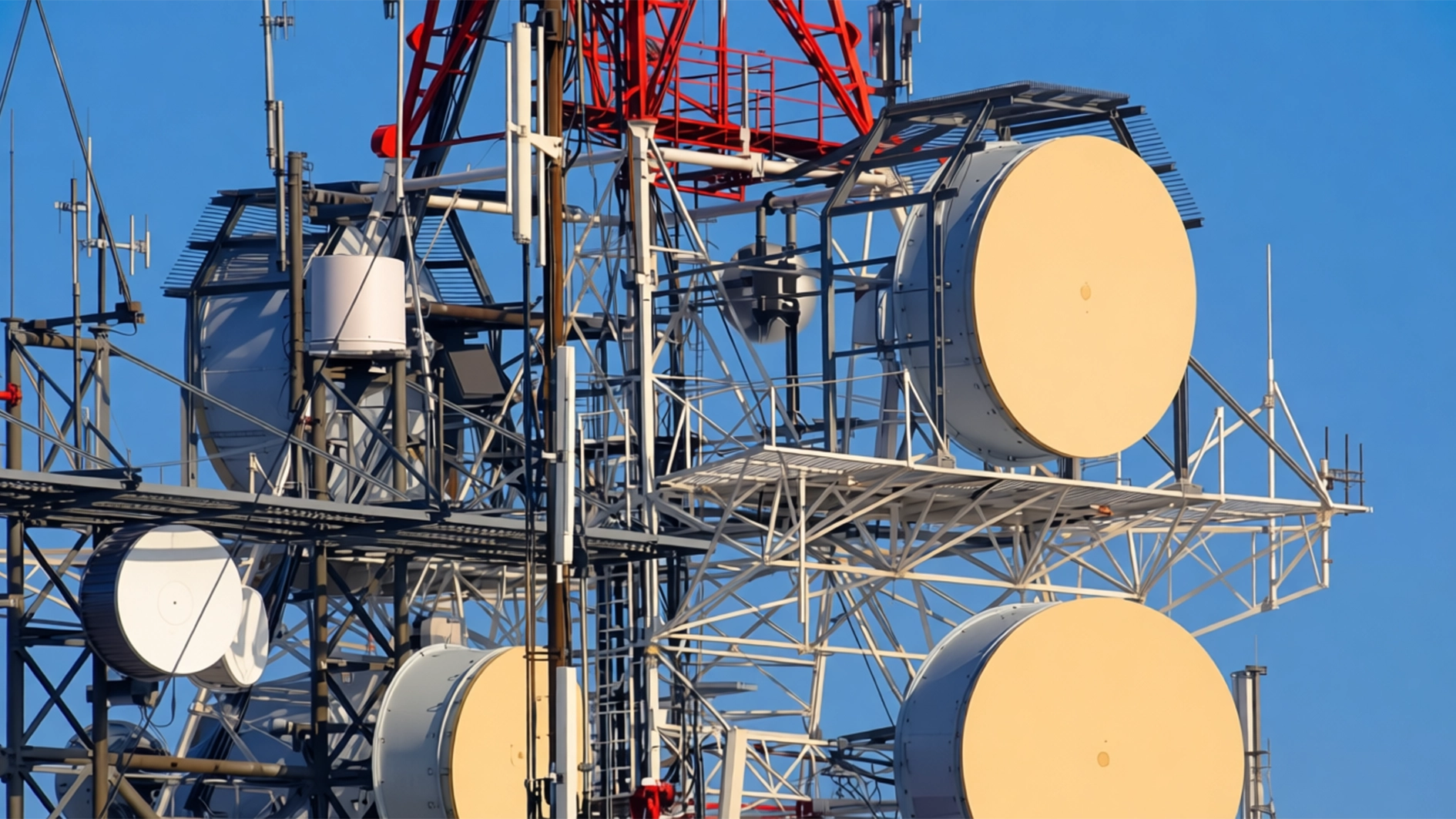
Driven by a relentless surge in CapEx, telecom rivals are pivoting from pure competition to strategic ‘cooperation,’ sharing the massive costs – and the risks – of building the networks of tomorrow, ADEYEMI ADEPETUN writes.
For decades, the Nigerian telecommunications landscape was defined by fierce, ‘winner-takes-all’ competition. Major operators, including MTN, Airtel, Globacom and T2 (9mobile), guarded their infrastructure like sovereign territories.
Nigerian telcos, for years, operated in silos, each racing to plant their own masts and lay their own fibre. But the economics of cost and benefit have changed. Industry data showed that in 2024, operating expenses (OpEx) in the sector surged by 85 per cent, hitting N5.85 trillion, while capital expenditure (CapEx) reached an unprecedented N2.9 trillion, representing a 159.03 per cent year-on-year increase compared to N1.12 trillion in 2023.
This year, the industry is projected to spend well over $1 billion on network investments just to keep up with 5G demands and rural expansion. A tower was more than just a piece of steel; it was a strategic moat. However, the latest National Bureau of Statistics (NBS) Capital Importation Report (Q3 2025) and current market realities suggest that the era of isolation is over.
Gradually, the industry is witnessing a forced marriage of sorts. Driven by astronomical CapEx requirements, relentless currency volatility and an urgent need for expansion, rivals are increasingly becoming bedfellows through infrastructure sharing and co-investment. In doing this, the operators are riding on the crest of the Guidelines of Colocation and Infrastructure Sharing Regulations introduced by the Nigerian Communications Commission (NCC) to ensure operators meet roll-out obligations.
The CapEx crunch
THE primary driver of this shift is the sheer cost of staying relevant. According to the NCC, telecom operators invested over $1 billion in 2025 alone to deploy approximately 2,850 new sites.
MTN Nigeria, the market leader, serves as the perfect case study for this financial pressure. In 2025, the company more than tripled its CapEx to N757.4 billion ($527 million). While this investment was necessary to support a 36 per cent surge in data traffic, the burden of funding such expansion in a high-inflation environment is becoming unsustainable for any single entity to bear alone.
The cost of building a single telecom tower in Nigeria has climbed to an estimated $160,000, according to sources from industry pressure groups such as the Association of Telecom Companies of Nigeria (ATCON) and the Association of Licensed Telecom Operators of Nigeria (ALTON). One can imagine how much it would have cost the operators had the country met the 70 per cent broadband plan target of 2025.
New pillars of collaboration
THE shift from ownership to access is being driven by two main regulatory and commercial levers. These are national roaming and active and passive infrastructure sharing.
National roaming allows a subscriber on one network (e.g., 9mobile) to automatically use the signals of another network (e.g., MTN) in areas where their primary provider has no coverage.
The regulator has approved a landmark three-year agreement between MTN and 9mobile (active as of 2025/2026), allowing 9mobile customers to roam on MTN’s expansive network.This helps to eliminate the dead zone problem for smaller operators without requiring them to build thousands of new towers, which can cost upwards of $100,000 per site.
Beyond just sharing the physical space on a tower (passive sharing), operators are now moving toward sharing active equipment like antennas and even spectrum.
While tower sharing is now standard, 2025/2026 has introduced a deeper level of collaboration through active infrastructure sharing. This involves sharing not just the steel, but the actual electronic equipment—antennas, base stations, and even fibre-optic backhauls.
The industry has pivoted toward Passive Infrastructure Sharing. Instead of each operator building its own tower in a single neighbourhood, they now largely lease space from independent tower companies (TowerCos) like IHS and American Tower (ATC).
This co-location model allows rivals to, among others, reduce initial outlay. This means that operators can expand coverage into rural or ‘white zones’ without the $160,000 upfront cost per tower. This also enables them to optimise Opex. For instance, sharing the cost of security, diesel, and maintenance allows for better margins.
The Guardian gathered that there are about 26 co-location data centres in Nigeria as of early 2026. There are equally some 36,000 active co-location sites, and about eight subsea cable landing stations.
Sharing active infrastructure
A REPORT by SBM Intelligence indicated that Nigerian telcos are increasingly moving toward Radio Access Network (RAN) sharing and Fiber leasing. Rather than digging parallel trenches along the same highway to lay redundant fibre-optic cables, operators are now co-investing in single ‘neutral-host’ fibre routes.
SBM Intelligence 2026 Outlook said: “The sector is no longer in a phase of unchecked growth. It is moving from an era of rapid expansion to one focused on durability, shared assets, and disciplined capital deployment.”
On the spectrum, it will be recalled that T2 recently leased parts of its 900MHz and 1800MHz bands to MTN. This gives MTN more capacity to handle its massive data traffic while providing 9mobile with much-needed liquidity.
There is also the fibre backbone connectivity. Here, the government’s 90,000km open-access fibre project is further encouraging telcos to stop digging separate trenches and start utilising a shared national digital backbone.
On industry collaboration, MTN Nigeria’s Chief Executive Officer, Karl Toriola, said: “Delivering the scale required for telecommunications services in Nigeria requires strong collaboration between the private sector, public sector, and long-term investors. This agreement demonstrates what we can achieve when we collaborate.”
CEO, 9mobile, Obafemi Banigbe, said the partnership would enable the telco to leverage the MTN radio infrastructure to enhance call connectivity in every city where MTN is present.
According to Banigbe, “We are currently entering into a partnership with MTN, where we have signed a national agreement for a three-year term that allows nine mobile subscribers to be able to use MTN’s radio access coverage across the country, and that is quite exciting for us in 9mobile.”
“Our mantra still has not changed, as we continue to invest in the development of our network infrastructure, invest in our core network operating system, invest in the operation of our payment system, and invest in our transmission infrastructure. We consider it an opportunity to leverage the infrastructure that MTN has in place across the country for us to extend our services to our end customers.”
Tariff rebound and investor confidence
THE NBS report further highlighted a dramatic recovery in foreign interest. Telecom capital importation jumped from a dismal $14.7 million in Q3 2024 to $208.5 million in Q3 2025, a staggering 1,314 per cent year-on-year increase.
Much of this confidence stemmed from the January 20, 2025, tariff adjustment, which raised the price of voice and data by approximately 50 per cent. This liquidity injection might have proved to investors that the sector could remain bankable despite a weakened Naira.
However, even with this new revenue, the cost of 5G equipment, which must be imported in dollars, is so high that collaboration is the only way to make the 5G business case viable outside of wealthy urban hubs like Lagos and Abuja.

Sharing the pains
BEYOND economics, the spate of insecurity is forcing rivals to cooperate. In 2025, operators recorded over 19,000 incidents of fibre cuts and equipment theft. When a major fibre trunk is severed, it often affects multiple operators, which lease capacity on that line. This shared vulnerability has led to a unified front in lobbying the government for Critical National Infrastructure (CNI) status, which would provide stiffer legal protection for telecom assets.
Seeking a more collaborative future
A TELECOM expert, Kehinde Aluko, said the Nigerian telecom sector is at a strategic turning point. He stressed that the high-CAPEX wall has effectively killed the “lone wolf” strategy.
“In its place, a more mature, collaborative ecosystem is emerging where competition happens at the service and customer-experience level, while the ‘heavy lifting’ of infrastructure is shared,” he stated.
Aluko posited that as the sector moves through 2026, the industry’s success will depend on how well these “rival bedfellows” can navigate their shared interests. According to him, the consumer may pay more post-tariff hike, but the ultimate prize is a stable, 5G-enabled digital economy, depending entirely on this new culture of collaboration.
He said the sector may further witness more collaboration. This is because the telecom regulator has moved from being a mere spectator to an active matchmaker. Aluko said by February 2026, the NCC initiated a total review of the National Telecommunications Policy (NTP) 2000, the first in 26 years, to formalise these co-opetition models.
The ongoing review of the NTP 2000 touches on 15 broad policy areas, signalling a structural rethink rather than incremental amendment.
Among the most consequential proposals is a redefinition of policy objectives to reflect contemporary digital realities, including measurable short, medium, and long-term targets.
On his part, Founder, Africa Tech Factory, Kelechi Ndieze, said rising CAPEX in Nigeria’s telecom sector is forcing a strategic reset. He said that, between FX volatility, energy costs, spectrum fees, and regulatory charges, operators are operating in a margin-constrained environment.
He added that infrastructure sharing and collocation are therefore not signs of distress, but signals of market maturity.
Ndieze said the era of aggressive tower duplication is giving way to capital discipline, saying sharing passive infrastructure improves asset utilisation, lowers operating costs, and preserves cash flow in a price-sensitive market with relatively low ARPU.
According to him, it also aligns Nigeria with global telecom trends where infrastructure ownership and service competition are increasingly separated.
“If managed well, this shift could accelerate rural connectivity by redirecting capital toward coverage expansion rather than redundant urban build-outs,” he noted.
However, the Africa Tech Factory Founder said the implications are nuanced, saying excessive consolidation of infrastructure could reduce competitive differentiation and introduce systemic risk if too few providers dominate backbone assets. He said it may also slow aggressive investment in next-generation technologies if operators remain in defensive mode.
“Ultimately, infrastructure sharing reflects a sector transitioning from growth-at-all-costs to sustainability. The real determinant of long-term competitiveness will be regulatory balance and macroeconomic stability, not just cost efficiency,” he stressed.

