 Follow Us on Google News
 Follow Us on Google Discover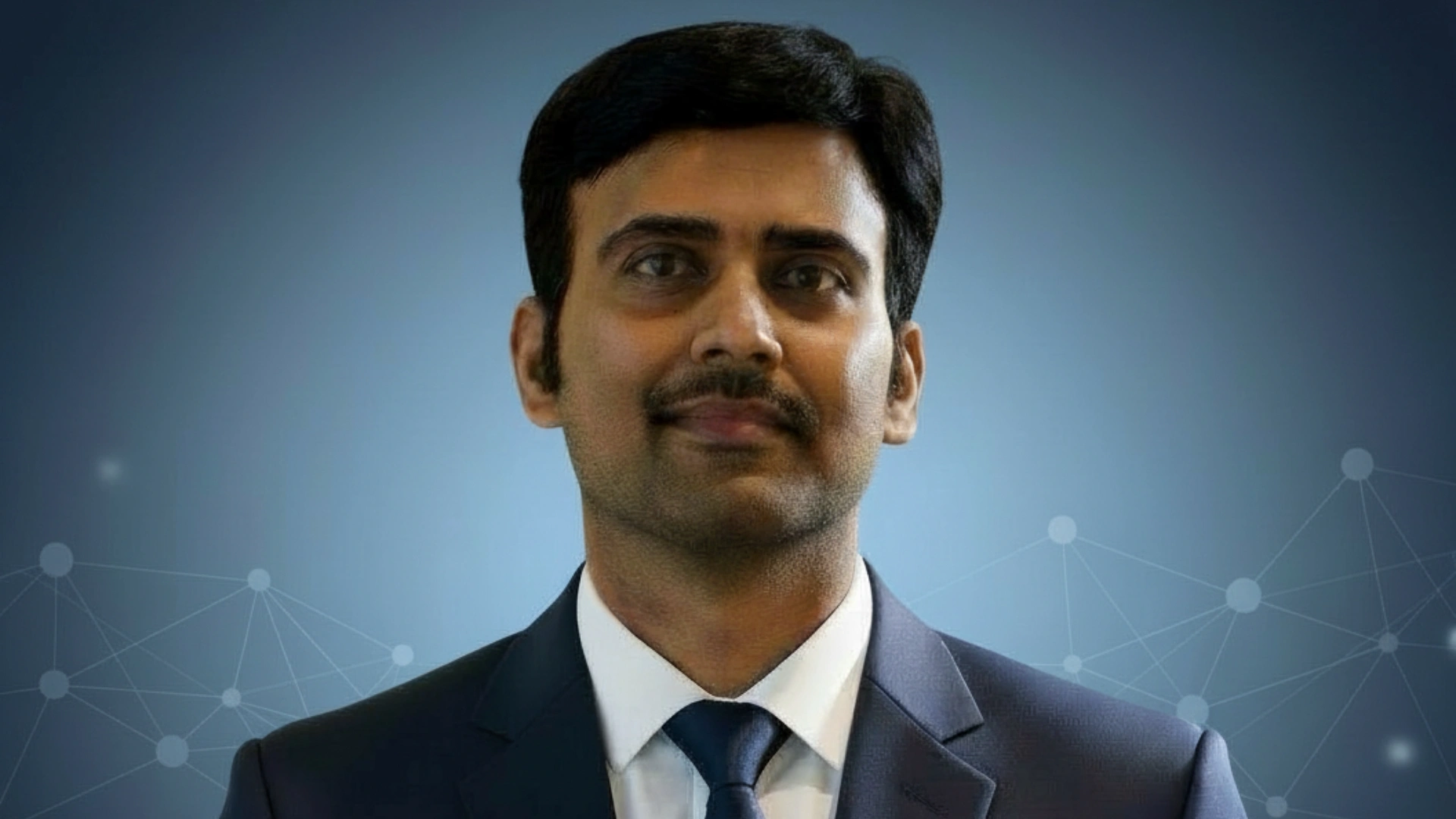
“Regulation does not slow innovation anymore; the real risk today is infrastructure that cannot keep up with the speed and volume of financial crime,” says P S L Narasimharao Davuluri, an Associate Principal, Data Engineering at LTIMindtree, where he leads data engineering initiatives supporting Citigroup’s global operations.
In an era when a single global bank can process billions of dollars in cross-border flows in a day, the fragility lies in the pipes, not just the policies. P S L Narasimharao Davuluri’s world is comprised of data platforms that ingest more than 100 TB of regulatory data daily, sanctions screening engines that process 70 million transactions in 24 hours, and real-time compliance monitors that must identify anomalies in milliseconds rather than overnight. It is a battleground that remains largely invisible to retail customers, yet it underpins their ability to move money, clear trades, and tap credit without friction.
From Legacy Batch To Real-Time Compliance
At the center of Narasimharao Davuluri’s work is a move from overnight batch jobs to real-time streaming architectures for regulatory monitoring. Traditional compliance systems would ingest a day’s worth of transactions, apply rules, and generate alerts long after the fact. That model is increasingly misaligned with sanctions regimes that can change with little notice and regulatory expectations that banks prevent, rather than merely report, suspect transactions.
Davuluri has helped spearhead architectures that pivot to event-streaming technologies such as Apache Kafka, shifting screening from hours to milliseconds and enabling what he describes as “proactive compliance”—spotting anomalies and potential sanctions breaches as transactions flow, not after they settle. This shift enables sanctions screening platforms to handle tens of millions of daily transactions while maintaining near-constant uptime and reducing false positives, all under the scrutiny of global regulators.
Hybrid ETL As A Competitive Advantage
One of the innovations that Narasimharao Davuluri points to is a “hybrid best-of-breed” ETL (extract, transform, load) architecture combining Ab Initio’s graph-based processing with Talend’s integration flexibility. Instead of committing to a single monolithic tool, the approach matches workloads to the strengths of each platform, enabling a pipeline that processes regulatory transactions daily while cutting false positives in sanctions screening by roughly two-thirds.
In practice, that means Ab Initio can handle batch-oriented heavy lifting, while Talend orchestrates real-time integrations with upstream systems, APIs, and downstream analytics platforms. The result, as colleagues describe, is a fabric of data flows that can be tuned for latency or throughput, depending on regulatory and business needs.

Crucially, this hybrid model has enabled automation of data quality and governance at scale. Davuluri has been associated with frameworks that reduce manual compliance reporting workloads by three-quarters, freeing compliance officers to focus on investigations rather than data wrangling. That, in turn, is reshaping how banks view the role of technologists in their regulatory strategy.
Cloud Migration Without A Safety Net
If hybrid ETL is one pillar, large-scale cloud migration is another. Citibank’s multi-year, roughly $50 million cloud transformation project, in which Davuluri has played a central technical role, illustrates the stakes. The goal is to migrate legacy on-premises data warehouses and regulatory platforms to AWS and Snowflake, while maintaining strict compliance with GDPR, CCPA, and OFAC rules.
The technical constraint is ruthless. To challenge this, Davuluri’s team has implemented zero-downtime migration strategies that rely on real-time data synchronisation, dual-running environments, and carefully orchestrated fallback procedures. The complexity is heightened by the sensitivity of the data, which includes regulated financial records that must remain auditable and protected across multiple jurisdictions.
The payoff has been tangible. Cloud-native architectures, optimized for elastic compute and storage, have enabled performance improvements of up to 60% while generating more than $2.5 million in annual cost savings, according to internal estimates. Those gains come not just from cheaper infrastructure, but from optimisation techniques such as Snowflake workload tuning, tiered storage, and intelligent resource scheduling.
The Economics Of Compliance Technology
Compliance technology has shifted from being a pure cost center to a potential source of competitive advantage. Institutions that can screen transactions more quickly and accurately face fewer operational bottlenecks, lower investigation costs, and reduced regulatory penalties. They can also bring new products to market more rapidly because they have confidence that compliance controls will scale.
Davuluri frames the economics starkly. “If you treat compliance platforms as sunk cost, you will always be playing defence,” he argues. “When you architect them as shared, reusable data platforms, your compliance spend becomes a foundation for analytics, product innovation, and better customer experience.”
Leadership At An Engineering Scale
Technology alone does not deliver these outcomes. Davuluri’s remit encompasses leadership of over 75 engineers, solution architects, and technical specialists, spread across multiple regions and vendors. The organisational challenge is to maintain a coherent architecture and set of best practices when teams are distributed.
Davuluri’s has responded by institutionalizing patterns: reference architectures for AWS migrations, standardized approaches to hybrid ETL, and training programs that bring engineers up to speed on modern data stack technologies, such as Snowflake, Kafka, PySpark, and Snowpark. Internal workshops have focused on issues such as cost optimization, data governance, and resilience engineering, aiming to replicate best practices across projects.
That kind of leadership, colleagues suggest, has helped Citigroup turn isolated successes into repeatable playbooks. When a new regulatory requirement emerges, teams can adapt existing patterns rather than having to improvise from scratch. Over time, that reduces project risk and shortens delivery cycles.
Nigeria And The Global Compliance Frontier
For readers in Nigeria and across Africa, the issues at stake may feel distant, framed by US or European regulatory acronyms. Yet, Nigerian banks and payment companies face similar pressures, including cross-border flows, evolving anti-money laundering rules, and the need to integrate with global financial networks. As more institutions adopt cloud platforms and modern data stacks, the questions confronting Citigroup’s engineers today will increasingly become theirs as well.
The work of high-performance architects in global banks offers a glimpse of the future for emerging markets. The same patterns could help African institutions leapfrog legacy bottlenecks. The challenge will be to adapt these approaches to local regulatory regimes, infrastructure constraints, and talent pools.
Closing Reflections From The Architect
Looking ahead to the rest of the decade, Narasimharao Davuluri sees the next wave of change coming from the convergence of AI with real-time data platforms. “By 2030, compliance will be less about static rules and more about adaptive models that learn from patterns of behaviour,” he predicts. That shift, however, will only be viable if the underlying data infrastructure is robust enough to support explainable, auditable AI.
He remains wary of hype, emphasising that foundational work on architecture, governance, and cost discipline must come first. “High-performance systems are not just about speed,” he reflects. “They are about trust—trust that the platform will be available, that the data is accurate, that the decisions it makes can be explained.” In an industry where billions of transactions hinge on that trust every day, the quiet reinvention of compliance technology may be one of the most consequential engineering stories of the age.

