 Follow Us on Google News
 Follow Us on Google Discover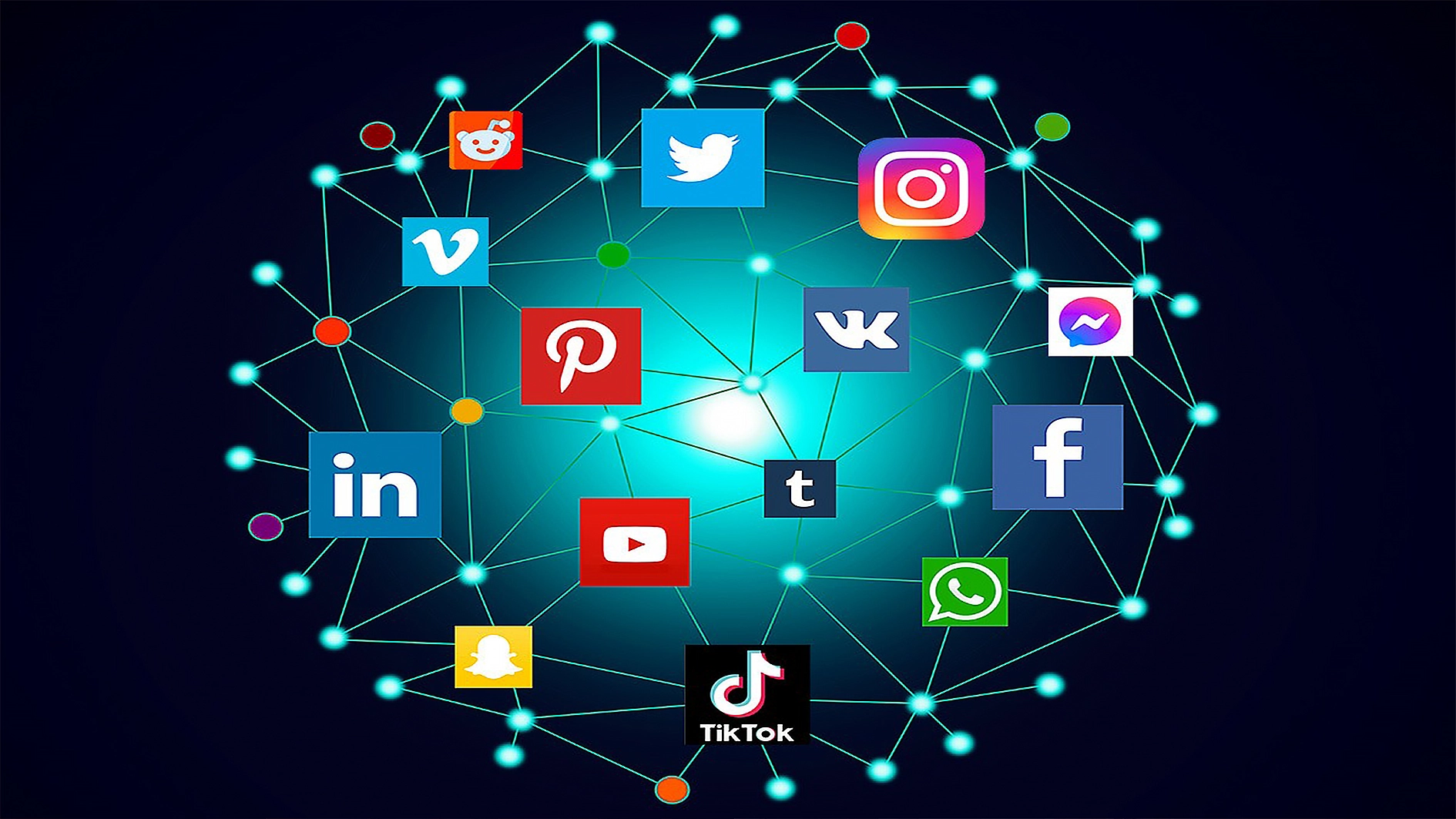
Despite abuses, Nigerian university students are making the most of global opportunities via social networking. Stakeholders, however, warned them to tread cautiously, KINGSLEY JEREMIAH reports.
In the digital age, where opportunity is increasingly mediated by connectivity, the success stories of university students who have leveraged social networking provide a compelling lens through growing importance amidst challenges that many could link to social networking. Across Nigerian university campuses and beyond, students are no longer confined to lecture halls and physical networks; instead, they are navigating global ecosystems of knowledge, mentorship, and opportunity from their mobile devices.
The story of Jennifer Obiorah, who landed at SOAS University of London through the power of social networking, demonstrates the strategic influence of digital platforms. Obiorah was constantly on LinkedIn and Twitter, not just to cure boredom but to seek transformative opportunities.
“Through the platforms, I accessed scholarship information, global networks and mentorship opportunities that would otherwise have been out of reach,” she notes.
According to her, these interactions directly contributed to her academic breakthrough, culminating in her admission and graduation with a distinction in Economics.
Beyond academia, Obiorah added that “what began as online visibility and engagement evolved into tangible outcomes, grants, fellowships, and international recognition” particularly through her social enterprise, TeamUpcyclers, which now supports vulnerable communities.

The African Union reports that the continent is home to over 400 million young people aged between 15 and 35, making it the youngest continent globally and a demography that is driving internet growth. In Nigeria, internet adoption has surged dramatically, with over 148 million active subscribers and penetration exceeding 53 per cent by early 2026 compared to only 0.06 per cent in 2000. According to DataReportal, the country had 38.7 million social media users as of January 2025, with users spending an average of more than three hours daily on these platforms. In Monetary terms, the sector, which barely had any significant economic contribution decades ago, now accounts for N2.508 trillion in terms of financial value contribution to the nation’s gross domestic product (GDP) as of 2023, according to the Nigerian Communications Commission (NCC).
Earlier this year, MTN and Airtel alone recorded total revenue of N6.8 trillion in 2025. The NCC this week said Nigerians consumed 4.06 million terabytes of data, translating to N3.3 trillion between January and March this year.
While at Covenant University, Irene David Arinze, now founder of Lida Network, a multimedia platform, built a life after school as an information and communications engineering student. Reflecting on her early career strategy, Arinze said: “It is essential to reach out to individuals and organisations you wish to work with even before you graduate.”
She explained that during her National Youth Service Corps (NYSC), she used social media platforms, particularly Instagram, alongside cold emails, to connect with organisations. “I sent out cold emails and used Instagram to my career advantage. Reaching out to companies, I was accepted to volunteer remotely,” she said.
According to Arinze, this exposure allowed her to learn workplace culture and teamwork before securing her first paid role, effectively giving her a head start in a competitive labour market.
At the undergraduate level, Kizito Valentina Destiny, who is studying Civil Engineering at the University of Abuja, curates her academic journey on platforms like Twitter and LinkedIn, stressing, “As a student, one major advantage is that they give me access to educational content, internships, scholarship opportunities, and online courses.”
She further notes the immediacy of information flow as she gets information easily, and people share useful opportunities regularly, even via direct messages. According to her, this access translated into real outcomes, including securing an internship and completing a free Google digital marketing course.
“When your feed is tailored to your niche, you gain insights on how to develop yourself as a student,” she adds.
For students in technical disciplines, social networking often fills gaps left by formal education. Bola Ajibade, a Computer Science student at the University of Ilorin, offers a practical example. As an IT student, she augments what she can’t learn in school with social networking.
In school, she noted that the focus is mostly theoretical, but platforms such as Instagram, LinkedIn, and YouTube have become essential learning tools. “Instagram helps me get ideas and follow creators in my field. LinkedIn is great for showcasing your work and connecting professionally. You can even get jobs there,” she said. Her experience shows how digital platforms are redefining the boundaries of classroom learning.
Emeka Ifeosome, a medicine and surgery student at the University of Delta in Agbor, emphasises the collaborative benefits of digital engagement, stating that: “I join academic groups and learn new skills. Overall, they make learning more flexible and interactive,” he explains.
Ifeosome also points to the motivational dimension of social media: “I get ideas from peers across Nigeria and around the world… this is very encouraging.” According to him, exposure to global perspectives helps him navigate the pressures of medical training and strive for excellence.
Similarly, Chukwuemeka Samuel, a 300-level Nursing student at the University of Delta, describes social networking as both an academic and emotional support system, adding that he uses WhatsApp, TikTok, and YouTube to relax, stay informed, and keep in touch with family and friends.”
Samuel adds that these platforms also support research and learning, noting that “at its core, social media is about connection… it breaks barriers and allows people to connect in different ways.”
Even platforms often dismissed as purely recreational are proving valuable for learning. Abu Gandi, a student at Base University in Abuja, credits TikTok with expanding his knowledge base.
“With the help of TikTok, I have learnt so many things that weren’t taught in class,” he explains. He adds that the platform has improved his communication skills: “TikTok has helped me in expanding my English vocabulary and awareness.” His experience shows the evolving role of informal digital spaces in education.
Jerome Bobo, a law student at Veritas University in Bwari, Abuja, stressed the collaborative entrepreneurial potential of social networking, disclosing that “social media like LinkedIn,
Facebook and Twitter help students connect from different institutions and carry out academic assignments.” Bobo further emphasises its economic dimension: “It even helps me to promote my small businesses.” Bobo customised football jerseys for students like him.
Social Media expert at Kaduna Electric, Munierah Tahir, argued that social networking translates into significant opportunities for university students, noting that: “Social networking offers university students opportunities to build professional connections, access diverse learning resources, collaborate with peers, and showcase their personal brand.”
She, however, advised students to be intentional, as she cautioned them to verify information, protect personal data, and think long-term about their digital footprint.
The Head of Corporate Communications at Mainstream Energy Solutions, Olugbenga Adebola, described social networking as a powerful but double-edged tool whose impact depends largely on how it is used by individuals and society.
Adebola likened social media to a gun, noting that while it is fundamentally designed for connectivity, professional development, and social networking, it can also be misused for harmful purposes.
He explained that the original intent of digital platforms was to enhance communication, build professional networks, and support social interaction, particularly among young people and professionals.
However, Adebola observed that the use of social media has evolved significantly over the past decade, particularly among young users. He noted that the modern concept of “influencers” has changed the meaning of influence itself. “Ten years ago, there was nothing like ‘influencers’ in the way we know them today. Influence originally meant the ability to affect decisions positively,” he said, suggesting that the term has now expanded into areas that are not always constructive.
To illustrate the power and speed of digital mobilisation, Adebola referenced a recent incident involving an online personality known as “Abuja landlord,” who allegedly posted on social media around 4 a.m., calling on people to gather at certain locations for free fuel. He said the post led to massive queues within a short time, demonstrating how quickly information spreads and influences behaviour in the digital age.
While acknowledging the benefits of social networking, Adebola stressed that it remains a critical tool for networking, skill acquisition, and professional advancement, including access to online courses and emerging technologies such as artificial intelligence for university students. However, he warned that the same platforms can be exploited for criminal activities, including scams and situations that may expose individuals to kidnapping or other dangers.
He further pointed out that social media has become a major tool for mass mobilisation across the world, referencing coordinated protests in parts of East Africa and even the United Kingdom, where online platforms have been used to organise large gatherings that sometimes raise security concerns.
With Africa’s youth population estimated to be approaching 60 to 65 per cent, Adebola said the implications of social media use are particularly significant for the continent. He emphasised the need for guidance rather than censorship, arguing that platforms should be directed towards productivity, education, and innovation instead of harmful activities.
A senior lecturer at the University of Nigeria, Nsukka, Dr Giver Celestine, noted that social networking facilitates collaborative learning and global research access for students, adding, however, that to mitigate risks like misinformation or privacy breaches, students must curate professional digital footprints and prioritise academic networking over passive scrolling. “Balancing virtual engagement with critical media literacy ensures these tools remain assets rather than distractions,” he said.
Social networking, when used intentionally, is no longer a distraction from university education but an extension of it. From securing scholarships and internships to building careers and fostering innovation, students across Nigeria are demonstrating that digital platforms can serve as powerful engines of transformation. The challenge, as both practitioners and scholars emphasise, lies not in the technology itself but in how effectively it is used.
Despite the opportunities, excessive use of social networking can lead to distraction, reduced productivity and addiction. Risks such as misinformation, cyber fraud, privacy breaches and exposure to harmful content remain significant. Social platforms can also distort values through unhealthy comparisons and the rise of superficial “influencer” culture.
To maximise impact, users must be intentional, as stakeholders noted that curating content around academic or professional goals, verifying information, protecting personal data and maintaining a credible digital footprint are essential. Balancing online engagement with offline priorities, developing media literacy and leveraging platforms for networking, learning and innovation can transform social networking into a strategic asset rather than a liability.

