 Follow Us on Google News



 Follow Us on Google Discover
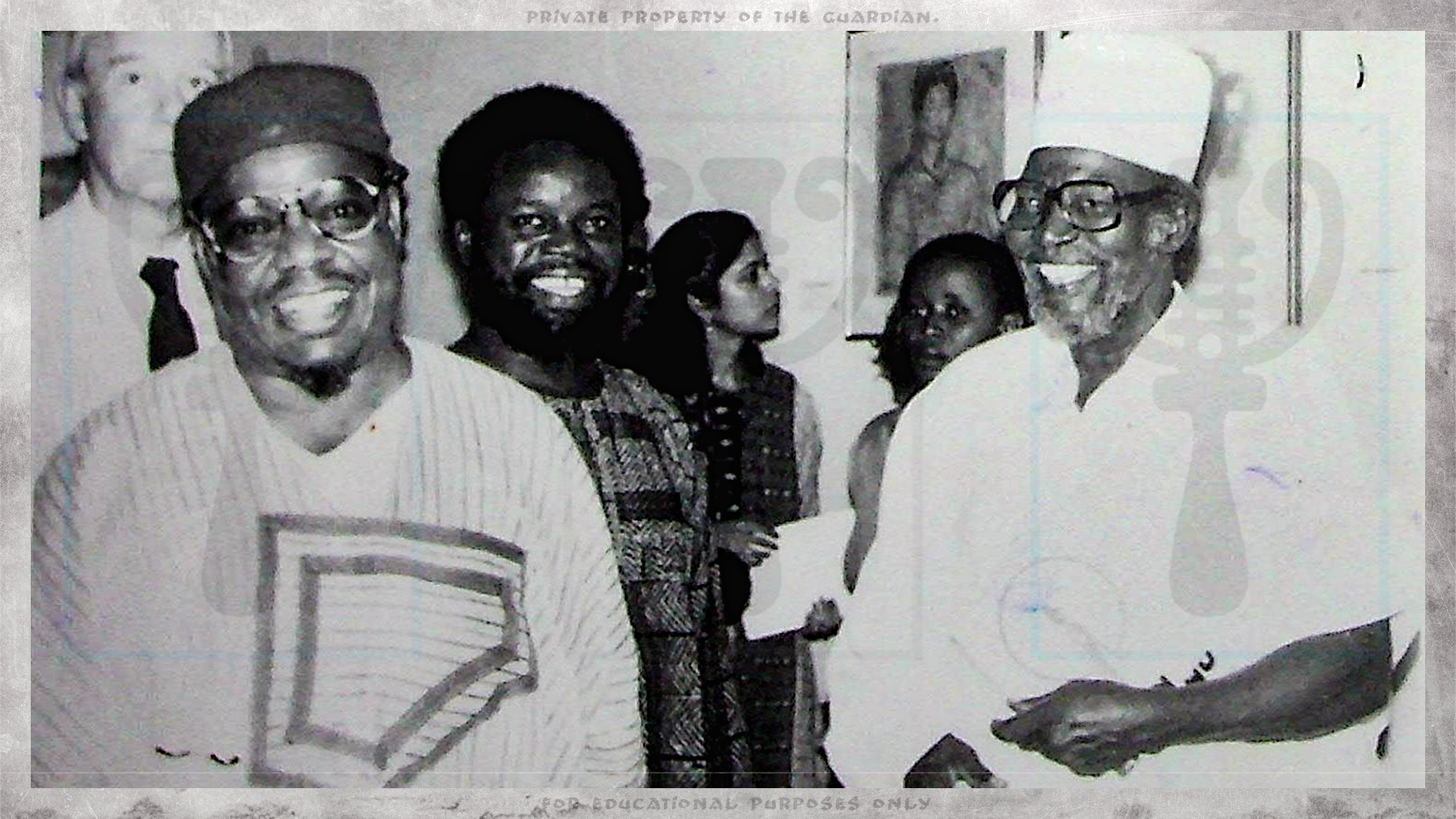
This week in the archive, we revisit the life and work of Ben Enwonwu, MBE, a pioneer of modern African art whose paintings and sculptures brought Nigerian cultural traditions to international audiences.
Long before Nigeria gained independence in 1960, Enwonwu was developing an approach that combined his knowledge of Igbo sculpture with techniques he studied in Nigeria and Britain.
His work addressed cultural identity, colonial attitudes and the place of African artists in the wider art world. Working across wood, bronze, watercolour and oil, he challenged expectations that African artists should remain confined to traditional forms.
An artistic foundation at home
Born in Onitsha in 1917, Enwonwu grew up with a family connection to sculpture. His father carved objects including staffs of office, stools and decorative doors.
Enwonwu inherited his father’s tools and showed an early ability as a sculptor. That grounding in traditional craftsmanship helped shape his later work.
He studied under art teacher Kenneth C. Murray in Nigeria before continuing his education in Britain, where he earned a first-class diploma in fine art at the Slade School of Fine Art.
His formal training expanded his practice, but his work retained connections to Nigerian cultural traditions. Dance, movement and the human figure became recurring subjects.
Rather than reproduce traditional forms unchanged, Enwonwu interpreted them through his own artistic language. His paintings and sculptures brought indigenous influences into conversation with the techniques he had learnt abroad.
The artist who sculpted the Queen
In 1956, Queen Elizabeth II visited colonial Nigeria. During that visit, Enwonwu received a commission to create a bronze sculpture of her.
He became the first African artist commissioned to produce an official portrait sculpture of the British monarch.
The Queen subsequently sat for him in London. Completed in 1957, the sculpture was exhibited that November at the Royal Society of British Artists exhibition in London.
The commission brought Enwonwu international attention, but his interpretation also attracted criticism. Some observers objected to features they considered an “Africanisation” of the Queen.
The episode reflected the tensions surrounding his career. He worked within European art institutions while challenging assumptions about the abilities and ambitions of African artists.
His portrait sculpture of Queen Elizabeth II remains an important example of an African artist interpreting a prominent European subject during the colonial period.
Anyanwu and an emerging African identity
Among Enwonwu’s best-known sculptures is Anyanwu, created for the National Museum in Lagos in the 1950s.
The bronze work depicts an elongated female figure reaching upwards. Its form and movement have been interpreted in relation to African independence, cultural confidence and renewal.
Created as Nigeria approached independence, the sculpture expressed ideas that ran through much of Enwonwu’s practice: identity, dignity and the right of African artists to represent their own experiences.
A version of Anyanwu was presented to the United Nations by Nigeria in 1966, placing his work within an international institution.
The sculpture also shows his ability to combine the human figure with a sense of movement, a quality visible across his paintings of dancers and other subjects.
The rediscovery of Tutu
Enwonwu’s portraits of Princess Adetutu Ademiluyi, commonly known as Tutu, became some of his most widely recognised paintings.
He painted three versions in 1973 and 1974, during the years following the Nigerian Civil War. The portraits have since been interpreted as images of reconciliation, with an Igbo artist depicting a Yoruba princess.
One version, long considered missing, was identified in a London home in 2017. Its rediscovery brought renewed attention to Tutu and Enwonwu’s place in modern African art.
The painting sold at Bonhams on 28 February 2018 for £1,208,750.
Often described as Africa’s Mona Lisa, Tutu also drew attention to the task of locating and documenting Enwonwu’s work, some of which had remained in private homes for decades.
A career beyond the famous portraits
Although Tutu, Anyanwu and the royal sculpture remain familiar reference points, Enwonwu’s career extended across exhibitions, teaching and writing.
He exhibited in cities including Lagos, London, Paris, New York and Boston. He also became a professor of fine arts at the University of Ife, now Obafemi Awolowo University, in the 1970s.
His work engaged with Négritude, the cultural movement that asserted Black identity and challenged colonial ideas about African culture.
In his writing, Enwonwu questioned why European artists could draw on African art while African artists faced criticism for using techniques acquired through European training.
His position was direct: “I do not copy traditional art.”
