 Follow Us on Google News


 Follow Us on Google Discover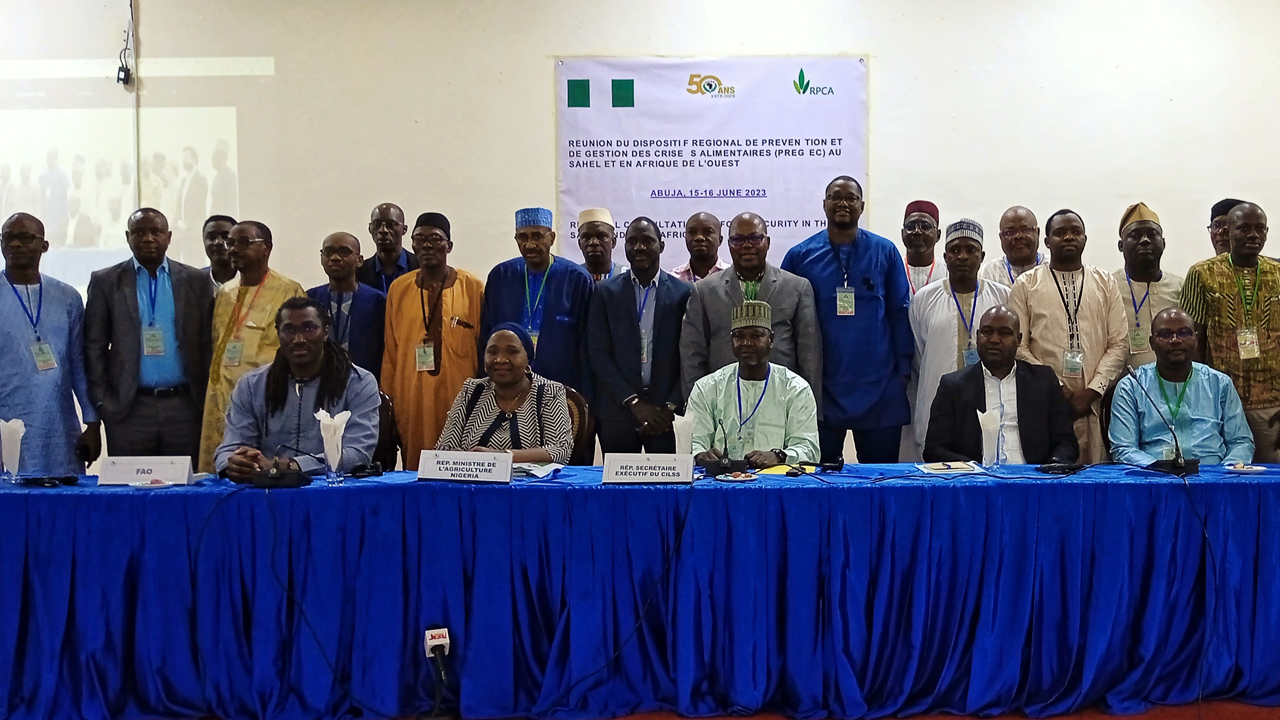

Experts on food crisis management in the Sahel and West Africa, have expressed concern over the deepening impact of conflicts and insecurity on growing food prices.
[ad]
At a meeting of the Regional Food Crisis Prevention and Management Mechanism, (PREGEC), yesterday in Abuja, they lamented that insecurity including conflicts, kidnappings and others, has further worsened factors pushing food unavailability in the region.
Head, Information and and Research Agreement of the Agriculture Hydrology, (AGRHMET), Dr. Abdou Ali, said that information monitoring on food and nutrition security in the West Africa and Sahel region shows that average rainfall is expected and that this portrays positivity because it means there will be no drought.
He notes that even though this year’s farming season’s forecast is good and shows favourable rains for good yields, factors such as insecurity, policy and policy implementation among others in the region, could exacerbate the current hike in the prices of foodstuff.
“The current situation is characterized by high market prices. Last year, we recognise that food production was relatively good last year but still we are facing very stressful situations.
“We are not going to face general drought situations and this will have a good impact on food production in the region but we need to also consider other factors such as insecurity which also has impact on the situation among others,.
[ad]
“However, the most important thing is from the forecast made in the month of April, we are expecting overall to have an average rainfall situation so this has a very good impact, we are not expected to have very dry situations”, he said
Permanent Secretary, Federal Ministry of Agriculture and Rural Development, Dr. Ernest Umakhihe, noted that PREGEC as an instrument of food crisis prevention, provides information on food and nutrition security in West Africa and Sahel regions.

Represented by the Director Special Duties, Fausat Lawal, the permanent secretary said report by the 2022 Cadre Harmonize for Identification of Risk Area and Vulnerable Populations in 21 states, 14.5 million Nigerians fall under the vulnerability population hence, required assistance.
He said “The Federal Government has responded to some of these challenges through several interventions and support.”
Head of Regional and Resilience Team Leader, of the Food and Agriculture Organization, (FAO), West Africa, Kouacou Koffy, said the FAO is putting it’s efforts towards finding viable solutions to the myriad problems impacting the prices of food and nutrition deficiency in the region.
According to him, “We are putting our efforts together for us to understand the root causes such as the climate change, conflicts Ukraine/Russia crisis on our region, the climate change, prices of fertilizer and others impacting on the prices of food so all these is a lot of challenge.
“We are trying to support all the governments to boost the production, we need now to boost the production on the countries in term of rice, cereals.
“This is our big challenge, yes we are doing a lot but the challenge also is there and that’s why I invite all the partners to join together to put our efforts and allow our population to first of all live in peace having food to eat.”
[ad]

