 Follow Us on Google News
 Follow Us on Google Discover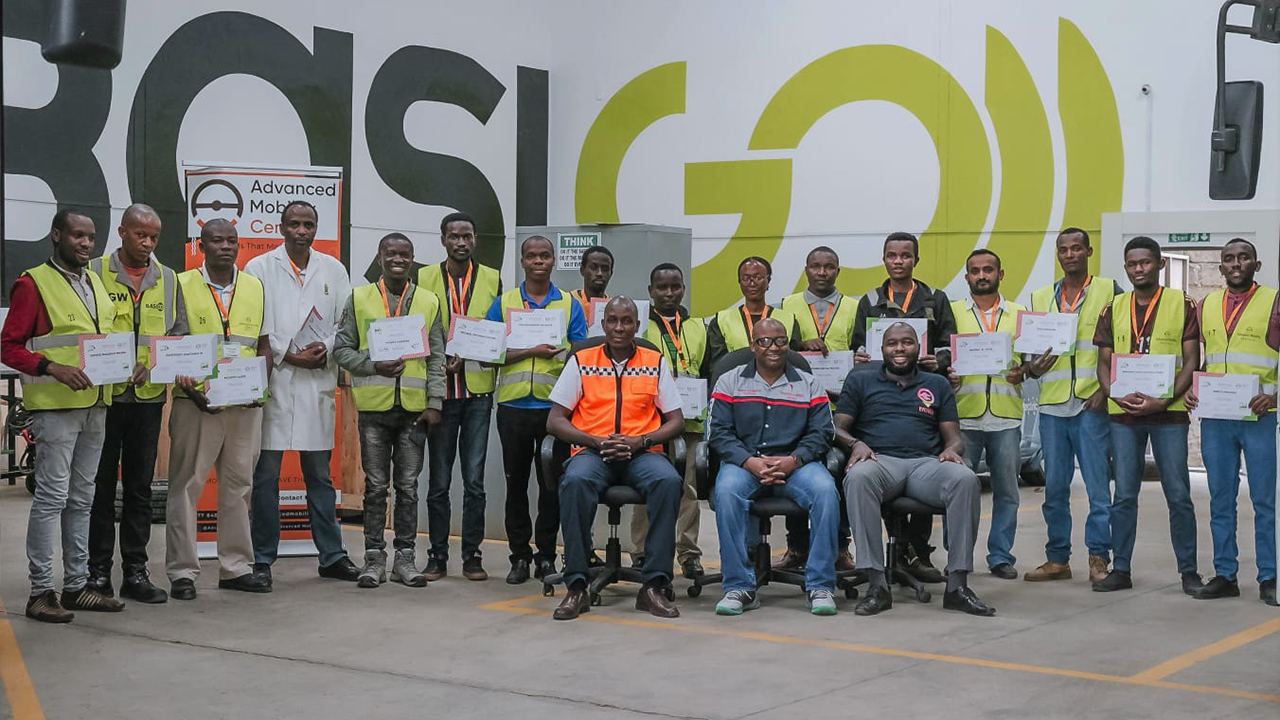

Experts in the electric vehicles (EV) space in Africa have advocated the need for the continent to possess a curriculum for the development of electric mobility experts.
[ad]
Besides, they said Africa has a shortage of qualified EV technicians, who know how to repair and fix issues within the space. The experts spoke at a webinar organised by AfricaNEV on the electric vehicle repair and maintenance ecosystem.
AfricaNEV is a continental non-profit that aims to accelerate the adoption of e-mobility in Africa through policy advocacy, awareness creation, skills development and linking industry players in the e-mobility value chain.
Chief Executive Officer and Master Technician, Truckteck and General Auto Services, Raymond Seewera, said there is a need for the development of a curriculum for the qualification of engineers for the repairs of EVs in the continent.
Seewera said the continent needs to come up with custom-made training for local technicians, stating that the curriculum used in Africa is outdated and needs to be changed. He said all governments of the continent need to play a role in the development of hybrid and electric vehicles.
According to him, continuous development and training for technicians from traditional cars to electric vehicles are needed as the evolution is not something that can be achieved in three years.
[ad]
Seewera said some of the African governments are already interested in it but need more awareness to adopt the totality of EVs. General Manager, Equator Mobility, Kenya’s first commercial electric vehicle provider, Alexander Mwanzo, said with access to the right checks for e-mobility, Africans would be able to fix electric vehicles in five years.
Mwanzo said the African continent is open to opportunities that abound within electric mobility; hence the region needs to develop a checklist of how to go about it.

He said there is a need for Africa to have assembling plants for spare parts of EVs, stating that the role of the government is to get the right policy in place for the provision of electric mobility.
The Mechanic at autoclinicng, ‘Tunde Onakoya, said the growth of the electric vehicle market in Africa is being driven by several factors, including government policies to promote clean transportation, increasing environmental awareness, and falling battery prices.
However, he said there are several challenges that need to be addressed to create a sustainable EV repair and maintenance ecosystem in Africa. Onakoya, who doubles as the moderator, said one of the biggest challenges is the sourcing and availability of spare parts. He said many of the components used in electric vehicles are not yet manufactured in Africa, which means that they need to be imported. This, he said can be a major obstacle for small businesses and independent mechanics, which may not have the resources to import spare parts.
Another challenge, according to him, is the qualification of repair and maintenance technicians. “Electric vehicles are more complex than gasoline-powered vehicles and require specialised training to repair and maintain. There is currently a shortage of qualified EV technicians in Africa, which is a major barrier to the growth of the EV market,” he added.
Besides, he said the Right to Repair movement is gaining momentum in Africa and could have a significant impact on the EV repair ecosystem. According to him, the Right to Repair movement advocates for consumers to have the right to repair their own devices, and to have access to spare parts and repair information. He said this could help to reduce the cost of EV repairs and maintenance and make it easier for small businesses and independent mechanics to compete.
On his part, the Chief Executive Officer, Thinkbikes Limited, Tolulope Olukokun, said no curriculum is fit for all likewise there is no training that will have it all for technicians, stating that mechanics could be the same but region differs. Hence, he advocated for a different curriculum for different regions.
[ad]

