 Follow Us on Google News
 Follow Us on Google Discover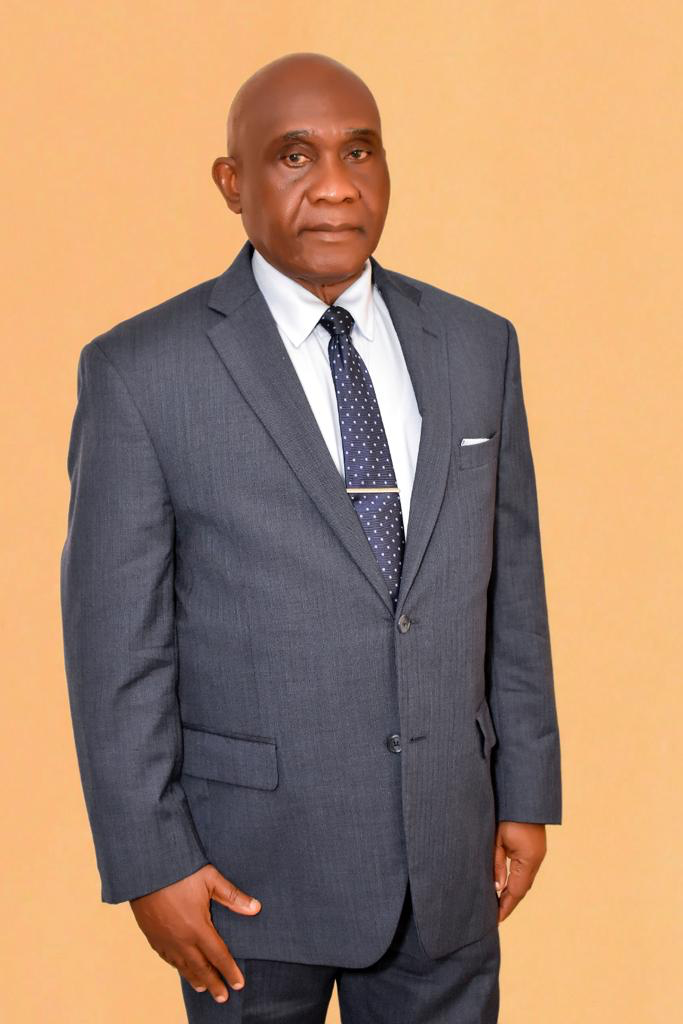
At 70, I’ve an unwavering commitment to excellence, upright towards humanity” – Osanakpo
In this interview with Dr. Theo Chike Osanakpo SAN and a Director, Kates Associates Industries Limited, he speaks about his personal life experiences and the big lessons on things that shaped his life and trajectory to the attainment of 70 years today 1st October 2023 to the glory of GOD. For him, it has been a quite befitting life of fulfillment and thanksgiving to God.
Kindly tell us about yourself, personal background, and how you feel turning 70 years old?
I was born into the family of Mr. and Mrs. Louis Osanakpo on the 1st October 1953 in Lagos exactly seven years before Nigeria attained her Independence from the British Government on the 1st day of October 1960. Although, born in Lagos, I hail from the Umuolodu quarters of Ndoni in the present-day Ogba/Egbema/Ndoni Local Government Area, Rivers State, Nigeria. My father of blessed memory Mr. Louis Chukwujike Osanakpo was an industrialist while my mother Mrs. Kate Onyeagwazie Osanakpo trained as a professional hairdresser and cosmetologist in London in the late 1950s. Both parents were co-founders of Kates Beauty Products Limited is a family Company that is presently known as Kates Associated Industries Limited, one of the leading manufacturers of hygiene care products in Nigeria. I recall in January 1958 when my parents were about to leave Onitsha for London, my mother told me not to cry. Incidentally, as she was about to leave the house with my father she began to cry. I guess what may have weighed in her mind then was how I would cope without her presence. However, I took instant relief in Ikem my elder brother, with whom I share very warm fraternal love, friendship, and relationship to date.
I commenced my nursery school education at the nursery wing of Holy Trinity Primary School Onitsha in January 1958. Upon completion of my nursery. I commenced my primary school in 1959 which I completed in 1965. Onitsha. On January 20, 1966, I commenced my secondary school education at Saint Teresa’s College Nsukka. My father at that time was an Assistant Commissioner of Internal Revenue in the then Eastern Nigerian
Government. My mother on the other hand was visibly one of the foremost hairdressers in Enugu at the time being a London-trained hairdresser and her saloon was highly patronized by highly placed women of note and society women. In January 1967, I was promoted to Class two. My class two was billed to end in December 1967 but was interrupted by the Nigerian Civil War.
My parents of blessed memory were Christians of the Catholic denomination. Consequently, I was baptized as a child on the 29th October 1953 at Saint Domine’s Catholic Church, Yaba Lagos twenty eight days after my birth. Suffices to state that my childhood embrace of the Catholic faith helped me immensely to develop the core values of do’s (what is right) and don’ts (what is wrong) in the dynamics of my life journey to follow my conscience and not the crowd in upholding what is good and distancing myself from bad behaviour or conduct.
Upon completion of secondary school in 1972, I proceeded to Higher School at Saint Patrick’s College Asaba where I did Physics, Chemistry, Biology, and General Paper in my first year of Higher School otherwise known as Lower Six to study medicine at the University. Incidentally, I did not pass any concessional examination as it was called at the time to study medicine at the two or three universities I applied to. The resultant effect of this dilemma meant the commencement of my second year of my Higher School in September 1973 otherwise known as Upper Six to end in June 1974.
However, I was faced with immense challenges whether to proceed with Physics, Chemistry, Biology, and General Paper in my second year of my HSC or otherwise. At that stage, I knew for a fact that my Arts subjects were stronger than my science subjects. Therefore, I made a strategic decision through the grace of GOD to do History, Economics, Government, and General Paper in the second year of my Higher School. However, an English-born coordinator of Higher School at Saint Patrick’s College, Asaba, one Mr Roger Haynes bluntly refused to accede to my request to change from Science subjects to Arts subjects in the second year of my Higher School class.
I must say that I was resolute to effect change from Science subjects to Arts subjects. Accordingly, I bought necessary books for the Arts subjects and copied relevant notes from my classmates in History, Economics, and Government. The day that I received a conditional nod from Mr Roger Haynes was the last date for the registration of the subjects that I would sit for in my Higher School Certificate examination.
The conditional nod from him was that I needed to repeat after him three times. ‘I must fail Higher School that if I pass he would give me £20 (Twenty Pounds). Upon recitation of his wish, he registered me to take History, Economics, Government, and General Paper for my Higher School examination.
The good story was that despite his threats and admonition I made the second best result in my Higher School Class. However, he was not in a position to redeem his promise to give me £20 if I passed because he was no longer a staff of the college when my results came out.
Upon successful completion of my Post Secondary School, I was admitted to study law in October 1974 at the University of Lagos which I completed in June 1977. Thereafter, I went to Nigerian Law School Lagos in 1977 which I completed in 1978, and was called to the Nigerian Bar as Barrister and Solicitor of the Supreme Court of Nigeria also in the same year. Thereafter, I proceeded to the National Youth Service. Upon completion of my NYSC, I had a stint of legal practice for One year in the Chambers of C.A.C. Akparanta who was one time Attorney General of Rivers State. Thereafter, I embarked on postgraduate legal studies to do a master’s Degree in Comparative law at Southern Methodist University Dallas Texas, United States of America which I accomplished in mid-1981 with excellent grades in International Economic Development Law. In the course of my MCL programme, I developed the zeal to do research work that would culminate in a Ph.D. (Doctor of Philosophy) degree.
I commenced my Ph.D. research degree work in September 1981 under the supervision of Professor Dominic Lasok an outstanding legal jurist with an academic LLD degree, Queens Counsel, and the Dean of the Faculty of Law, University of Exeter at the time which I accomplished on July 9, 1984.
During my legal practice, I developed a keen interest in the attainment of the coveted rank of Senior Advocate of Nigeria. I wish to also place on record that sometime in 1992 at the instance of the then Chief Judge of Rivers State, Honourable Justice Donald Graham Douglas of blessed memory notified me of his disposition to appoint me a Judge of the High Court of Rivers State. I told him during the interface that I was not emotionally and psychologically ready for the appointment. His Lordship had to interrogate me further based on my response. It was at this juncture that I opened up and told him that my professional objective was to attain the esteemed coveted rank of Senior Advocate of Nigeria. Incidentally, the then Chief Judge of Rivers State said something instructive to me which was simply ‘put it in writing in case you change your mind about the information of my successor.’ To the glory of GOD, I did not change my mind, and I was elevated to the rank of Senior Advocate of Nigeria in 1997 when I was 43 years plus but under 44 years old.
I want to utilise this singular opportunity to immensely give glory to GOD for the attainment of 70 years in good health.
What are your views about the legal profession in present-day Nigeria vis-à-vis global best practice?
The legal profession is regulated by the Rules of Professional Conduct which sets out the minimum standard of conduct and behaviour required in the profession. Accordingly, the Rules of Professional Conduct demand honest conduct in the practice of the legal profession because a lawyer is an office of the Court and a Minister in the temple of justice. It implies that the lawyer’s duty to the client is subordinate to the duty owed to the Court. Lawyers are engaged to espouse the case of their clients. However, within the rules regulating ethical conduct, lawyers owe a duty to their clients but owe a higher duty to the cause of justice. The lawyer is equally obligated by the Rules to draw the attention of the Judge to the law, which is relevant to the facts or issues in contention in the interest of justice. These rules of conduct are consistent with global best practices and more so in common law jurisdictions in the world.
It is equally necessary to state at this stage that members of the legal profession operate within the Nigerian environs and hence are not insulated from daunting challenges that undermine the Nigerian system. Therefore, members of the legal profession are neither devoid nor shielded from untoward conduct. However, proven cases of misconduct have consequences for erring members of the Profession, hence possibly acting as a restraint towards untoward conduct.
What is your advice to upcoming lawyers in Nigeria and what should they do to see themselves at the top of their careers?
My advice to young lawyers is to inform them that Rome was not built in a day and that the bottom of the profession is crowded but there is space at the top. Therefore, there is a need to develop the requisite capacity, competence, and strength of character to elicit confidence and trust from potential clients for engagement to render legal service. Succinctly put, young lawyers need to develop relevant skills, and useful such as Information Technology, Mediation Conciliation, Arbitration, and the acquisition of new knowledge that are in dire need in the contemporary Nigerian echo system. Furthermore, I enjoin Young Lawyers to embrace the Mentoring Programme newly introduced by the Body of Benchers to avail themselves of requisite opportunities and available pathways in the legal profession.
At 70, what do you want to be remembered for?
It is difficult for me to say what I want to be remembered for because I cannot be a Judge in my cause. However, I am mindful of ‘Vox Populi Vox Dei’. Consequently, I am told by persons who know me closely that I exhibit contentment, simplicity, honesty, and humility, strive to uphold what is right and abhor what is predicated on contraptions, and am willing to render service for the betterment of mankind in my little way.
One of my aspirations at 70 is to establish a foundation that is geared toward the promotion of the common good in a sustainable and enduring manner. My other aspiration is to be a player in the solid mineral business to contribute my humble bit towards the national development.
What do you think are the challenges of democratic governance in Nigeria?
The foundation of democratic governance is rooted in the Sovereign Will of the People and not otherwise. Therefore, for democratic governance to be sustainable and enduring, it is imperative to embrace the mantra – one person one vote. The resultant effect is an affirmative social contract between the elected and the people, hence
the former will be obligated to genuinely work in the interest of the people because the elected person owes his or her mandate to the people and not on contraptions or manipulations associated with Nigerian electoral process, hence good governance deficit.
It is noteworthy to state at this juncture that the electoral umpire INEC is strategic towards ensuring that the mantra of one person one vote is sacrosanct. In the event of any visible occurrence in any form that undermines the mantra, the electoral umpire is undoubtedly confronted with an avoidable challenge. Therefore, the electoral body INEC needs to be truly independent in all ramifications. It is based on this premise that Constitutional. Reform of the 1999 Constitution of the Federal Republic of Nigeria As Amended is imperative and will be geared towards the following – INEC needs not to be a party on the side of any person, or political party in any electoral dispute so that justice will be visibly seen to be done by all contesting parties in an election. Accordingly, INEC can only be summoned or called as a witness by any person or party to an election dispute in the election it conducts.
To substantially checkmate abuse of power, rule-of-thumb tendencies arbitrariness, untoward conduct, and selfish interest, the appointment of Chairman and National Commissioners and Secretary of INEC needs to be vested in the Council of State.
What can you say shaped your life and what are the lessons that you have learnt?
Many things shaped my life, however, I would like to highlight key character traits, namely: Contentment – this was implanted in me by my paternal a grandmother who was saddled with the responsibility to bring me up
as a child at the age of four when my parents left for England for further studies in the late 1950’s. Early embrace of profound teachings of Christian faith and fundamental spiritual beliefs that make me realize the dos which are essentially trying to do the right things whenever I am confronted with a challenge hence I strive to be substantially honest in my dealings with others.
Similarly, simplicity from the standpoint that the simpler the better to avoid unnecessary tension and arrogance in society. Strive to keep to my commitments and my words; The big lessons from the things that shaped my life are comprehensively expressed in my Autobiography titled “Memorable Parts of my Life + Trajectory to the attainment of 70 years on 1st October 2023 to the glory of GOD which I seek to itemise some
such as Be yourself; Do not pretend to be who you are not; Do not indulge in falsehood that undermines the truth; It is in pardoning that one is forgiven; Eschew bitterness and unnecessary rivalry for personal good; Without GOD we can do nothing; Be there for others; Avoid unnecessary battles; Light will overcome darkness; Prayer is the key.
What are your views about the 2023 general elections and the tribunal verdict?
Succinctly put, the Presidential election fell below the presentation made by the Chairman and some officers of INEC at different fora within the country and outside the country especially at Chartham House before the 25th February 2023, the date of the general election. Consequently, I adjudged the election as a transparent deficit despite huge resources appropriated more than Three Hundred Billion Naira of tax payers money to INEC.
Concerning the election verdict, I am not seised of the facts of both the Petitioners, Respondents, and Judgment of the Presidential election Tribunal. Consequently, I am not in a position to express an informed legal opinion on the facts and issues on the Tribunal’s verdict save the vexed Constitutional issue of scoring a 25% vote as enshrined in Section 134(1) of the Constitution of the Federal Republic of Nigeria 1999 as Amended. However, from general parlance, an election petition is ‘sui generis’ and the burden of proof of facts weighs heavily on the Petitioner. Therefore, what appears factually correct may be legally incorrect.
Notwithstanding my earlier expressed view, I am inclined to express my opinion concerning S. 134(1) of the Constitution on whether a Candidate seeking the office of the President needs to score 25% of the vote cast in FCT is both a factual and constitutional issue. My response from the visible available facts the declared winner of the Presidential election did not score 25% of the vote cast in FCT. Therefore, my opinion based on a strict interpretation of the Statute or Constitution is that when the word and is used it needs to be construed conjunctively and where the word or is used it needs to be interpreted disjunctively. Consequently, by the enshrined provisions of Section 134(2) of the Constitution the word ‘and’ needs to be interpreted conjunctively and not otherwise. Therefore, any person seeking the office of the President of the country needs to score 25% of the vote cast in FCT to satisfy the enshrined provisions of S. 134(2) of the Constitution hence any interpretation that is at variance with the enshrined provisions of S.134 falls below the required threshold of stipulations of S.134(2), hence improper.

