 Follow Us on Google News
 Follow Us on Google Discover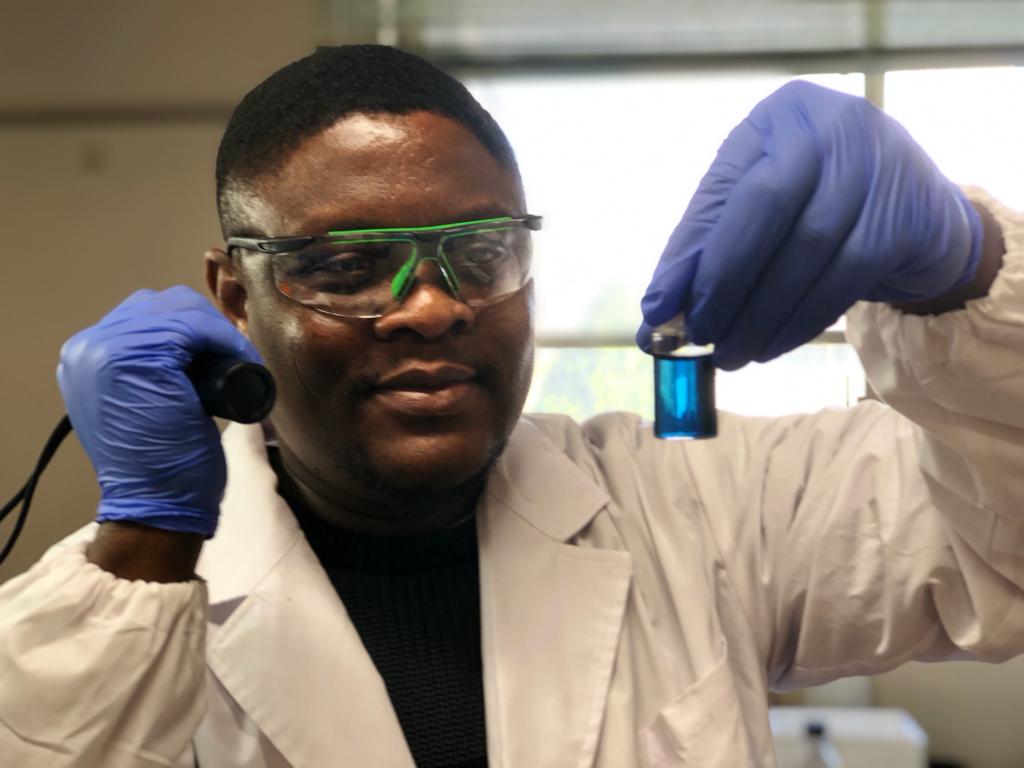
 A Nigerian-born United Kingdom-based (UK) academic at Teesside University, Dr Ojodomo Achadu has led research into the development of solar-powered water purification technologies, which is a ground-breaking innovation poised to revolutionise access to clean water in the developing world.
The technology, which is in collaboration with experts from South Africa and the Democratic Republic of Congo (DRC) could potentially address the global problem of clean water and sanitation and improve the quality of life for millions across Africa.
[ad]
Access to clean water is fundamental to the United Nations’ Sustainable Development Goals (SDGs), yet billions worldwide still struggle with water scarcity or pollution and according to the World Meteorological Association, up to five billion people may face inadequate access to clean water by 2050.
Many African countries, despite their abundant water resources, see millions of citizens consuming contaminated water, adversely impacting their health, and living conditions. Therefore, innovative technologies that could address the most pressing issues with clean water and sanitation are a matter of global importance.
The project has received a £300,000 grant from the UK Royal Society’s International Science Partnerships Fund with global support through a feature article on the BBC. According to the research team, the technology employs nanomaterials; tiny particles that can remove contaminants and pathogens in a single step to purify polluted water.
The system also integrates a follow-up automated detection of pathogens to ensure water safety and the process harnesses the power of nanomaterials and solar energy to purify water efficiently and affordably, particularly benefiting isolated and rural communities that need clean and safe water supplies.
Designed to be sustainable, this water purification technology utilizes free solar power, making it ideal for Africa, where abundant sunlight can be harnessed to easily purify water and this reduces reliance on electrically powered water supply infrastructure and allows local communities to treat water collected from various sources.

Its implications are vast, particularly for African communities grappling with potable water access due to pollution and climate change factors. It is believed that, in Nigeria, for example, this technology could mitigate water scarcity caused by oil pollution in the Niger Delta as well as contamination from flooding and mining activities in other regions of the country.
Achadu expressed his gratitude for the Royal Society’s funding, emphasising the project’s potential to enhance global health and well-being. He underscored the importance of ensuring safe drinking water for all, marking this initiative as a pivotal moment in applying advanced science and nanotechnology to real-world problems.
The research work by the team showcases how scientific innovations can tackle urgent global challenges with impacts, offering a sustainable solution that could transform water access and public health across numerous developing regions globally.
The user-friendly design of the water purification technology aims to empower communities, providing them with access to clean water and improving their quality of life. This initiative not only signifies a remarkable technological advancement but also serves as a beacon of hope for sustainable development in Africa and beyond.
[ad]

