Follow Us on Google News
 Follow Us on Google Discover
In this respect, was the Ogun State Attorney-General ignorant of prevailing laws or derelict in duty? Or, did he do his duty but his learned opinion was ignored by the state governor? Indeed, why did the Amosun government appoint Zhongfu interim zone managers firstly, before the conclusion of its findings on the “tissues of lies” by the “impostor”, and secondly, before seeking clarification from the government of China? The senator further wrote that the Attorney-General of the Federation, and other agencies of the Federal Government, as well as the National Assembly were aware of the dispute. What did these many authorities do (or fail to do) when, despite a court ruling disallowing it, the case went into arbitration outside Nigeria’s shores? All these reveal starkly insufficient collaboration and coordination in state affairs, involving various governments or actors in this federation. It may also be said that the Federal Government, in charge of Foreign Affairs failed in its oversight role over matters of relations between Nigeria and outside interests. Whatever the case, Nigeria, as the parent entity, is now burdened with the problem under an agreement with China to mutually protect each other’s business interests.
Amosun asserts that the dispute was decided in four different courts against Zhongfu International Investment FXE. Besides, there is a March 2017 court ruling that “specifically restrained a reference to arbitration in the special circumstances of the matter being a trade dispute between two Chinese entities – Zhongfu and China Africa – with little or no connection with either Ogun State or the Federal Government.” If this is correct, why did Ogun State and the Federal Government not present these facts in the respective foreign courts of arbitration? Indeed, this case was reportedly decided with the huge cost against Ogun State (Nigeria) in March 2021 in the UK court. In the U.S. court, Nigeria lost too. Was it brought to the notice of these courts that the case before them was, as claimed by Amosun, already decided by a court of competent jurisdiction in Nigeria? Nigeria has embassies in these countries but was it represented in these proceedings? If so, by which sufficiently skilled and experienced persons?
[ad]
The Minister of Foreign Affairs, Ambassador Yusuf Tuggar, said his ministry was “unaware” of the OGFTZ contract. He admonished, therefore, that going forward, sub-national actors like state governments to involve both the Federal Government and the Ministry of Foreign Affairs. Furthermore, such deals should involve persons with the requisite training, skill, and experience.
On the second suggestion, the ambassador is right, but not completely. All the knowledge, skill, and experience in the world will not do unless Nigerian negotiators possess the character to subject personal interest to the higher interest of their fatherland. Alas, too many self-seekers seize and occupy public offices to the eternal detriment of the good of their country. The habit of unilaterally cancelling legally binding contracts for reasons that often defy understanding and common sense is common among government officials. But this bad attitude of ‘contractual impunity’ in Nigeria is alien to other climes. It is therefore considered dishonourable. One unforgettable example of such action is the cancellation in the 1980s by the then Major-General Muhammadu Buhari, as military head of state, of the Lagos metro line initiated by the Chief Lateef Jakande administration. Nigeria paid a very high monetary and reputation price for that commonsense-defying decision.
Arrogance of power, selfishness, and vindictiveness drive such obnoxious behaviour. But while these acts satisfy their small-mindedness, they deny in no small measure, the huge benefits accruable to the people. If the Jakande project had not been killed, the benefits to Lagos State and the extension of the metro line to other parts of the country can only be imagined.
Irrespective of the stand of Amosun on this matter (he says ‘Nigeria should not give Zhongfu International Investment FXE any listening ear as doing so would amount to indulging and, encouraging an unlawful entity without locus standi to appropriate our common patrimony’), as popular wisdom posits, right or wrong in case, it is better to not have a case in the first place. But a case has come now. So, in order to get out of the suit instituted, rightfully or not, by the Chinese company the Federal Government, according to those who know, should adopt a diplomatic approach.
[ad]
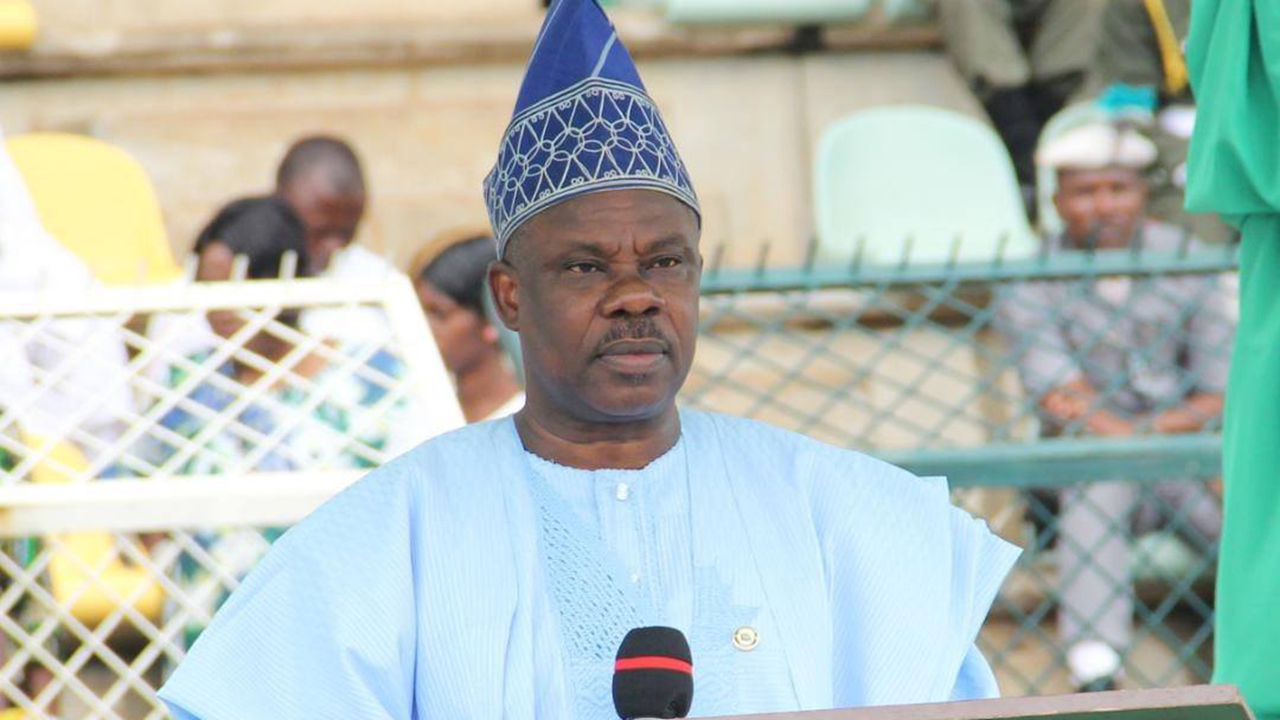
Mr Gbenga Daniel, whose government signed the original agreement for the export processing zone and Amosun, who inherited the deal have both promised to cooperate with the Federal Government to find a way out of ‘this testy time and situation.’ Of course, being key persons involved in this unpleasant incident, they owe this country all the patriotic effort they can apply to bring it to a respectable conclusion.
Whimsical abrogation of agreements makes Nigeria appear unserious in the race to develop; it also portrays her as untrustworthy. Speaking from experience, Adebayo, lawyer and international businessman, who has had cause to drag Nigeria to the court of arbitration and “threatened to seize assets before” described Nigeria as “highly litigious” and “a very difficult country” “known (in the international arena) as a tough customer such that when they owe you, they don’t want to pay…and will make trouble with you”. Even if this is a perception, it is disreputable! Coming from one of our own, it is no wonder that all the globetrotting efforts to attract the much-touted foreign investment into the country yields so little despite so much travel costs. Adebayo therefore advises governments to be careful of their “commercial reputation”, “make our courts to be fair and respected” because, arbitration clauses in contractual agreements “is making us lose money, reputation, and opportunity to resolve issues domestically”.
Adebayo suggests that the aim of the plaintiff “is not necessarily to keep the (seized) assets but to put Nigeria in the negative news (in the mind of potential investors) all the time”. “These are pressure tactics”. Certainly Nigeria cannot afford this negative publicity. But the way to avoid it is to “(uphold) the binding nature of international and domestic agreements, safeguarding contractual integrity, and prompting the rule of law” for “contractual sanctity is real and penalties for breaches can be devastating” writes Femi Ojumu, Principal Partner at Balliol Myers LP.
All said and done, only a change of attitude by public officials in favour of personal honour, public interest, and public good can protect Nigeria from aberrant behaviour that keeps bringing shame on this potentially great country. Persons elected into high office are reminded that they are on oath, publicly sworn, to work “in the interest of the sovereignty, integrity, solidarity, well-being, and prosperity of the Federal Republic of Nigeria.”
Concluded.
[ad]
Seizure of national assets: An embarrassment too many – Part 2
Date: 3 September 2024 5:16am WAT