 Follow Us on Google News


 Follow Us on Google Discover
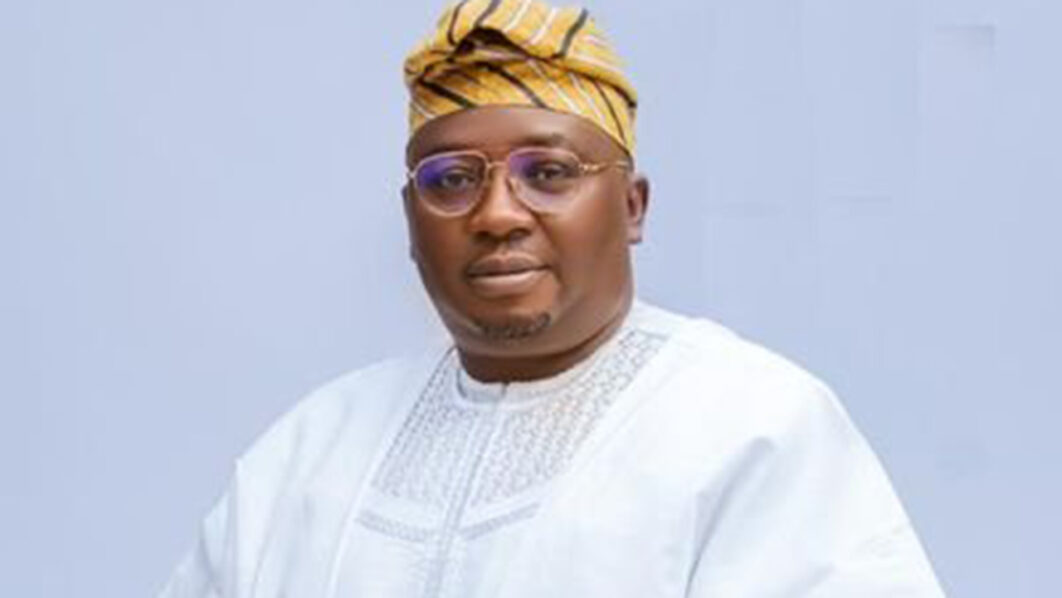
The Minister of Power, Adebayo Adelabu, is reported recently to lament the resort by industries to ‘their own captive power plants’ while ignoring electricity supply from the national grid. The minister’s grievance is nothing but the shedding of crocodile tears. It is needless and avoidable – if only his government will do the needful. The power supply from the public source is unreliable; any serious, target-focused, profit-oriented business that depends on it does so at its own peril.
[ad]
How much electricity can Adelabu’s public supply deliver for industrial and domestic use in this 200 million-plus population? In his speech to the board of Nigeria Electricity Liability Management Company in Lagos, he reportedly regretted that a “record 5,155MW” being generated is not taken up. If the industries in only the Lagos and Ogun states were to run at full productive capacity, it is doubtful that this meagre quantity will meet their power requirement.
Another point to explain the unattractiveness of the power supply by what may simply be termed as ‘the unbundled 18 of class 2005’ is the pricing. At first, the distribution companies (DisCos) were recalcitrant to meter consumers to ensure that what is consumed is what is charged and paid for. The 11 electricity retailers were and still are more comfortable with an opaque, non-accountable arbitrary billing, which generates more revenue to the suppliers without commensurate electricity to consumers. It is termed “crazy bills” by hapless citizens and businesses that suffer the literal extortion.
Even for the metered consumers, the DisCos, emboldened by an attitude of take-it-or-leave it, increase tariffs surreptitiously and at will. The latest is the classification of some subscribers into the so-called ‘Band A’, with the sole aim of charging them exploitatively and often unjustly. There is rarely consultation with stakeholders; customers are treated with disdain for the assumed reason that they have little choice. But indeed they do have, as the minister is finding out to his chagrin.
All these aberrations should not be in a country that desires to develop, grow, and occupy a respectable stand in the community of nations. The very ordinary meaning of the word ‘power’ implies a critical resource that energises activities, which make possible human and machine performance and productivity. This explains that the State, through government makes steady power a topmost priority for domestic and industrial uses. It is simply the sensible standard first step to national development and prosperity. Alas, for decades, successive governments, including the current one of which Adelabu is a member, have not embraced the incontrovertible fact that steady and affordable power supply is a sine qua non to development and growth. Stable power supply is an infrastructure necessity for domestic comfort and industrial productivity.
For the reason that it is a capital-intensive project, the state takes it upon itself to marshal the resources – including, if need be, external loans – to build and maintain power structures for the long-term economic productivity and prosperity, and other benefits to society. This is what responsible and responsive governments do on behalf of the states, and for the people. Nigeria is not different. In pursuit of the constitutional obligation of government to, as its “primary purpose,” ensure “the security and welfare of the people,” the 1999 Constitution is replete with the specifics of this obligation. Two examples: Section 16 (1)(a) requires “the State” to “harness the resources of the nation and promote national prosperity and an efficient, a dynamic and self-reliant economy;” sub-section 2(b) enjoins that “the material resources of the nation are harnessed and distributed as best as possible to serve the common good.”
[ad]
Nigeria’s many natural sources of power come in five varieties: Coal, crude oil, natural gas, hydro, and solar. Researcher on Energy, Doris Dokua Sasu, writes that: “In 2023, roughly 79.5 per cent of (Nigeria’s) electricity generation was derived from (natural gas). This natural source of power the country holds in abundance, at an estimated 5.94 trillion standard cubic meters (scm), equivalent to three per cent of global reserves. The country also has a proven oil reserve estimated in 2021 at 36.89 billion barrel. There are four hydroelectric stations and another four at various stages of construction. The biggest of them, the U.S. 5.8 billion, 3,050MW Mambilla Hydropower Station has been under construction since 1982 with no clear end in sight even as successive governments commit money to move it forward –or claim to do. Nigeria’s hydropower installed capacity is 12,522MW but “nearly 85 per cent of (it) is yet to be developed”. Meanwhile, a solar power station is reported to be proposed in Delta State.
Blessed with these natural sources to generate power, the glaring lack of commitment by Nigerian governments to make Nigeria energy-sufficient defies any common sense explanation. Indeed, this may rightly be construed as a violation of the relevant constitutional injunctions. The consequence of the failure of government in this critical area is that, Nigeria does not rank among the top nine African countries in per capita electricity consumption. There is just never enough electricity to go round.
While war-ravaged Libya leads with 3.793 MWh/capita, and South Africa has 3.637MWh/capita, Eswatini ranks ninth with 1.117MWh/capita. South Africa with a population of a little over 64 million generates 244,383 GWh, Egypt 116.5 million people have access to 209,677GWh. Morocco’s 38 million citizens enjoy 42,561GWh. On the other hand, Nigeria’s 232.67 million people share a miserable 36,037 GWh. The Nigerian power sector has witnessed so much motion without movement, so much heat without light. It has undergone a number of restructuring that seem to compound its inefficiency.
Two decades ago, a major structural change, the 2005 Electricity Power Sector Reform was intended basically to free the entire sector from government’s corruption-ridden monopoly. The reform has merely created numerous private and public corporations (including regulators of all sorts) that, taken together, have been remarkable only in their spectacular failure to deliver on their respective mandates. But it is difficult to not conclude that opacity and inherent corruption bedevil the operations of the corporate actors. What can be the reason at all that the Federal Government maintains a strangled hold on the transmission component of the power sector despite that it cannot afford the large investment to assure its efficient and effective delivery of service?
The Federal Government–owned Transmission Company of Nigeria (TCN) is solely in control of power transmission and systems operation all over the country. But it fails abysmally in its professed mission to ‘transmit electricity in the most efficient and effective manner.’ Numerous times has it reported ‘system collapse that plunges the entire country in darkness.
[ad]
Audu Lamu, managing director of Mainstream Energy Solutions complained in a recent interview that whereas the Zungeru Hydropower station can generate much more, “based on the advice of System Control Centre (SCC), we are limited to 175MW” to feed into the transmission line in order to not overload it and cause a breakdown. 175MW is the output of only one of the four generating units of the plant. Given situations like this, the TCN cannot possibly achieve its vision to be “one of the leading electricity transmission companies in the world.”
Lately, the Electricity Act 2023 was enacted “to provide a comprehensive legal and institutional framework to guide the operations of a privatised, contract and rule-based competitive electricity market…and attract… private sector investments in the entire power value chain of the Nigerian Electricity Industry [NESI].” Among its 19-point objectives is to “stimulate policy and regulatory measures to generally scale up efficient power generation, transmission, and distribution capabilities of the power sector …with a view to achieve a national electricity access target and attaining the highest per capita power consumption in Africa within a reasonable time frame.” All these look good on paper and sound good to the ear. Alas, characteristic of the gap between policy and implementation in Nigeria, the sub-national entities and other investors expected to seize the opportunity of this new law are yet to move their feet in any meaningful way. The act allows states to establish power infrastructures of their own to energise development. They are yet to seize the opportunity the new law offers.
In view of the woes that afflict the power sector as currently structured, Mr Adelabu’s lamentation will continue unless and until he convinces the government of which he is a part, to do the needful and release the energy sector from corruption-driven government influence. The minister is reminded that he is put into high public office not to lament what is wrong, but to correct it. Nigerians want to see his plan to provide in the shortest possible steady and affordable power for domestic and industrial uses.
However, in a world that is moving and bettering, citizens and businesses that want to rise above the prevalent mediocrity will find their way around obstacles contrived by self-seekers in public office.
[ad]

