 Follow Us on Google News


 Follow Us on Google Discover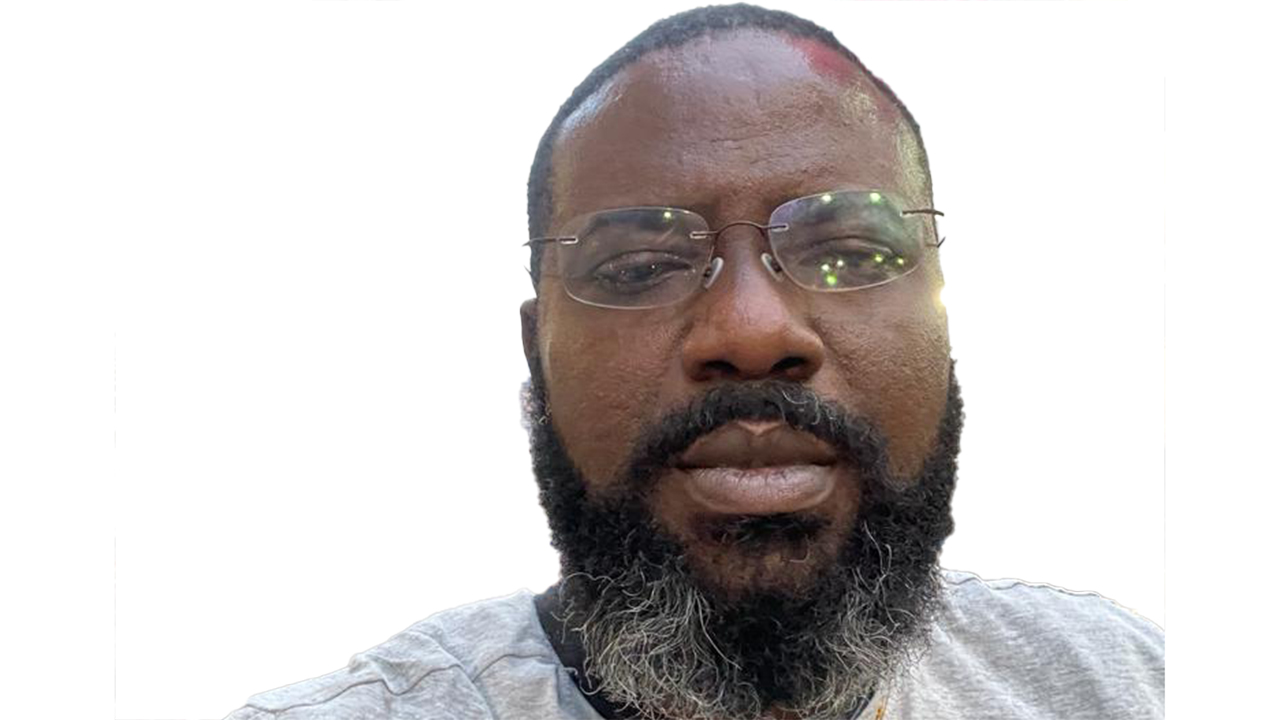

Adeyinka Ola-Williams, popularly known as Yinka Ola-Williams’ life has come full circle. He faced a lot of rejections growing up as an orphan: He dropped out of school in class two and living on the street for seven years. He did menial jobs, and was, in fact, a labourer in a construction firm and later apprenticed as a welder and all. Today, he is a renowned artiste, school proprietor and artpreneur.
[ad]
“I was born in Lagos; however, life took a challenging turn when I lost my parents at a young age. I first lost my mother at 12, and father, a few years later. These tragic events forced me out of secondary school in class two, leading me to several years of hardship; I became an apprentice at a welding workshop. Seven years later, my eldest brother, Yomi, secured a better job and helped me return to school, where I finally completed my secondary education,” he confesses.
What sparked his passion for the theatre?
“It was by chance, really. It started immediately I finished secondary school. I was not sure what I wanted to do exactly with my life. Around that time, I was invited to a church, and I became born again. The direction then was that as a new convert, you must join a department in the church. So, the department in the church, which I found comfortable then was the drama department, so, I joined,” he says.
After several months of attending rehearsals on Saturdays, his break came when someone who had been cast for the role of a mad person did not come and the performance was supposed to be the day after. Not seeing anyone, he was reluctantly cast for that role. He played the role during the rehearsal with the guidance of the drama coordinator. The role filled his heart throughout the evening till the following morning.
“After the performance, I became an instant star. Everyone loved my performance; even the pastor’s wife approached me and said I acted well. Everyone commended me. From that obscure member, I got attention and subsequently, I got cast in every performance in the church,” Ola-Williams chips in as the conversation wore on.
[ad]
He retorts, “I felt happy, and for the first time, saw that I could do something meaningful with my life. So, my interest and passion for drama rose. I was always the first person to arrive rehearsal ground; I never missed meeting for anything. I was really enjoying it and having fun. Though no payment, it was like I was getting paid for it. And truly, I got paid somehow: the acceptance, the accolades and the life-long friendships.”
His first theatre job came as a surprise. He went to an address given to him, auditioned, and instantly, the guys liked him and asked that he joined them in their production company. It was called Elites Productions. It was a children theatre outfit. “They had approval from the Lagos State Ministry of Education to be staging educational plays in public schools in the state. Two people owned the company. It was a mobile production; what I will learn later that it’s called, professionally, is a travelling theatre. We went from school to school performing and entertaining children,” the theatre artiste explains.
“For several years, that was all we did,” he says. “It was exciting, energy draining and fun.” Owing to sharing of profit, the two owners started having conflict. This degenerated until there was a split. After the split, he formed The Ancient Theatre Company in 1998. Since these guys were already known in public schools, he moved his focus to private schools.

“Private schools were not mandated to allow you perform to their pupils. If they are convinced without ministry letter, you can perform. I began to focus on schools in the highbrow Ikeja, Ikoyi and Victoria Island. No Lekki then. All developments in that axis ended around Mobil House on Mbadiwe Street, then.”
His break came from Grange School. It took him years to perform at that school. To him, it was like magic. They reluctantly allowed him to perform. “I went with my photographer. They just counted how many children they had and the school paid N100 per child, which amounted to N15,000 then. I was so happy. The breakthrough was not the money I was paid, but that if Grange could allow me to perform in their school, others too wanted me. The moment I go to any school and told them I had performed at Grange and show the pictures, they give me a date. Corona Schools, Apapa, Gbagada, VI and Ikoyi, CTC, Chrisland School, Avi Cenna, St. Saviours Schools at Ikoyi, Greenwood House, Ikoyi. My perspective began to change,” he chuckles. “From Monday to Friday, we often had shows lined-up. I was in the time table of Grange School for several years performing every mid-term.”
He ran drama club for several years at Corona Gbagada. When Grange School began its secondary school, he was called to offer drama for the CAS project under their International Baccalaureate Programme. He couldn’t even afford to do shows everyday again as he was having different arrangements with schools.
Later, he moved into performing for secondary schools students by staging recommended literature texts to enhance learning and understanding of literature text. He began to move away gradually from children to student shows.
After he had seen several plays at the theatre, especially plays with African setting, he tried to write one but with the theme of God, Jesus Christ and redemption. Woroko is the story of a man who sold his soul to the devil in exchange for power. He was drunk with power and used his powers arbitrarily until he met some evangelist who had gone to his village of Igbekun in search of souls for Christ.
[ad]
He gave it to a friend, Ahmed Aliu, to read and critique. Ahmed went ahead to submit the play for National Troupe of Nigeria’s Play Reading Session. “I was shocked to learn that my play was selected for the fifth session.
“By the way, the book is on Amazon. I just published it after so many years,” he adds. After the reading session, a woman approached me and gave me a card to come to their office. The name of the woman was Aida Opoku Mensah, a Ghanaian. I will never forget that woman. She was the Programme Officer at Ford Foundation. The office was on the top floor of the AIB building at Victoria Island; her assistant’s name was Angel Pariola. They told me that they were willing to fund me to study anywhere in the world.
They began to deliberate about me saying if I can achieve this without a university degree; it would be a waste of time sending me abroad to spend four years in the university to be trained on what I was already excelling at. They could not decide and told me to come back in two weeks. The woman kept emphasising that what I needed was international exposures. That I should just go abroad and come back and if I don’t come back fine,” he smiles.
Following this success, he was offered a life-changing opportunity by the Ford Foundation to study drama at the University of Edinburgh in Scotland and Creative Arts Business at the Felix Meritis Foundation of the University of Amsterdam in 2001. The experience particularly witnessing the Edinburgh International Festival, profoundly impacted his perspective on theatre.
“What I learnt in the street of Edinburgh was more rewarding than the classroom teaching of cultural, political and spiritual Shakespeare, Christopher Malowe or Samuel Beckett. I was in Edinburgh during the International Theatre Festival, Jazz Festival and Fringe Festival etc. I was stunned; it was a cultural, social, and intellectual shock. I returned to Nigeria a different person and would have nothing to do with children or students shows again,” he retorts.
In 2002, the British Council funded his participation in the International Networking Events (INE) on Promoting Rights and Development Through the Arts at the University of Leeds. This exposure drew his focus towards Theatre for Development (TfD), with numerous training courses on using arts to advocate for human rights, gender equality, health, education, and behavioural change communication. He soon became a specialist in Theatre and Development. He was selected as a change agent when he visited Ghana on a study tour for the reformation of health systems in Nigeria funded by the UK Department for International Development (DFID).
[ad]
“My expertise in TfD led to various high profile projects, including a commissioned play, titled, Ajaka, for the Africa Leadership Forum during the Africa Women Forum and UNDP regional conferences on AIDS in Africa,” he says.
In 2004, he was contracted by the British Council to lead a troupe of young Nigerians to Manchester, UK, for an international exchange programme. This experience earned him residency at Contact Theatre, where he studied theatre management and marketing. Upon returning to Nigeria, he took on roles such as judge, associate producer, and creative consultant for The Next Movie Star TV reality show, which aired on 28 stations nationwide in 2005.
According to him, his international work continued with the National Theatre of Scotland in 2006, where he was employed as an International Director. “I also collaborated with Vast Valley Productions on film projects in Benin Republic and Dublin, Ireland.”
Who are his biggest influences in the theatre world, and why?
“Influence?” he asks, as if to be sure.
“I like William Shakespeare. The volume of work he churned out in his career, how he got the attention of kings and aristocrat as patrons, the strong and evergreen work that still resonate till date; he was indeed a great mind. Perhaps, he may not be the best playwright in British theatre, but he had a special respect and recognition and immortality. Another person is Chinua Achebe. He was real, vivid and natural. It’s very unfortunate Nigeria did not give him needed recognition, but I hope someday, he will get it. I like Herbert Ogunde for his pioneering work in travelling theatre, unfortunately, he’s not that remembered. He was the first artistic Director of National Troupe of Nigeria with over 100 artistes. I visited his Ososa residence years ago and left the place very sad. It should have been an elegant museum and monument, but it’s a shadow of what it should be. He played his part and I honour him,” he brims in smile, confidently.
Ola-Williams reveals: “My most memorable project was in 2014, when the British Council selected my company, the Ancient Theatre Company, to participate in an international exchange programme in Manchester, tagged, Contacting The World. It was a year-long project. My brief was to identify 15 young Nigerians who had never been to the UK, to train them and prepare them to perform with other 12 countries all coming together in a week-long event in Manchester. It was very tasking for me,” the Ancient Theatre Company boss remarked.
“Over 100 young people applied. I was dealing with British Council Nigeria, British Council London, Contact Theatre, our partner theatre, Theatre Royal Stratford East, all at the same time for a year, aside from writing two plays for performance, managing the artistes and all. It was very challenging, because the plays I wrote were traditional African settings: The Three Omugo, which I got Yomi Oyekanmi to help me direct and Ija Esu I gave to Segun Adefila to direct also. I needed someone who could chant. So, Segun told me about a boy called Akewi real name is Lekan. I selected him only because of that irrespective of his very limited education. Out of these 15, 13 are currently based in the UK: Doing very well.”
[ad]
In 2023, he expanded his ventures internationally by registering Yow Digital Media LLC in the United States and Yow Digital Media Limited in Nigeria. These companies focus on content creation, sales, acquisition, and broadcast and also launched YOW Television on Roku, along with several YouTube channels. He was the immediate past Chairman of the National Association of Nigerian Theatre Arts Practitioners (NANTAP) Ogun State Chapter, now serving as the Director of Finance at the national level.
NANTAP recognised his contributions to Nigerian theatre by awarding him the title of Fellow of Theatre Arts (FTA). He currently chairs the Coalition of Theatre Arts Associations in Ogun State, representing over 40,000 members. He is married and has five children.
What should your audience expect from you soonest?
“I plan to do a stage play in December.”
[ad]

