 Follow Us on Google News
 Follow Us on Google Discover
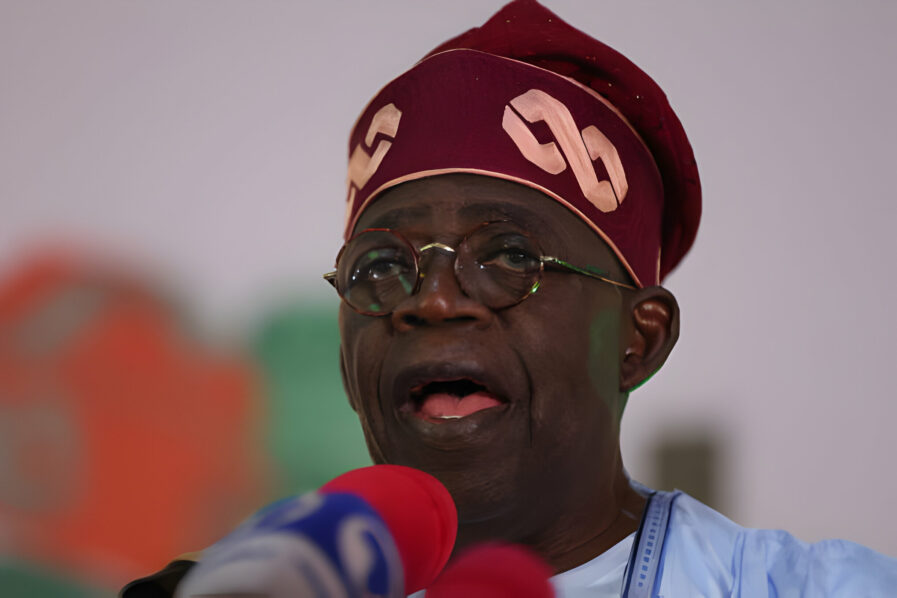
President Bola Ahmed Tinubu has restated his commitment to addressing the economic and security challenges in Nigeria.
[ad]
The President stated this on Monday at the Nigerian Institute of Management’s 2024 Annual National Management Conference, in Port Harcourt, Rivers State.
He emphasized that the security of lives and property remains essential for the nation’s development.
Represented by the Head of Federal Civil Service, Didi Esther Walson-Jack, Tinubu acknowledged that Nigeria is faced with numerous security threats such as terrorism, banditry, kidnapping, and communal clashes, which he said does not only endanger physical safety but also hinder economic growth and foreign investment.
[ad]

He also acknowledged the challenges of inflation, unemployment, and inadequate infrastructure but assured that strategic initiatives would be implemented to enhance business development and improve the quality of life of the citizens.
To combat the challenges President Tinubu stressed the importance of enhancing intelligence capabilities, strengthening community policing, and equipping security forces adequately and collaboration.
He also underscored the need to address the root causes of insecurity, such as poverty, unemployment, and inadequate education, to ensure lasting peace.
[ad]
He added that Nigeria’s economic stability is crucial for its growth and prosperity, noting that his administration has been working tirelessly to diversify the economy, investing in key sectors such as agriculture, technology, and renewable energy
Tinubu noted that his government has also introduced bold reforms, including floating off the Naira and removing fuel subsidies, aimed at revitalizing the economy and expressed confidence that despite the short-term hardships, the sacrifices will yield benefits for Nigerians and the economy in no distant time.
READ ALSO: Current economic challenges predates Tinubu’s administration
“We recognise the fact that the pains occasioned by these reformative economic policies have been biting hard on the citizenry but we are convinced that the nation’s economy and Nigerians will start reaping the benefits of all the sacrifices in no distant time,” he said.
Also, the Rivers State Deputy Governor, Ngozi Odu, while representing Governor Siminalayi Fubara at the event, stressed the need for a collective effort to address Nigeria’s economic and security challenges.
[ad]
She said Rivers State has experienced firsthand, the impact of economic instability on local communities, businesses, and government operations.
To achieve economic stability and national security, the deputy governor called for the diversion of the economy from oil, addressing the infrastructure deficit, implementing sound fiscal policies, and creating a conducive environment for small-scale businesses to thrive.
Odu highlighted the complex interplay between economic stability and national security, citing resource allocation, youth unemployment, regional disparities, and corruption as contending issues.
[ad]
She said Rivers State has been grappling with the impact of oil theft on revenue, environmental degradation, and security challenges in the Niger Delta region which underscore the complexity of the problems.
Earlier in her address, the President and Chairman of the Council of the Nigerian Institute of Management, Christiana Atako emphasized the critical need for collective action to address Nigeria’s economic and security challenges.
Atako noted that Nigeria despite being regarded as one of Africa’s economic powerhouses due to its abundant resources and diverse populace, grapples with several economic and security challenges that directly impact its economy.
She added that the conference aims to provide solutions to the government, charting a direction for Nigeria’s economic stability and national security, stressing that as Nigeria navigates the challenges, it is essential to prioritize security, economic reforms, and sustainable development to ensure a brighter future for its citizens.
[ad]

