 Follow Us on Google News


 Follow Us on Google Discover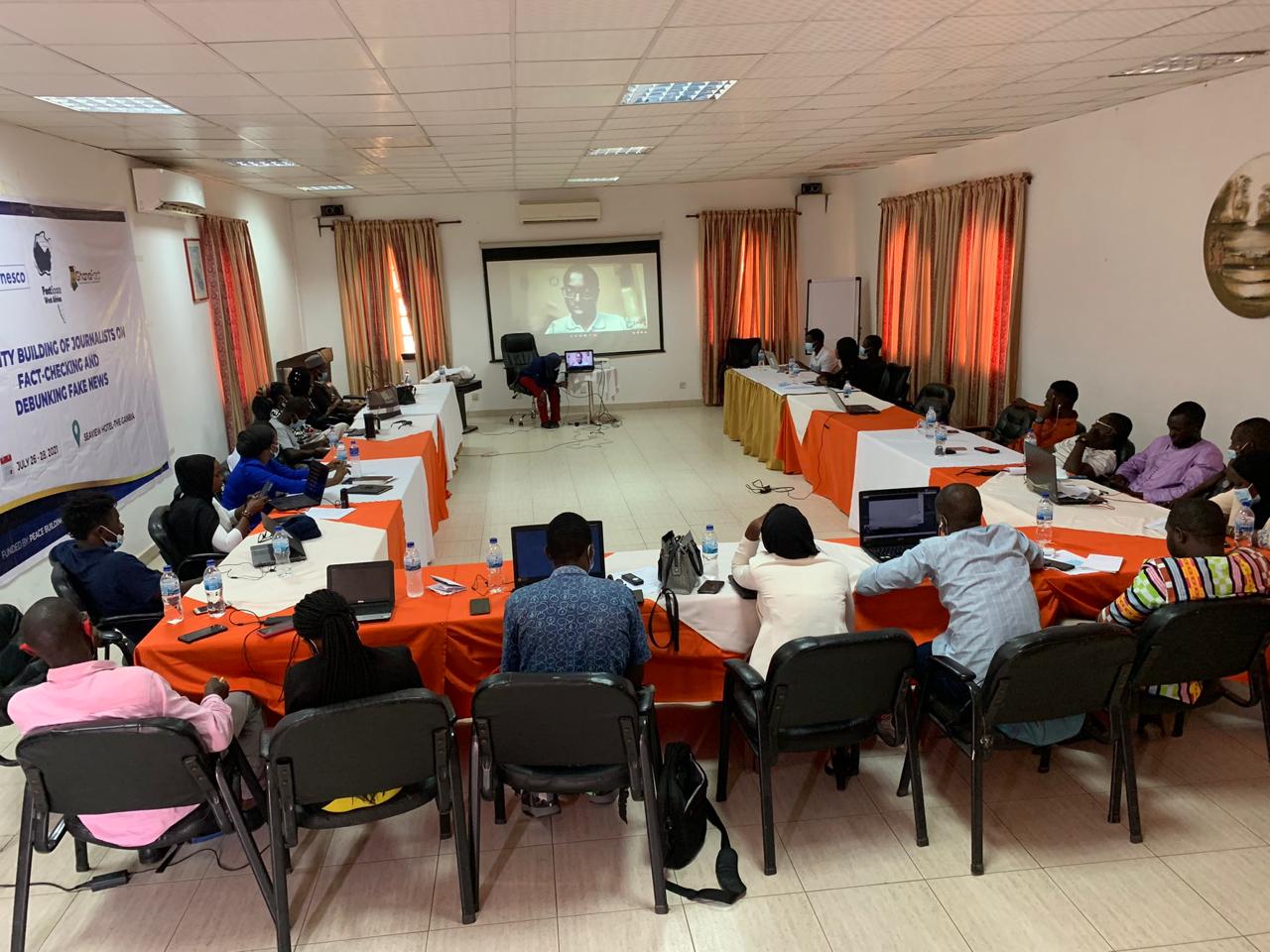
 No fewer than 30 journalists in The Gambia were part of a training workshop on fact-checking led by Segun Olakoyenikan, an experienced journalist with Agence France-Presse (AFP).
The workshop, sponsored by UNESCO, aimed to equip Gambian journalists with the skills and tools to produce fact-checked content and debunk false claims ahead of the country’s presidential election later this year.
[ad]
The training was part of the project “Young Women and Men as Stakeholders in Ensuring Peaceful Democratic Processes and Advocates for the Prevention of Violence and Hate Speech,” funded by the Peace Building Fund in The Gambia.
This project sought to address institutional barriers, strengthen youth capacity, and counter hate speech and misinformation.
The Gambia’s democratic elections in 2016 produced a peaceful transfer of power, marking a significant shift from years of dictatorship.
This change led to an expansion in the use of traditional and social media, including online radios and televisions. However, this newfound freedom of expression also brought risks, including the spread of hate speech and misinformation.
UNESCO’s support for the workshop demonstrated its commitment to promoting media literacy and combating misinformation globally.

By partnering with local organizations, UNESCO aims to create a network of fact-checkers and promote fact-based reporting.
The Gambia Press Union (GPU) partnered with UNESCO to organize this capacity-building initiative. GPU’s Secretary General, Saikou Jammeh, emphasized the importance of fact-checking in maintaining public trust in the media.
Olakoyenikan, who shared his knowledge with the participants, has expertise in countering misinformation in Nigeria and other Anglophone West African countries. He has previously facilitated similar media workshops in Nigeria and Ghana as part of efforts to promote fact-checking and the spread of accurate information.
In preparation for the poll, Olakoyenikan stressed the importance of verifying information to combat fake news.
The workshop focused on three key objectives: sensitizing media professionals to the dangers of misinformation, promoting a fact-checking culture, and establishing fact-checking teams.
By achieving these goals, the workshop aimed to promote a better-informed and more critical public discourse in The Gambia.
The training was well-received by participants, who praised Olakoyenikan’s expertise and engaging presentation style.
“Segun’s knowledge of fact-checking is impressive,” said one participant. “His training has empowered us to tackle misinformation effectively.”
[ad]

