 Follow Us on Google News
 Follow Us on Google Discover
• Ibrahim wants palliatives collapsed into food voucher system
• NLC threatens to push IMF, W’Bank out of Nigeria for alleged sabotage
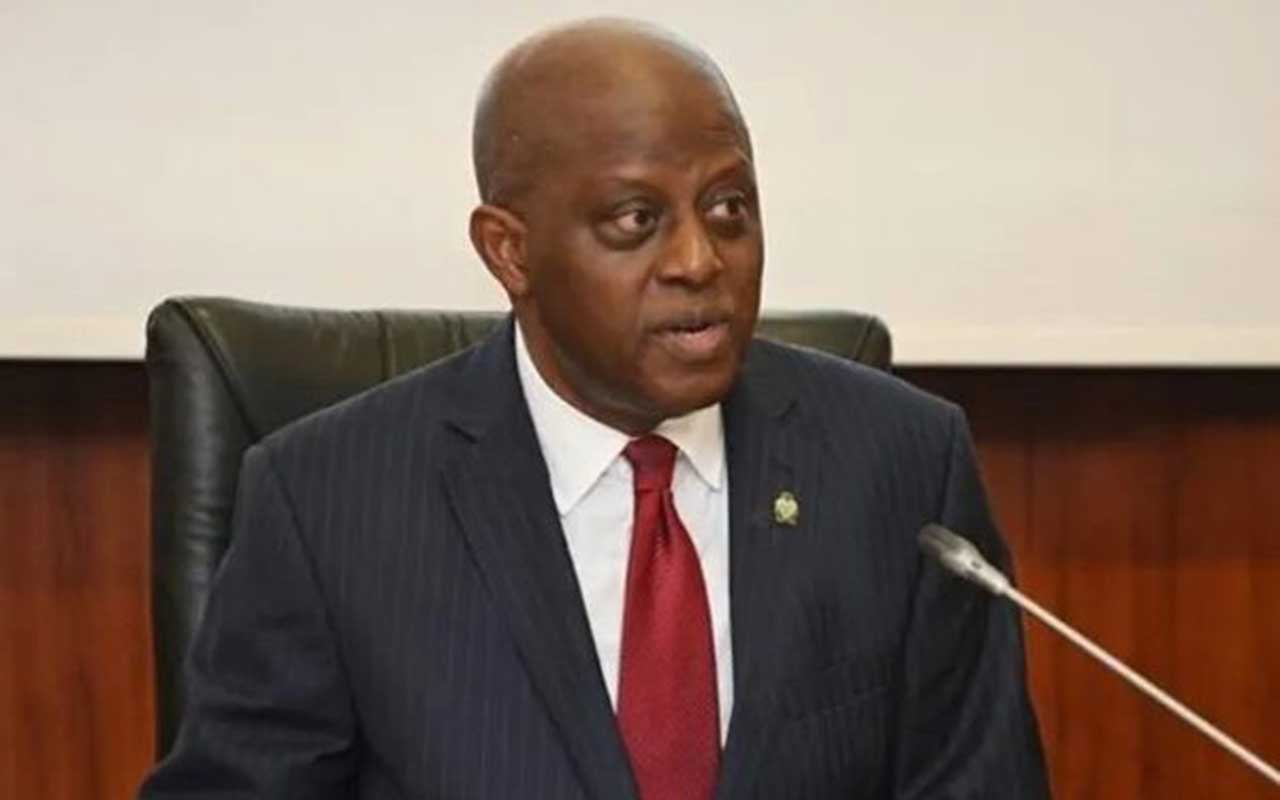
Governor of the Central Bank of Nigeria (CBN), Yemi Cardoso, and the Minister of Finance and Coordinating Minister of the Economy, Wale Edun, are optimistic that ongoing efforts will flip the foreign exchange (FX) soon and see the naira gaining significantly against the dollar.
[ad]
However, the Nigeria Labour Congress (NLC) has called on the World Bank and IMF to discontinue being a clog in the wheel of the Nigerian government, threatening that it might be forced to demand that they leave Nigeria entirely.
The CBN and ministry’s optimism rides on the back of a monthly target of $1 billion in diaspora remittance. The target, if achieved, will see the inflow rise by 67 per cent from its current $600 million.
At a briefing to mark the end of the 2024 World Bank/International Monetary Fund (IMF) Annual Meetings, in Washington, Cardoso said Nigeria’s delegation held a series of meetings with the Nigerian community and the international Money Transfer Organisations (IMTOs) to harmonise thoughts on how to increase remittances through the official channels.
Similar discussions during the April Spring Meetings had seen the inflow spike from $250 million to $600 million in September. He said IMTOs and the apex bank had continued to follow up on the resolutions taken during the meetings.
“Nigeria has such a strong diaspora community here. In the earlier stages of the reforms, IMTOs were having issues transferring money to Nigeria and we felt it was important to engage them, which we did. As a result of that engagement, we identified particular problems, of which a lot of responsibility was shared. Things have since improved because as at the last meetings, which was, I think, April, monthly inflows were about $250 million; but as of September, it had risen to $600 million,” he told the media.

With the recent efforts by Nigeria Interbank Settlement Systems (NIBBS) and the banking industry to engage the diaspora, the CBN boss said a $1 billion monthly remittance is achievable.
[ad]
“We believe we will be able to move accordingly. Again, rising from that engagement, we put our sights on increasing the inflows to $1 billion monthly. I am confident that we will get there,” he noted.
The bank, according to Cardoso, is also working hard to remove the country from the Grey List, a classification that has negative consequences for confidence-building.
The grey list contains countries with shortcomings in tackling illicit financial flows. Such countries are strictly monitored by the Financial Action Task Force (FATF) due to perceived weaknesses in Anti-money Laundering (AML) and Combating the Financing of Terrorism (CFT).
Also, confident that the present reforms would leave Nigerians better off, the minister said there was a need for Nigeria to continue to combat inflation, even as he noted that dwindling interest rates were good news for Nigeria and others who might want to borrow from the international market.
LABOUR alleged that the policies of the Breton Woods institutions had continued to undermine the country’s economy while sabotaging the people and the nation.
Calling on the international financial institutions to leave the Nigerian government to pursue policies that reflect the real needs of the citizens, the NLC emphasised the need for Nigeria and other developing countries to reclaim their economic sovereignty, resisting externally imposed policies that fail to consider local contexts and the needs of the masses.
[ad]
NLC, in a statement yesterday, entitled ‘Nigeria’s Economic Mess and IMF’s Denial: Esau’s Hands but Jacob’s Voice’, urged the World Bank and IMF to “remove their knees from our necks, so that we can breathe as a nation,” alleging that their austerity measures might only lead to further economic quagmire and social unrest.
NLC President, Joe Ajaero, stated that the congress believed that it was cynical and indeed typical of the IMF to recently deny responsibility for the Nigerian government’s removal of petroleum subsidy.
He alleged that the IMF and World Bank remained the twin forces with a longstanding pattern of recommending harsh and unworkable economic policies to developing nations.
In their usual subterfuge, Ajaero alleged, they have continued to present the advisories as growth strategies, which unfortunately often led to increased socio-economic hardship and stagnation in Nigeria and other nations that have had the misfortune of drinking their poisoned chalice.
[ad]

