 Follow Us on Google News


 Follow Us on Google Discover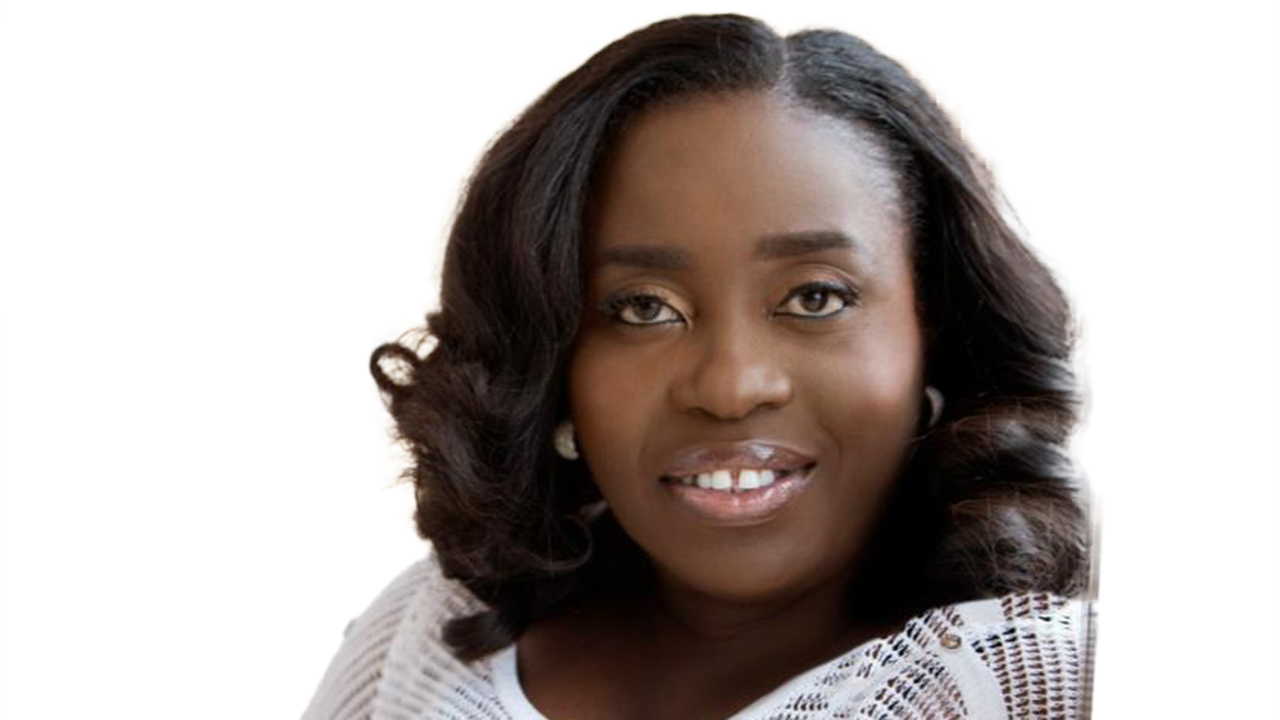

Shalom Asuquo is a travel expert who has impacted African tourism through her innovative leadership as the Chief Executive Officer (CEO) of Travel Lab Nigeria Ltd. A pioneering Artificial Intelligence consultant, she has driven remarkable growth within the company, specialising in corporate travel services.Shalom has a degree from London South Bank University and advanced studies at leading institutions such as London Business School, Ross School of Business, and Lagos Business School. With over 20 years of professional experience across sectors like banking, AI, consulting, and travel, she has held diverse roles in banking, chatbot engineering, travel advisory, and peak performance coaching, certified by John Maxwell.In this interview with MARIA DIAMOND, she spoke about the A-Z of international travel procedures and processing, the danger of flying through back routes, the challenges of travelling within African countries, the importance of being bilingual in a borderless era of diverse languages, among other issues. Excerpts:
[ad]
As a travel and tourism professional, what are touchlines in the international travel procedure?
Profiling is always the first way to go. Most travellers have a preconceived notion, and in most cases, they have concluded on what they want to do. So, it’s in my place to engage them in a discussion and we talk about everything. First I want to know what you do, and as a coach I am able to deduce where you are lying and I begin to connect the dots, which leads to the next question. I ask them why they want to travel to the country. Then we will establish the procedures surrounding obtaining a visa – if it’s a visa on arrival country or fill in the whole pre-visa process. The next thing is the pricing; people forget that when it comes to visas, there is speed which helps us get there on time and comfort for higher class of travel. These come with a cost. Having established these facts, we find a balance. Some would say what they want is to get there on time and not mind the cost while others have limited funds and we have to work around it. So, we put it vis-à-vis your cost, what you want, what is available and the concessions you would have to make. We will educate you on all ramifications of your trip and as consumers you will have the right to choose what suits you, your budget and what suits the terms and conditions of that trip.
Most travel consultants don’t go all the way; they sum up everything around money, which shouldn’t be. I am very passionate about the travel space so it’s beyond money for me. I wouldn’t want a situation where you call me at odd hours and start crying over something that could have been prevented.
One of the routes that are not known is the back route going to the Dominican Republic. This back route allows you to fly to Panama to get to the Dominican Republic. Nigerians like this route for a number of reasons but it is very dangerous because it is a drug route. By the time you’re going to South American countries, one of the criteria for that is that you must have the National Drug Law Enforcement Agency (NDLA) certification before other documentation. But we find Nigerians wanting to go through the back route and by the time you ask them why they prefer this back route you hear excuses like they don’t want to go through the stress of the Schengen visa. For me, I would prefer you going through the stress of the Schengen visa. So, in most cases I refund people who insist on these back routes saying they are willing to pay any amount. But it is no longer about money; a lot of things are put into consideration, especially safety. What happens if you disappear? What happens if you are taken by sex/drugs cartel? I list the risk associated with those back routes and it’s always a NO for me. This is because if your clients don’t arrive at their destination, they don’t take your calls, they just disappear, it becomes a huge problem. I have seen a situation where a girl child travelled through the back route and nobody could trace her whereabouts.
Considering the viral issue regarding Nigerians being delayed at Istanbul airport some time ago, do you educate travel consumers about airline policies especially when there is delay in flights and what their compensations should be?
What a lot of people don’t know is that the profit margins for airlines are really slim. Some Nigerians are too lazy to even read the fine print, which is the condition for these fares. Most of these fares are non-refundable fares because we are trying to buy promo fares in order to enjoy the luxury packages that come with it.
[ad]
Secondly, most Nigerians are too ignorant to call a travel professional to ask a question. Some Nigerians just believe travel professionals are fraudulent but the question is who are you dealing with? There are ways to confirm authentic travel professionals – ask for International Air Transport Association (IATA) licence; registration with National Association of Nigerian Travel Agencies (NANTA); Nigeria Association of Tour Operators (NATOP) etc. The day travel consumers begin to demand certifications from travel professionals to confirm their authenticity is the day travel agencies fraudulence ends.
Regarding the Nigerian girl issue in Turkey, it was clear that she was not enlightened about updated travel policies in Turkey. This is because Nigeria was taken out from the list of visas on arrival in Turkey two years earlier. We are also encountering a generation of Nigerians that want to start Do It Yourself (DIY) but what they are really into is obviously a DIY where they are ignorant; yet they carry their ignorance with swag. You do not read, you do not ask questions and you carry your ignorance with swag. You refuse to call a professional who can address the situation; you now assume that a country’s policy would change because of you. Sometimes when I think of it, I find it difficult to believe that she is not aware that Nigeria was removed from Turkey’s visa on arrival list in this era where information is everywhere. I think it’s just her quest to create content, which means there is something wrong with this next generation.
What are the checking parameters for qualified travel operators in Nigeria?
The standardisation criteria put in place. To open a travel agency you are asked to bring a certain amount. You must register your business with close to N30 million from the Corporate Affairs Commission (CAC). The next is to register with NANTA, NCAA (Nigeria Civil Aviation Authority), IATA.
In a case where you have stranded Nigerians in a foreign country based on passport or visa expiration, how do you rectify this?
Two things – the issue of passport and visa. If clients are smart enough to tell you on time – as a travel operator, you should have Business Model Canvas – who are your partners? My key partners are the immigration and the embassies aside from the NANTA, IATA etc. Travel professionals must know that. So, in such cases, if you have a relationship with your key partners, some of these things are not rocket science. Due to this relationship, you will get a solution within 24 hours. However, because some Nigerians are too quick to look down on authority, issues that shouldn’t be so complicated escalate. One thing about the authorities in Nigeria is that they want you to come to a place where you know that you don’t know everything and you accept that you don’t know, and then they will be willing to help you.
But most of these travel consultants do not go for familiarisation tours to their key partners’ offices. When you want to process visas for clients you must factor in everything that could go wrong and then figure out how you will mitigate against it. Regarding expired visas, two things are involved – there is a reputational risk; there is also country risk for Nigeria always. The reputational risk or damage could make the country ban you from coming into their country for 10 years. The country’s risk would always put Nigeria on the spot of defiance mockery – they would say such situations are peculiar with Nigerians; it is what they do. This negative projection of Nigeria is what usually leads to the hostility that Nigerian passport holders get from other countries. Perception matters in all ramifications even in our dressing.
How do you ensure that travellers are well kitted for destination airport policies?
Let’s start with an example; if you are going to South Africa and you have the e-visa, first and foremost what would matter to me is how you want to get there. South Africa sanctions airlines that bring people with fake visa letters into their airport. So, in such cases, it is imperative to stick to the airline of the home country in which you are getting the visa from as other airlines don’t have 100 per cent authorisation to confirm that visa. This is what we try to do.
Another example is Egypt. There is this tale that Egypt airport is notorious and with such space, you have to look at delays and ensure that you are not at the airport for too long especially when you don’t speak their language. So, you should be thinking how do you do a long layover for about five hours or more in a country that doesn’t speak English and you don’t understand their language. This means you don’t even have the proper tools. However, this is where a translator comes in.
Usually, I advise people to stay in the airport when they feel stranded or there is a situation, especially students going to the United Kingdom. I tell them not to leave the airport. I ensure that you have the proper medication, although we stopped it Post-COVID but with what is happening now, I give every international traveler of mine a travel kit that has all the basic things they would need including medications because I don’t want to hear I have headache, I was looking for medicine, I had a stomach upset etc. The travel kit even has condom and sanitary towel.

This is to avoid anything that could lead them to stray from the airport space – no room for carelessness of any form. Also, Nigerians don’t have the presence of mind to always empty their bags before they travel. Some of us can be careless when we travel. So, I advise all my clients before they travel to pour out the contents of their bags and be sure of what is there. I also advise them not to travel with a fabric suitcase that has an extra compartment without a double zip especially first time travellers. I insist they use a shell suitcase because of its smooth body so that nobody turns it into a carrier. Also, I tell them if it can be avoided, don’t go with food as that also subjects you to some checking and you know that Nigerians do not know how to interpret a boarding pass. If you are flying within America there are some boarding passes you see SSS subjecting you to further security check but some don’t even know it is a flag for further check beyond the regular.
What is your opinion about the challenges of travelling within African countries?
Communication is a major setback. Communication matters; how you approach the people matters. Most Nigerians don’t know how to speak outside their boundaries; they speak as if they are in Nigeria. Most times we do not know that it is disrespectful to policemen when we make the statement ‘why did you stop me?’ It is their duty to stop you; yours is to go through the formalities of the questions they ask. When you approach them properly it paves ways for better interaction. However, what Nigerians do is bring the way we treat our own law enforcement officers and exhibit that same rascal behaviour. They will use their language that you don’t understand to deal with you; this is one of the reasons I believe it is imperative for us to be bilingual. This is beyond speaking English. We are in the borderless era, which comes with understanding languages, culture, respecting common practices of other countries.
Beyond travel within Africa, Nigerians are usually just eager to leave the country and they would go extra miles to have their pastors and other religious leaders who have never left the country to pray for them to have the visa but would not pray for the person travelling to understand and respect the country they are going to; they would not advise them to come under the authority of the country. We forget that when you land in a country you have to come under the authority of the country.
[ad]
In recent times there has been a lot of Nigerian family migration or relocation to other countries. Why do you think this is happening?
Most Nigerians relocate for basic amenities – shelter, light etc. Most of the relocations are not even planned; it was not in a five to10 years plan, it just happens suddenly. As a mobility expert, I must have a two-hour session with both parties because we have seen a trend with this relocation that has caused marriages to end. There is also the part the man and woman plays. Most women come into the consciousness of the level of freedom they have when they relocate. They take advantage of every quarrel that happened 10 years ago and they take their pound of flesh from that. A woman relocates to a country and realises women have a voice here and seize the chance to misbehave. They have forgotten that women do have a voice in Nigeria; they do not factor in cultural belief systems and environmental influence. They desire that country. Most of those relocations are usually more of peer pressure – my friend has done it, me too I want to do it. It is a ‘wanna be’ thing, an ego thing not necessarily because it is required. At the end of the day the extent at which they strip themselves down for the relocation will shock you. Then there is a shame when it doesn’t work out; the family falls apart. I have husbands that would call me that they are now nannies; their wives have turned them into nannies to take care of the children. I will say you have to bear it; they are your children. I have men that would call me when everyone is sleeping and just cry – men are now depressed.
What people don’t factor in is that relocation for men is totally different because they have deep-rooted relationships. A man is still talking to the friend he met in primary school, the woman walks into a salon and she has a new ‘bestie’; women have shallow relationships so they make friends on the street. Now you uproot a man from everything and everyone he has ever known to a new life and most times our men don’t have other skills than what they studied in the university. Unfortunately, we are in a skill economy, not an education economy. So they are lacking in multifaceted life. This is why they are reduced to becoming Uber/taxi drivers out there. The man becomes angry and vindictive towards the wife and children because you now hear things like after all I have done for you; do you know that I am doing this for you? So, when I have the two hours session for husband and wife who want to relocate I make sure I talk about the other skills they have aside from their B. Sc or other acquired educational degrees. I then advise them to learn other skills that are relevant to the economy of the country they are relocating to. Most Nigerians don’t prepare themselves for the economy of the country they are going into, and most of the economies out there are skill economies. You look at the list of the occupational shortage and they don’t have anything to fill in.
[ad]

