 Follow Us on Google News
 Follow Us on Google Discover
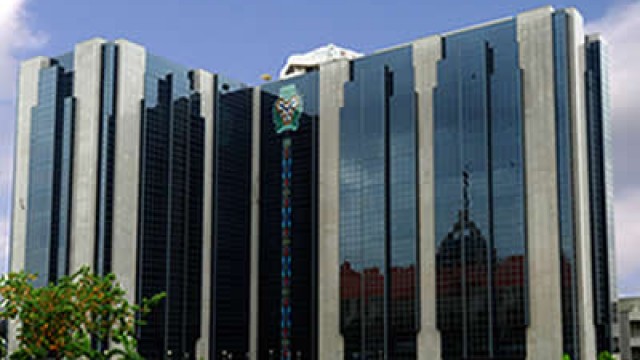
Nigerian banks significantly reduced their borrowing from the Central Bank of Nigeria (CBN) in November 2024, as the rising Monetary Policy Rate (MPR) made borrowing more expensive.
[ad]
According to a report by the apex bank, the CBN’s financial data revealed that banks borrowed N9.97 trillion in November, a 44.9% decrease from the N18.09 trillion borrowed in October. This decline reflects the impact of the higher interest rate environment on banks’ liquidity management strategies.
CBN’s financial data indicates that banks borrowed N114.6 trillion in the first 11 months of 2024, representing a 579 per cent Year-on-Year (YoY) increase compared to the N16.87 trillion borrowed during the same period in 2023.
Banks access short-term credit from the CBN through the Standing Lending Facility (SLF), used to manage immediate withdrawal demands from customers. The interest rate for these loans is influenced by the Monetary Policy Rate (MPR), which currently stands at 27.50 per cent after being raised during the November 2024 Monetary Policy Committee (MPC) meeting.
[ad]

In November 2024, with the MPR at 27.25 per cent, banks borrowed from the CBN at a rate of 32.25 per cent, based on an asymmetric corridor of +500/-100 basis points around the MPR. Following the latest hike, borrowing costs have risen further.
So far in 2024, the MPC has raised the interest rate multiple times, moving it from 18.75 per cent to the current 27.50 per cent in a bid to combat inflation and stabilize the naira in the foreign exchange market.
[ad]
CBN Director of Financial Markets Department, Dr. Omolara Duke, noted in a circular that banks were allowed to borrow at a rate of 31.75 per cent when the MPR was at 26.75
Analysts’ Perspectives
Afrinvest Research analysts highlighted that the increasing MPR forces banks to continue borrowing from the CBN. They noted, “MPC’s tinkering of the asymmetric corridor to further tighten liquidity conditions should exert pressure on funding costs for banks, both directly (as lenders tap the window) and indirectly (repricing of rates across the money market).
[ad]
“We note the particular importance of the SLF as a support for banks amid liquidity crunch induced by contractionary interest rate policy. Elsewhere, businesses might continue to strain under the weight of elevated borrowing costs—a necessary evil to starve decades-high inflation.
“That said, we are of the view that MPR as a tool has its limitations in addressing structural issues like insecurity and weak availability of infrastructure to support productivity, amongst other things. Fiscal policy reforms are necessary to fix these issues, as monetary policy alone can only do so much.
“Continued rate hikes without complementary and decisive fiscal efforts might only increase the burden on businesses without much effect on inflation. Nonetheless, the decision to decelerate the pace of tightening indicates awareness of these underlying complexities.”
[ad]
Deposits via Standing Deposit Facility
Banks can deposit excess cash with the CBN through the Standing Deposit Facility (SDF). Deposits in the SDF closed at N3.59 trillion in November 2024, an 18 per cent increase compared to N3.05 trillion in November 2023.
The CBN recently raised the interest rate on SDF deposits to 26.5 per cent, marking a 0.75 percentage point increase from the 25.75 per cent announced in August 2024.
[ad]

