 Follow Us on Google News
 Follow Us on Google Discover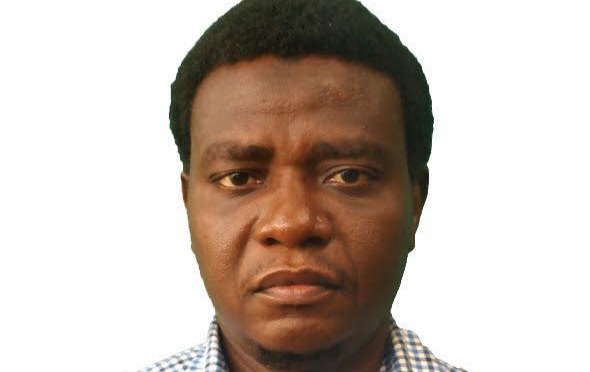
In the highly specialized and ever-evolving field of nuclear engineering, where precision, safety, and innovation determine success, Abdulraheem Kamal Kayode has distinguished himself as a leading force. His career, built on a strong foundation of rigorous academic training, groundbreaking research, and practical contributions, reflects his unique ability to address some of the most pressing challenges facing nuclear power systems. From designing advanced reactor control solutions to building critical infrastructure for nuclear capacity development in Nigeria, Kamal’s contributions extend far beyond individual achievements—they are paving the way for a safer, smarter, and more efficient nuclear future. Abdulraheem Kamal’s journey is grounded in exceptional academic achievements that span some of the world’s most prestigious institutions.
[ad]
His story began with a Bachelor’s degree in Electrical Engineering from Ahmadu Bello University, Nigeria, in 2008. This early exposure to electrical systems, in particular control systems, provided Kamal with a deep understanding of dynamic processes, laying the groundwork for his eventual focus on nuclear reactor dynamics and control. Recognizing the transformative potential of nuclear power in addressing global energy demands, Kamal pursued a Master of Engineering in Nuclear Engineering at the University of Port-Harcourt, Nigeria, where he immersed himself in the complexities of reactor physics, thermal hydraulics, nuclear reactor dynamics, and nuclear safety. Understanding that control systems are critical to ensuring stability and operational efficiency in nuclear reactors, Kamal broadened his scope of expertise by earning a Master of Science in Advanced Control and Systems Engineering from the University of Manchester in 2015. At Manchester, Kamal excelled in applying control theories to real-world systems, conducting sophisticated experiments such as robot path planning, virtual take-off and landing demonstrations, and designing stable control systems for processes like inverted pendulums.
This period of study not only honed his skills in system optimization but also inspired him to tackle larger challenges at the intersection of control theory and nuclear engineering. Kamal’s academic pursuit culminated with a Ph.D. in Nuclear Engineering from the National Nuclear Research University (MEPHI) in Moscow, Russia, completed in 2023. His doctoral research addressed some of the most critical challenges in nuclear reactor operations, specifically the need for stable and efficient reactor control systems under dynamic conditions. He focused on solving operational issues related to xenon oscillations—a well-known phenomenon that can destabilize reactor power—and the load-following operation of Pressurized Water Reactors (PWRs). Kamal’s research introduced innovative control frameworks, including adaptive second-order sliding mode control and robust optimal-integral sliding mode control. These methods ensured reactor stability, even under transient conditions, by effectively suppressing oscillations and improving operational flexibility.
His work was not only theoretically robust but also practical, offering solutions that could be implemented in real-world nuclear systems to improve safety and efficiency. A unique aspect of Kamal’s contributions lies in his integration of artificial intelligence (AI) and machine learning into nuclear reactor control. By leveraging predictive algorithms and data-driven models, he demonstrated how intelligent systems could forecast reactor behavior, identify disturbances, and optimize operations in real time. This application of AI to nuclear systems marked a significant step forward, showcasing Kamal’s ability to merge traditional engineering methods with emerging technologies. Using advanced tools such as OpenMC, OpenFOAM, and CASMO/SIMULATE, Kamal performed complex multiphysics simulations, analyzing reactor behavior under varying operational and safety conditions. His work laid the foundation for intelligent reactor designs capable of autonomous operation—an essential advancement for next-generation microreactors and large-scale nuclear systems. While his academic achievements are impressive, Kamal’s professional contributions demonstrate the tangible impact of his expertise on the nuclear industry.
Since 2010, Kamal has been a vital member of the Nigeria Atomic Energy Commission (NAEC), where he played a leading role in the development and installation of Nigeria’s first full-scope Generic Pressurized Water Reactor Simulation System. This landmark achievement, supported by the International Atomic Energy Agency (IAEA), provided Nigeria with a world-class training platform to enhance its nuclear workforce. Kamal was instrumental in overseeing the system’s commissioning, ensuring its technical accuracy and operational efficiency. As a lead instructor at NAEC, Kamal has been a driving force in training Nigeria’s next generation of nuclear engineers. Through carefully designed courses and simulation-based scenarios, he provided critical instruction on reactor systems, structures, and components. Over the years, Kamal trained more than 100 engineers and scientists, equipping them with the knowledge and skills required to operate and manage nuclear power plants safely and effectively. His contributions extended beyond teaching; he also developed and documented training programs, ensuring they adhered to international standards for technical excellence and effectiveness. Kamal’s global perspective is reflected in his participation in several IAEA-led international programs and technical exchanges. He has attended specialized courses and workshops in Italy and Japan, focusing on nuclear reactor technology, thermal-hydraulic simulations, and hybrid energy systems.
These opportunities allowed him to collaborate with leading nuclear organizations, including Mitsubishi Heavy Industries, Toshiba, and Hitachi-GE. His visits to operational plants such as Tokai Power Plant, Tsuruga Power Plant, and the Fukushima Daiichi Nuclear Power Station provided him with invaluable insights into reactor operations, safety protocols, and emergency preparedness. Such experiences deepened Kamal’s understanding of global best practices and further cemented his role as a thought leader capable of addressing nuclear energy challenges on an international scale. Kamal’s contributions to the global nuclear engineering community have been recognized through his numerous publications in high-impact journals.
His work, featured in publications such as Annals of Nuclear Energy and Nuclear Engineering and Design, represents significant advancements in reactor control systems. His 2022 paper on adaptive sliding mode control for PWR reactors remains particularly notable for its practical implications in ensuring reactor stability under complex operating conditions. By addressing critical issues such as xenon oscillations and load-following efficiency, Kamal’s research has advanced the understanding of reactor dynamics and set new standards for safe, flexible reactor operations. Throughout his career, Kamal has been the recipient of numerous awards and scholarships that underscore his excellence and dedication.

He has been honored with the Russian Federation Quota Scholarship, the Petroleum Technology Development Fund Scholarship, and Nigeria’s Federal Government scholarship for undergraduate studies. These accolades are a testament to Kamal’s unwavering commitment to pushing the boundaries of engineering and his contributions to nuclear energy development. Abdulraheem Kamal Kayode’s work stands as a beacon of innovation, leadership, and progress in nuclear engineering. His ability to integrate advanced control theories, AI-driven methodologies, and multiphysics simulations has provided practical solutions to challenges that have long hindered the nuclear industry.
From building Nigeria’s nuclear infrastructure to pioneering intelligent control systems for next-generation reactors, Kamal’s contributions are both transformative and far-reaching. His journey serves as a powerful testament to the impact of perseverance, ingenuity, and global collaboration. Abdulraheem Kamal Kayode is not only shaping the future of nuclear energy but also inspiring a new generation of engineers and scientists to envision and create solutions for a cleaner, safer, and more sustainable world.

