 Follow Us on Google News


 Follow Us on Google Discover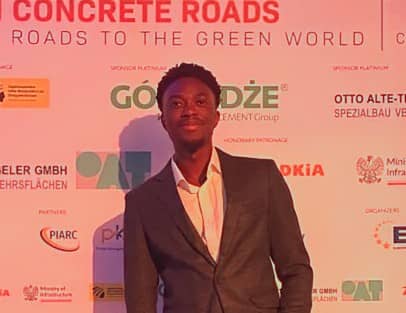
 Samuel Alalade is synonymous with innovation in civil engineering. From humble beginnings in Nigeria to pioneering research in South Korea and now transformative projects in the United States, Alalade has emerged as a leader in sustainable infrastructure. His work exemplifies academic brilliance, professional expertise, and a deep commitment to global impact.
[ad]
Currently pursuing a PhD at Texas Tech University, Alalade is a vital member of the TechMRT research team, contributing to key projects funded by the Texas Department of Transportation (TxDOT). His focus on optimizing Continuously Reinforced Concrete Pavements (CRCP) reflects his dedication to improving the durability and sustainability of transportation systems. “Sustainable infrastructure isn’t just a technical goal—it’s a moral imperative,” he asserts.
A defining aspect of Alalade’s career is his pioneering research on sustainable construction materials. At Gangneung-Wonju National University in South Korea, he explored innovative ways to repurpose industrial waste. His study, “Characteristics of Concrete Utilizing CBA and RAPA as Total Replacement of Conventional Aggregate,” investigates the potential of Coal Bottom Ash (CBA) and Reclaimed Asphalt Pavement Aggregate (RAPA) as substitutes for traditional aggregates in concrete.
This research addresses pressing environmental concerns, as natural aggregate production is a significant contributor to global carbon emissions. By repurposing waste materials like CBA and RAPA, which are often relegated to landfills, Alalade’s work not only mitigates environmental degradation but also highlights the feasibility of using these materials in applications such as pavement construction.
The study revealed that concrete incorporating CBA and RAPA exhibited exceptional flexural strength, surpassing benchmarks by 110%. However, challenges arose in compressive and splitting tensile strengths, which reached only 53% and 66% of predicted values, respectively, due to the unique characteristics of the materials. Despite these limitations, the concrete demonstrated promising durability metrics, such as acceptable drying shrinkage and air void content. “Our ongoing research aims to address these deficiencies and expand the material’s applicability to broader structural uses,” Alalade explains.
This innovative approach aligns with global efforts to reduce the environmental footprint of construction. By repurposing industrial by-products, the study not only reduces landfill waste but also contributes to achieving net-zero carbon emissions in the construction sector.
Alalade’s academic foundation underscores his professional accomplishments. Graduating with First Class Honors from Obafemi Awolowo University in Nigeria, he showcased an early aptitude for solving practical challenges, exemplified by his undergraduate research on campus mass transit systems. His master’s studies in South Korea earned recognitions, further solidifying his reputation as a forward-thinking researcher.

Beyond academia, Alalade gained invaluable hands-on experience managing road rehabilitation projects and highway construction in Nigeria. His certifications in project and contract management enhance his ability to tackle complex infrastructure challenges.
Reflecting on his journey, Alalade emphasizes the need for collaboration across disciplines and borders. “The future of transportation engineering lies in innovation that prioritizes sustainability, resilience, and inclusivity,” he states. This vision is evident in his current work at Texas Tech, where he earned the Distinguished Graduate Students Assistantship for exceptional research contributions.
As urbanization accelerates and climate change intensifies, Alalade’s research and expertise provide critical pathways for balancing performance, cost, and environmental responsibility. His groundbreaking contributions are reshaping civil engineering, ensuring a more sustainable future for infrastructure development worldwide.
[ad]

