 Follow Us on Google News
 Follow Us on Google Discover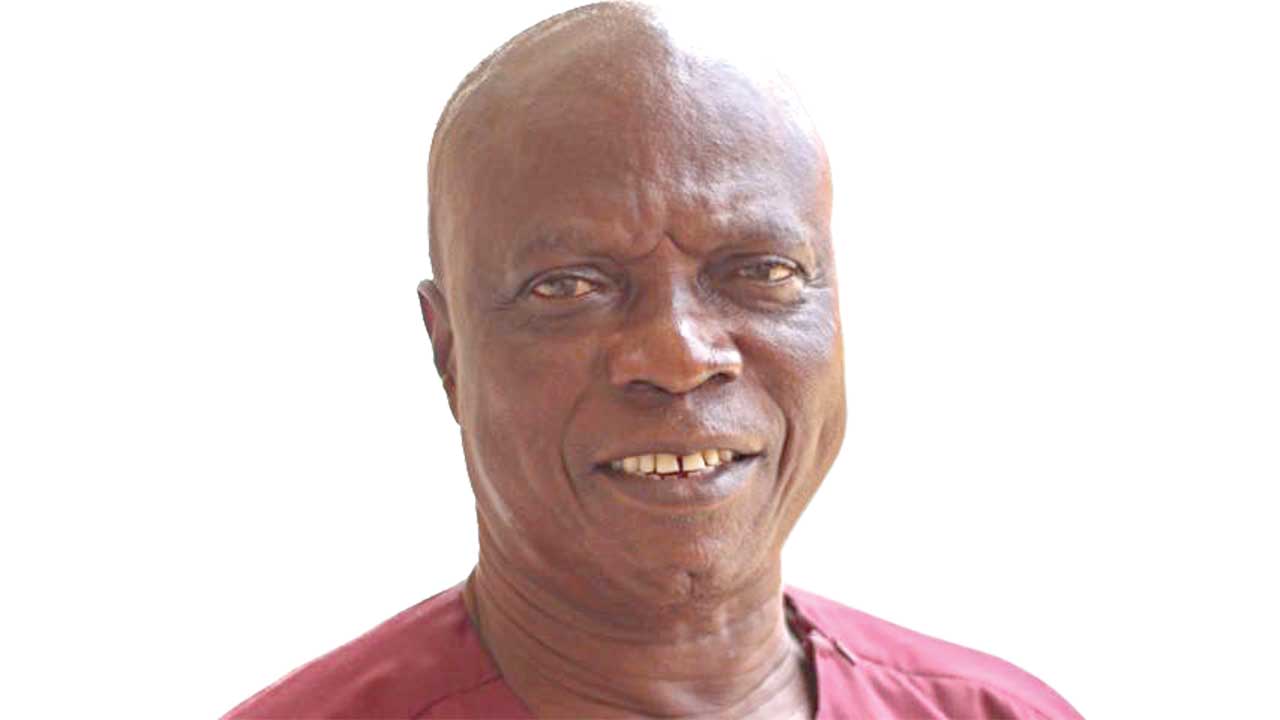

The production of 18 First Class graduates and 12 PhD holders during the last convocation ceremony of the university has even boosted the department’s profile among its peers in the country. Being the first time to record such a feat since the establishment of the department in 1967, it speaks to the diligence and open mindedness of its current crop of lecturers in grooming media professionals that can hold their own anywhere in the world.
[ad]
“We have been trying to improve on what others had achieved before us,” said the Head of the Department, Prof. Oloruntola Sunday.
“So, we have been striving to make sure that the department soars among other departments of Mass Communication in Nigerian universities. With the help of the dedicated academic staff we have, we were able to record the achievement that people have been calling us from all over the world.”
Speaking on the 18 female students who graduated with First Class honours, Prof. Sunday stated that the population of the students played a role.
“We had 222 of them and I am sure the percentage of male students was small. But that does not mean that the male should not strive to be the best.
“What I tell people is that First Class is not something you can help somebody with. It’s a cumulative aggregate of their performance from year one. So, maybe since they entered the university, they have been performing very well and what you saw is the result. And in the Faculty of Social Sciences, when you present your results and the advisers for each level see students that scored above four points, they will always advise us to monitor such students so that they don’t derail. At the departmental level, when we identify such students, we encourage them. We also encourage students who don’t measure up as expected to work harder. So, their own hard work and the encouragement from their lecturers helped them to get to where they are,” he said. Sunday said the students can defend their results anywhere in the world.

His words: “I don’t think the students will have problems defending the First Class. Go and find out; some of them have already got offers. The university had a programme to retain the best two in each department as its staff. They stopped it after three years because they realised that within the second year, they got scholarships and left the country and didn’t come back to the university again. So, the university felt that the programme was not worth it. That tells you that when a student makes First Class here, he or she is able to defend it.”
He noted that what stands the department out is that the lecturers don’t spoon-feed the students. “When we give them the course outlines, we back it up with materials. So, when we go to class, we throw questions to them based on the outlines and we discuss. We push them to read and with the advent of AI, there are materials all over the place for anybody that wants to learn. They have resources to learn more than we had when we were in school. So, those who want to be serious, I think the opportunity is there for them,” he added.
He disclosed that the university has radio and television stations as well as a print and online newspaper – UNILAG Sun and UNILAG Sun Online – where students learn the practical rudiments of journalism before they graduate.
“They have staff but they are like the laboratories for our students,” he noted. “When you go to the newsrooms, you will see our students there. They report for the platforms. They are the ones that do page planning for the newspaper; it’s only the printing that is done outside the campus. Meanwhile, we have a printing machine in the department.
[ad]
“We have competent hands to equip students here; we have both academic staff and Fellows in the department. The Fellows are professionals in different fields of mass communication. So, we effectively marry both town and gown. The media attachment programme also gives these students the opportunity to learn more. So, in terms of the practical aspect, where we are now, if you want to excel you will excel.
“For instance, news writing is one of the courses they study and we have over 200 students in the department. It will be practically impossible for lecturers to give them assignments and grade them. But those who want to learn will still learn. There are some that will write news and bring it to me to assess it. They also leverage the university newspaper, radio and television stations to learn. Some of the students write stories from events in their churches.
“For the radio and television, if you see some of the programmes these students produce, you will marvel. A female student came to me and said she wanted to be producing a show on photography on UNILAG TV. I just took her to the manager of the TV station and she has been doing very well.
“Another student went for an event organised by Punch newspaper. When she wrote the story and I forwarded it to the organiser of the event, he said she wrote it the Punch way. I only told the student to keep it up. I am sure that if the student graduates and wants to work with Punch newspaper; and shows them what she had done before, she will get a job there. So, for those who want to learn, the opportunity is there for them to learn.”
Looking into the future, Sunday said the unbundling process of the department is ongoing, adding that when completed, it will give lecturers the opportunity to concentrate on their areas of specialisation and also enable students to gain more from the lecturers.
“We are going faculty and I believe that the future is bright. When we go faculty, there will be more opportunities for our students to specialise. There will also be the opportunity for lecturers to face their areas of specialisation. Students who want to specialise will also specialise and definitely they will get better results from the efforts of the lecturers,” he noted.
The immediate past head of the department, during whose tenure the 18 First Class students and 12 PhD graduates were consummated, Prof. Adepoju Tejumaiye, corroborated Sunday’s views on how the First Class graduates emerged and the offerings of the department.
[ad]
He said: “Producing excellence is not an activity especially in academia; it’s a process. For instance, the 18 First Class students were admitted into the University of Lagos when I was the HoD. Even the 12 PhDs are products of what I was actively involved in. I ceased being the HoD on July 31, last year. So, the new HoD that resumed on August 1, 2024, inherited the process. So, I will just say glory be to God.
“But to be sincere with you, producing 18 First Class and 12 PhD graduates in one convocation is not an easy task. It requires painstaking efforts on the part of the students and also on the part of the academics in this department. It is not a one-man show; it’s the cooperation by my colleagues that made the excellence to be achieved. But I must also state the fact that for the students, having First Class is not a one-session thing. I have heard people wanting to question the results, especially as it is in Mass Communication that is not Mathematics related. My response to them is simple – producing First Class is not a one semester result; it is not a session thing. It is a cumulative average. So, that simply tells you that these First Class graduates have been making excellent grades right from their year one. It is not as if they made the First Class when they got to Year Four. No! As a matter of fact, to make a First Class, if you have not made it or are very close to making it by the second semester in your Year Three, there is no way you can make it. So, that simply tells you that those 18 ladies were in First Class or at the precipice of First Class in their Third Year; and they now had good grades in their final year, which led to them making First Class. It is not an easy task; but the fact must be said that the students merited it.”
On how the department produced 12 PhDs graduates during the last convocation, Tejumaiye said: “It is not an easy task either. I graduated from this department and I remember that I spent about nine years doing a PhD. But to the glory of God, the university has made a policy that students should not spend more than five years and that is exactly what happened this time around. Many of the students didn’t spend up to five years; within three years, three and a half years, four years they were done. So, what changed?
[ad]
“What changed is that the usual delay associated with the department in the past is no longer there unless a student wants to delay him or herself. We have spoken to one another in this department that there is no point wasting the time of students; we have told ourselves not to look at what we experienced during our time and ensure that we do the right thing always. So, nobody is interested in delaying anybody except where a student fails to do what he or she is supposed to do; and students or lecturers will not help the student to do it.
“Of course, the Postgraduate School is always on our trail, asking what is happening to this student or that student. So, I must concede to the fact that the university and the PG School are always on our trail to do it right and we have been doing it right. It’s not our making; it’s the making of the Almighty coupled with the excellence of these students.”
Talking on what stands the department out from the pack, Tejumaiye said it is staffed with men and women of excellence.
He added: “Don’t forget that this department produced the first Pulitzer Prize winner in Africa in the person of Dele Olojede. It’s not a new thing that the department is associated with or known for excellence. Go to the industries and you will meet our graduates excelling in print journalism, broadcasting, advertising and public relations. So, the thing is that we ensure that we do it right. We follow the curriculum and update it when the need arises. We also expose students to opportunities outside Nigeria. These exposures no doubt brighten the horizons of the students and enable them to do well.”
[ad]

