 Follow Us on Google News


 Follow Us on Google Discover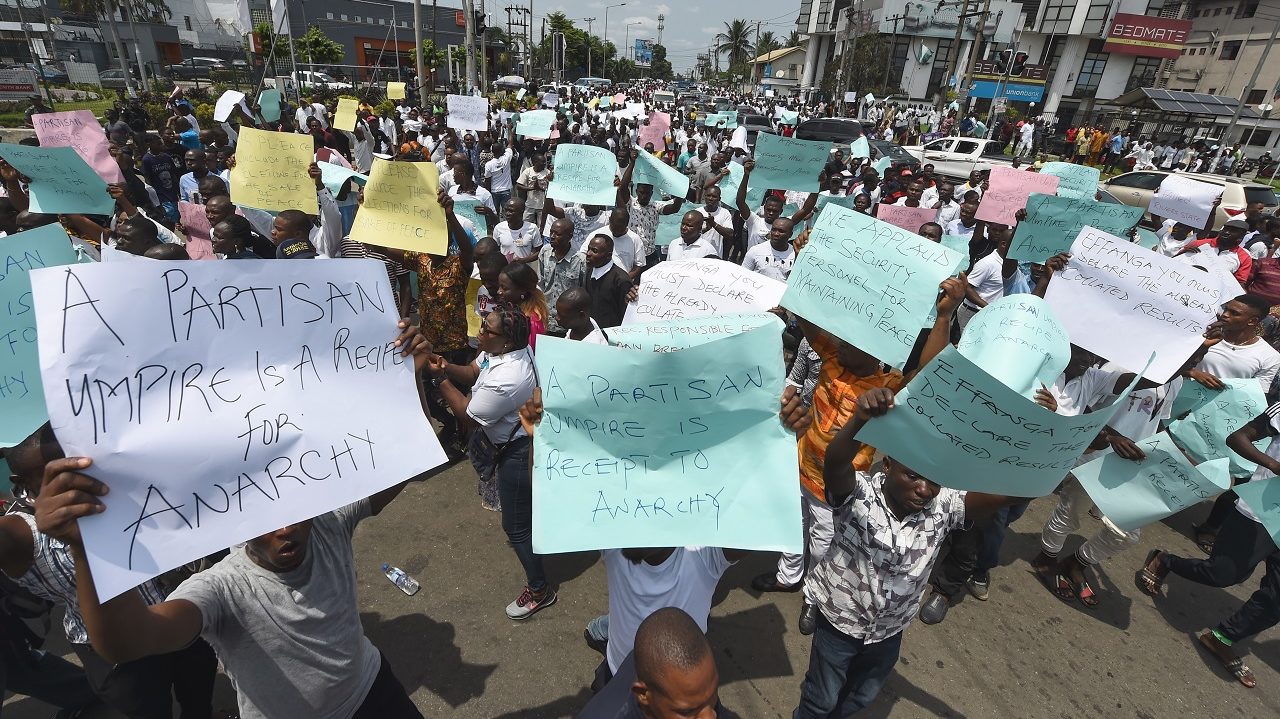

Democracy is supposed to thrive on transparency, accountability, and the free exchange of ideas, yet information manipulation has become a cancerous growth that threatens the very foundation of governance.
Political actors, rather than using information as a tool for enlightenment and nation-building, have turned it into an instrument of deception, polarisation, and electoral fraud.
This is not a uniquely Nigerian phenomenon—it is a global crisis that undermines democratic legitimacy and fuels societal instability.
The strategic use of political language to mislead, distract, and manipulate plays at the heart of this crisis. Politicians have mastered the art of rhetoric, slanting, and selective word choices to present half-truths and outright fabrications as reality. Glittering generalities such as ‘change’, ‘new dawn’, or ‘reform agenda’ are wielded with little substance behind them. In Nigeria, electioneering campaigns are often filled with slogans that promise the world but deliver little. The electorate, battered by years of broken promises, has grown weary, yet the cycle continues.
One of the most dangerous aspects of information manipulation in politics is propaganda. And we have seen numerous instances where propagandas have torpedoed good programmes.
The deliberate spread of misinformation, often amplified by the media and social platforms, has become a key tool for politicians seeking to discredit opponents. Political discourse is no longer centred on policy debates but on character assassinations and unfounded accusations. The goal is not to inform but to confuse, to make truth indistinguishable from falsehood.

Beyond rhetoric, information manipulation extends to the very fabric of electoral processes. Elections are meant to be the bedrock of democracy, providing a transparent mechanism for choosing leaders. However, when information is distorted—whether through fake poll results, voter suppression tactics, or biased media reporting—the credibility of elections is compromised. This has led to an erosion of public trust, where citizens no longer believe in the integrity of the ballot. A democracy where votes do not count is no democracy at all.
The consequences of this phenomenon are dire. Societal instability, ethnic and political divisions, and an increasing sense of disenfranchisement among citizens are all products of a system that thrives on information manipulation. When people lose faith in democratic institutions, the door is left open for authoritarianism, political apathy, and civil unrest.
To combat this crisis, there must be a concerted effort to strengthen democratic institutions and hold political actors accountable.While it is easier said than done in Nigeria, electoral management bodies must be insulated from partisanship to ensure fair elections. Anti-corruption agencies should have the independence and capacity to expose and punish those who engage in political deception. More importantly, there must be a robust movement for civic education and media literacy to help citizens critically assess the information they consume. An informed electorate is the best defence against manipulation.
Press freedom must also be safeguarded. When the media is compromised, either through state influence or corporate control, the ability of journalists to hold power to account is weakened. A democracy without a free and independent press is a democracy in decline.
At the end of the day, the responsibility of safeguarding democracy lies not just with institutions but with the people. Citizens must demand transparency, question political rhetoric, and refuse to be passive consumers of manipulated narratives.
Nigeria and Nigerians must be aware that democracy is not merely about casting votes; it is about ensuring that those votes reflect informed choices, rooted in truth and accountability. If the battle against information manipulation is not won, then the very essence of democracy will remain under siege.
Rilwan Ayobami Salaudeen wrote in from the Department of Editorial & Technical, Arise News,
Ikoyi, Lagos.

