 Follow Us on Google News
 Follow Us on Google Discover
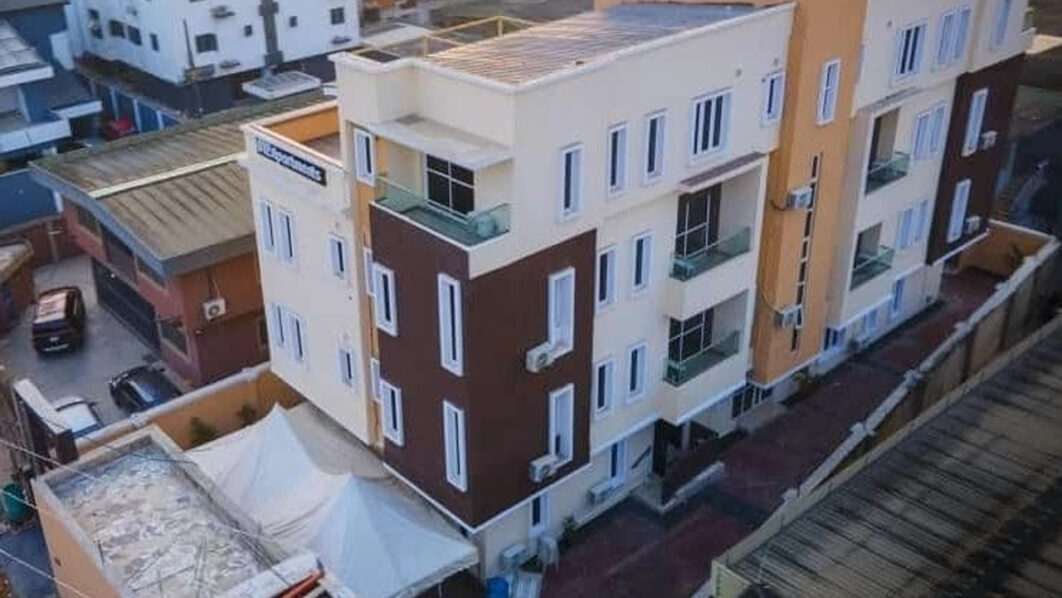
The robust demand for budget-friendly accommodation for corporate stays, tourism and visits continues to drive the expansion of the serviced apartment market in Nigeria, and operators are increasingly enjoying the boom in major cities.
[ad]
The global serviced apartment market size accounted for $126.88 billion in 2024, grew to $143.04 billion in 2025 and is projected to surpass around $420.89 billion by 2034, representing a healthy Compound Yearly Growth Rate (CAGR) of 12.74 per cent between 2024 and 2034, according to Precedence research statistics.
Essentially, the surge in demand for short-let apartments in locations such as Lagos, Abuja, Port-Harcourt, Ibadan and others is attributed to the ability of the facilities to meet the needs of customers, especially visitors from the diaspora, and young, upwardly mobile professionals, who need short-term accommodation.
Short-let apartments became popular at the peak of the COVID-19 pandemic outbreak when many businesses, including hotels, closed down operations. The facilities almost overtook the relevance of hotels, offering business professionals moving from one location to another, tastefully furnished living areas with a well-equipped kitchen, and other amenities, creating a home away from home.
Several years after the pandemic, such accommodation types have increasingly become an alternative to hotels with strong occupancy rates predicted to be above 50 per cent in 2025. Short-let apartments can be let out from one day to a week or a month and come in the form of studio apartments, two to three-bedrooms, duplexes and bungalows in these cities.
The apartments generally offer facilities like 24-hour Internet access, 24-hour power supply and water, air conditioning, fully furnished, access to Digital Satellite Television (DSTV), Closed Circuit Television for security, standby security guards, parking spaces, sporting facilities, car hire and laundry service.
In terms of features, short-let apartments allow clients to manage schedules, and cook and often afford customers flexible payment on apartments rented for short periods, whereas, the normal apartments/hotels that are rented for longer periods, are usually without these peculiarities of short-let apartments.

According to data from the BuyLet Live 2024 Nigeria Property Price Index Report, which highlighted several key factors driving the broader surge in Lagos’ residential market, it revealed that short-let apartment prices in Lagos rose by over 200 per cent in 2024, following a modest 12.95 per cent increase in 2023 and a notable 46.4 per cent rise in 2024, accounting for the highest growth rate in the state’s residential market.
The price for short-let apartments ranges from N40,000 for a studio apartment to N50,000 and N80,000 respectively for one-bedroom and two-bedrooms in the mid-level market and depending on the proximity to the city centres.
The Lagos short-let real estate market has been one of the most thriving destinations with premium properties near high-traffic leisure destinations generating millions of naira in yearly revenue.
Real estate research and advisory expert, Joseph Oloyede, and Co-Founder/Chief Executive Officer of Edala Homes, Samuel Olatunde, in their Lagos short-let market report 2024, noted that a one-bedroom unit short-let apartment commands an average daily rate of N110,000 generating a yearly revenue of N26 million per unit.
According to them, larger units see a corresponding increase in rates and revenues, with five-bedroom properties averaging N496,000 per night and yielding yearly revenue of N117.7 million per unit. The experts argued that the figures underline the financial viability and high revenue potential of investing in the short-let market, particularly in Ikoyi, Lagos.
[ad]
In some strategic locations in Abuja, a one-bedroom flat short-let apartment with a kitchen and 24-hour power supply goes for N180,000 per day, a two-bedroom N80,000 to N130 000 while a three-bedroom per day unit can be N280,000 to N300,000, depending on the location.
In the Port Harcourt axis, the average price of short-let apartments is N120,000 daily. Prices also depend on locations and facilities offered in the apartments. Also, in Ibadan, prices of short-let apartments range from N60,000 to N160,000 per day depending on sizes, location and features.
The Guardian gathered that the average occupancy rate in short-let apartments last December rose significantly to about 85 per cent in these locations which witnessed a huge volume of leisure seekers, and other visitors.
Findings show that short-let apartments offer Return On Investment (ROI) in highbrow locations Ikoyi, Ikeja Lekki, Omole Phase 1, Victoria Island, Surulere, Yaba and Banana Island.
The Guardian learnt that in some of these locations where it has proven difficult to fill up some of the residential buildings, including the luxury homes, property owners have had to convert such unoccupied buildings to short-lets to recoup their investments.
Industry operatives explained that continuous occupancy thus implies steady flow of income that could be used to sustain property value and used to further invest elsewhere.
Speaking on the development, the Managing Partner of Mausi Realty Company, Mr Mausi Bababunmi, told The Guardian that besides the genuine business professionals, visitors and leisure seekers who massively patronise short-let apartments in some of the city areas, some of the youths who engage in ‘Yahoo-yahoo’ also make demands for the apartments to spike from one location to another.
According to him, some of them see such apartments as a haven to perpetrate their nefarious activities, adding that most short-let apartments offer unique facilities like Wi-Fi connectivity and aiding them to even stay for a month in a particular short-let apartment.
Bababunmi said: “Demand is high now, what a lot of people do is that they rent apartments and purposely furnish it for short-lets because the amount you could make on a weekly or monthly basis if you calculate it, will triple the amount realisable from the yearly rent.
For instance, a decent two-bedroom flat in the Magodo area of Lagos, on average goes for about N1.8 million or N2 million, while a two-bedroom short-let in Magodo Phase-One goes for N65 or N70,000 per day. If you have a client that could pay for a month, you can imagine the income you would generate and so, in less than one year, you can make a huge profit and invest the remaining money in other short-let apartments in another location. So, it is highly lucrative now.”
[ad]
According to him, to have a huge number of clientele, a major side attraction to short-let apartments is the provision of facilities like swimming pools, and gyms and ensuring that the facility comes fully equipped for the comfort of customers.
However, he noted that challenges exist for the business, emphasising this as basically power-related, adding that most estates are now electricity tariff band ‘A’, where the residents pay a premium on electricity.
“Once there is a power failure, diesel consumption is a big issue, especially when supply is epileptic, operators of the outlets must run the facility on diesel. For instance, such a situation may come up and last for almost two to three weeks. When you calculate that, a huge amount of money must have been spent, and this will eat into the profit. But a way out is if the owners can as well invest in solar/inverters, which is still costly,” he argued.
Georgina Opara of Trust Row Limited told The Guardian that many discerning investors are taking advantage of the boom to diversify their investment portfolio with high-yielding luxury assets converted to short-let apartments.
For instance, the firm observed that a lifestyle five-floor fully furnished, 16-unit luxury apartment complex, located in a high-demand location near Elegushi Beach is projected to yield a yearly effective room revenue estimated at N418 million, additional revenue from Spa and others N45 million. Commutatively, such investment could yield about N463 million, in revenue yearly.
The class of asset, it was gathered offers premium guest amenities like Spa, rooftop restaurant, banquet hall, and luxury suites. Prices in premium short-let apartments with state-of-the-art smart facilities designed for elite, business travellers, and tourists consist of one-bedroom units, N100,000 per night, and two-bedroom units N150,000 per night.
“With increasing demand from tourists, and High-Net-Worth Individuals (HNWIs), highbrow locations near top leisure and business hubs enjoy high occupancy rates and pricing,” she said.
[ad]
Former chairman of the Nigerian Institution of Estate Surveyors and Valuers (NIESV) Lagos branch, Adedotun Bamigbola, attributed the boom to the growth of Financial Technology (FINTECH) operators, who wanted a nice and cosy place. He said some of the operators are start-up businesses that don’t own houses or invest in real estate but in finance and technology.
“They are more like portfolio tenants, they don’t have to stay in some places for too long and they can just carry their luggage and move at any time, especially on the Island. Another factor for the boom is the people who just visited Nigeria briefly for one business or the other, they patronise many of the short-let’s apartments,” Bamigbola said.
However, he agreed that rentals for short-let apartments are higher than a regular house. He explained that short-let apartments are more furnished apartments where tenants can enjoy the comfort offered and don’t necessarily need to do a capital expenditure for furniture, television or pay for DSTV services.
“All those have been taken care of and are like a one-stop payment. Tenants just pay on a daily, weekly or monthly basis. Some people pay for six months or one-year ahead for short-let apartments, depending on their needs and plan. That helps the business to run. Now, people rent a building and use it for short-let apartments only,” he said.
[ad]

