 Follow Us on Google News


 Follow Us on Google Discover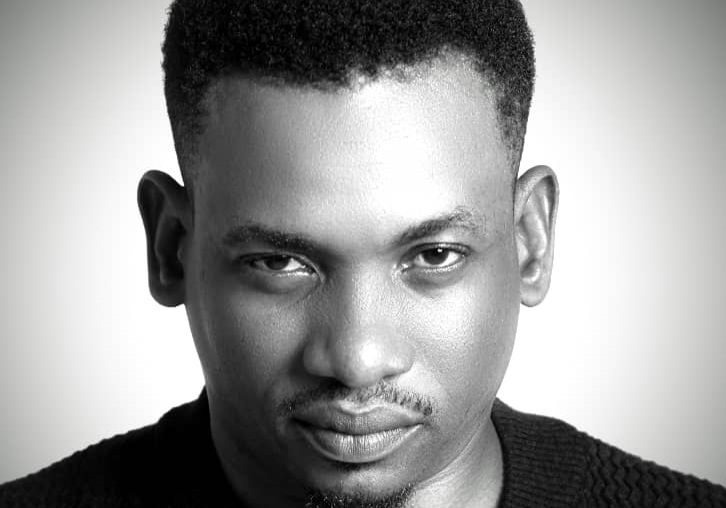
The name doesn’t ring immediate bells in poetry circles bustling with performances, panels, and prizes. Yet, his words quietly echo in the minds of those who have stumbled upon them. They are sharp, tender, and deliberate. Valentine Okolo is not your everyday poet. He is the poet you discover and wonder why no one ever told you about him sooner.
In a literary landscape which is often loud with showmanship, Okolo’s strength lies in restraint. His voice is soft but resolute. His language deliberate yet fluid. He writes with a conviction that silence is not the absence of speech but its most potent form.
Though he remains a lesser-known figure in Nigeria’s literary mainstream, Okolo’s work has gained traction beyond borders. His groundbreaking poem I Will Be Silent, published in Apogee Journal (Perigee), United States, on October 30, 2017, is a haunting meditation on the politics of silence.
More than Just a Poet
Born and raised in Nigeria, Valentine Okolo came of age in a country riddled with contradictions: beauty and brokenness, resilience and repression. These contradictions find their way into his verse. However, not as complaints. But as questions. His poetry does not seek to dictate. It seeks to invite the reader into a shared space of contemplation.
Okolo’s background (both personal, political, and cultural) is woven into his work. He writes about women, about silence, and about survival. And he does so without claiming the experiences as his own. Instead, he writes with empathy. He writes as a witness. And he writes as a student of pain, and resilience.
A Male Poet Who Understands the Female Condition
In a patriarchal society where the voices of women are often muffled, it is striking, almost jarring, to find a male poet so attuned to the feminine experience. And it is also quite interesting to know that Okolo’s approach in documenting the female ordeal is neither performative nor patronising. For his empathy is not draped in saviourism. Rather, it is firmly rooted in understanding.

His poetic masterpiece, I Will Be Silent is a powerful case in point. The poem explores what it means to be muted by culture, by fear, and by memory. Yet, it also turns silence into a weapon. And turns it into a strategy for survival, and protest.
In his poetry, Okolo doesn’t speak for women. He speaks with them. And in doing so, he challenges the traditional boundaries of gendered storytelling. He becomes a kind of poetic conduit, one that allows stories that are often buried to come up to the surface with great dignity and grace.
The Craft of Quiet Courage
In the poem I Will Be Silent, “silence” is both wound and weapon. And Okolo reframes it not as an act of surrender. But as an act of resistance. He aptly understands that silence can be louder than words of protest. And that sometimes, in an effort to survive, you must be mute.
The language of I Will Be Silent is subtle but not shy. For each word carries the weight of someone who knows that poetry is not just performance. It is also presence. And Okolo’s poetry compels the reader to lean in and listen. And perhaps, to awaken an attentiveness that our noisy world has dulled.
The Evolution of a Voice
Early in his career, Okolo’s poems bore the marks of introspection. Themes of personal identity, mental health, and the struggle to belong dominated his pages. His newer work, however, expands his poetic lens. There is now a deeper engagement with the broader world, a world riddled with systemic injustice, gender-based violence, and the complexities of cultural expectations.
This evolution is not a departure from his earlier work. Rather, it is a deepening of it. And a willingness to bear, not just his own story, but the stories of others. His poems are now bridges that connect personal pain with collective memory. And in doing so, they create space for healing.
Not Just a Nigerian Poet
Though firmly rooted in the Nigerian experience, Okolo’s voice is unmistakably global. His concerns (identity, voice, freedom) are not confined by geography. He belongs to a new generation of African writers who understand that literature is borderless. Like his contemporaries: Chimamanda Ngozi Adichie, Tolu Ogunlesi, and Niyi Osundare, Okolo is part of a movement that refuses to let literature be a luxury. Because for him poetry is protest, preservation, and power.
A Literary Force, Quietly Rising
In a time when loud declarations often overshadow thoughtful reflections, Valentine Okolo is a refreshing reminder that depth still matters. And that stillness can also be revolutionary. Though he is not the headline act at every poetry festival, his words are there in classrooms, in conversations, and in quiet corners of the internet where readers go to feel seen.
His growing body of work is a testament to the enduring power of poetry not just as art but as archive. For Okolo is archiving the unspoken, the unheard, and the unseen. And in doing so, he is carving out space for a more inclusive literary future.
A Call to Pay Attention
As Nigeria continues to navigate the intersections of democracy, tradition, and modernity, voices like Okolo’s are more important than ever. His poetry reminds us that power does not always shout. And that sometimes, it whispers. At other times, it sits in silence. And oftentimes, it hands you a mirror. Valentine Okolo is not just your average poet. He is a witness, a scribe, and a narrator of quiet revolutions. His work urges us to rethink what it means to be heard, and who gets to speak.
In a world obsessed with visibility, Okolo’s poetry offers something quite rare—clarity. He doesn’t just write verses. He builds sanctuaries. Sanctuaries for the silenced. Sanctuaries for those finding their voices. And sanctuaries for readers who want more than just rhymes. Readers who want truth.

