 Follow Us on Google News
 Follow Us on Google Discover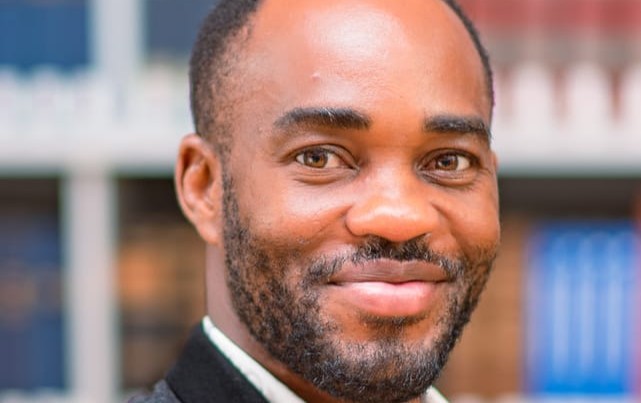
In the flood-stricken communities of Durban, a Nigerian scholar is reshaping global thinking on who truly leads climate adaptation.
In the narrow, waterlogged corridors of Durban’s informal settlements, where climate change is not theory but lived reality, a different kind of environmental science is emerging, one that does not begin in laboratories or policy chambers, but in the resourceful practices of ordinary people.
Dr. Fidelis Joseph Udo, a Nigerian postdoctoral researcher based at the Max Planck Institute in Germany, has been documenting these practices, revealing a layered and often overlooked story of climate resilience. His recently published study titled “Evaluating the Sustainability of Local Women’s Climate Change Adaptation Strategies in Durban, South Africa: A Feminist Political Ecology and Intersectionality Perspective” and co-authored with fellow African scholars, brings new attention to the powerful, localized strategies used by Black African women in Durban to cope with and adapt to increasingly frequent and devastating floods.
His work focuses on four high-risk communities, uMlazi, Ntuzuma, Inanda, and KwaMashu, where women are not only responding to disasters but actively shaping their outcomes. These women are leading adaptation efforts through community-based flood defenses, informal warning networks, local knowledge sharing, and the use of indigenous survival techniques. Their responses are not uniform; they are adaptive, embedded in place, and shaped by a confluence of cultural, social, and historical forces.
Rather than portraying these communities as passive victims, Udo’s research frames them as active agents navigating overlapping systems of inequality. Using feminist political ecology and intersectionality as his theoretical lens, he uncovers how gender, race, and socio-economic status intersect to define vulnerability, and shape resilience.
Despite their innovation and determination, these grassroots efforts remain largely excluded from formal planning and policy structures. Governmental support is minimal, and institutional recognition is rare. This disconnect not only marginalizes effective local responses but weakens broader resilience strategies at a time when climate adaptation demands all available knowledge systems.
Udo’s work positions these communities, and particularly their women, at the center of a reimagined approach to climate governance, one that values indigenous wisdom, cultural continuity, and everyday ingenuity as core components of sustainable development.
Beyond physical adaptations, the research explores psychological dimensions of resilience. Some women, facing constant exposure to disaster, have developed internal strategies to cope with recurring trauma. Others exhibit strong collective agency, organizing neighborhood initiatives to reinforce homes and educate residents. The study suggests that emotional resilience and spatial attachment also play critical roles in decision-making and recovery.
The work further challenges dominant top-down narratives in climate discourse. It advocates for a model that integrates local knowledge and lived experience into policy frameworks, not as an afterthought, but as a foundational principle. By reframing the expertise of Durban’s women as essential rather than supplemental, Udo redefines what effective climate leadership looks like in the Global South.
As environmental instability accelerates worldwide, the insights from Durban’s townships provide a valuable counterpoint to conventional climate solutions. The women whose efforts are documented in Udo’s study are shaping a model of adaptation that is deeply ethical, inherently sustainable, and urgently relevant.
Rather than waiting for help to arrive, these communities are building their own systems of protection, grounded in solidarity, memory, and necessity. Through his work, Dr. Fidelis Joseph Udo is ensuring their knowledge is not only preserved but amplified, informing global understanding and influencing how the world responds to one of its greatest challenges.
In bringing these stories to the forefront, he is shifting the spotlight from abstract strategy to practical wisdom, from global centers to peripheral zones. And in doing so, he is quietly rewriting the climate survival story, one township at a time.

