 Follow Us on Google News


 Follow Us on Google Discover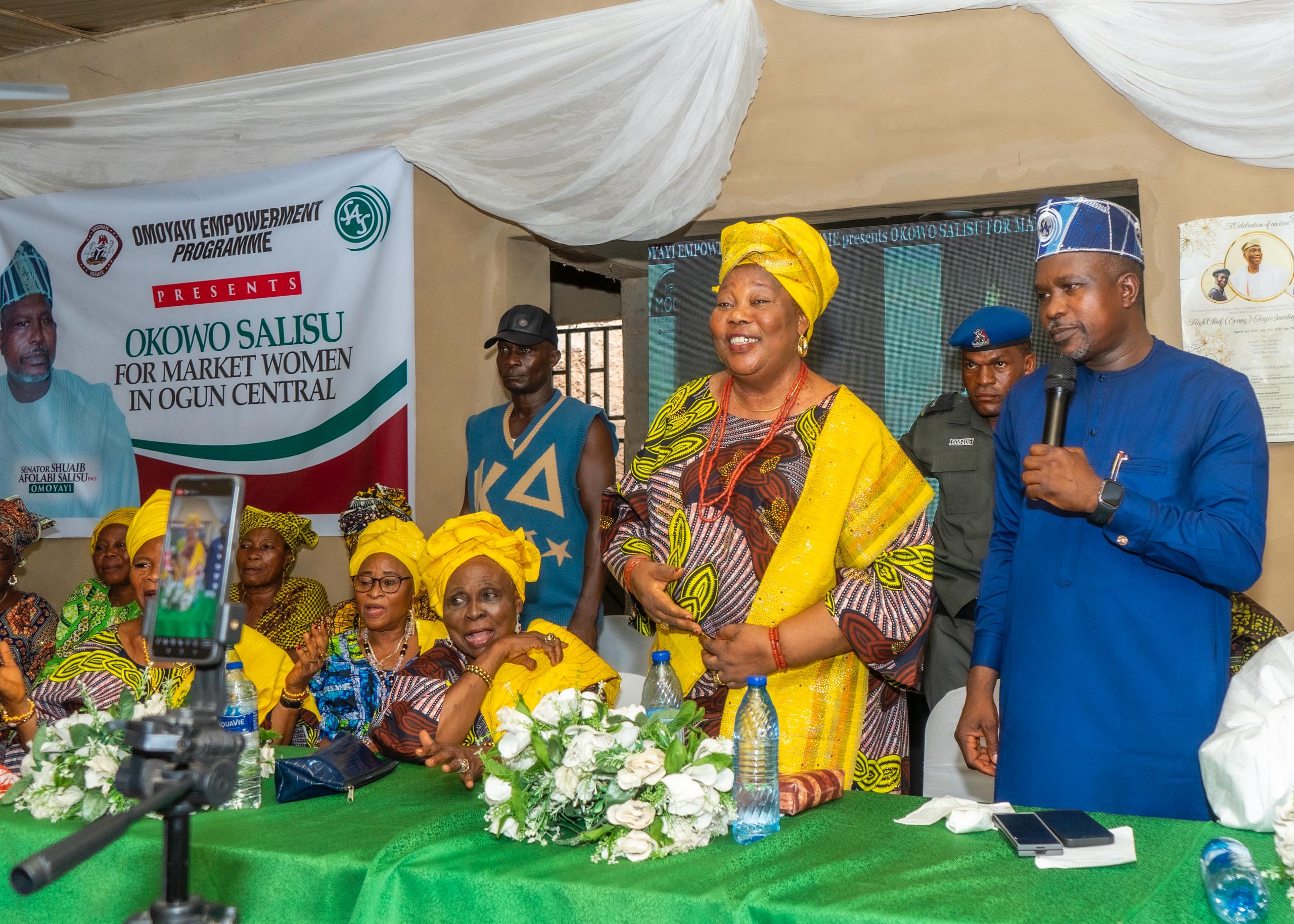
Senator Shuaib Afolabi Salisu, representing Ogun Central Senatorial District, has disbursed ₦100,000 each to 250 market traders across Egbaland.
The initiative, tagged ‘Olowo Salisu’, forms part of his ongoing constituency empowerment programme, which has previously targeted students, youths, and traditional institutions in the district.
Speaking at the event, Senator Salisu explained that the intervention was deliberately designed not just to offer financial relief, but to transition market women from the informal to the formal economy.
“With the support of partnering financial institutions, we are not just providing capital, we are onboarding these traders into the financial system. This includes introducing them to banking services and equipping them with basic tools like POS machines to facilitate digital transactions and reduce cash-related risks,” he said.
According to him, the programme also offered beneficiaries training in business development and financial literacy to promote long-term sustainability. He emphasized that empowering market women, who he described as the “backbone of the economy,” has a ripple effect on families and communities.
“My mother was a trader, so I understand the hurdles they face—particularly lack of capital and poor documentation. This is why the support includes not just seed funding, but an additional cushion to help cover immediate personal expenses, ensuring the business capital remains untouched,” he added.

Senator Salisu disclosed that the programme will be reviewed after six months, with plans to offer further support to traders who effectively manage and grow their businesses.
He expressed confidence in the financial discipline of women, saying many are likely to qualify for additional assistance.
“We’re not just handing out money—we’re building a pathway for micro-enterprises to thrive, scale up, and become part of a more inclusive economy,” he stated.
On national economic issues, the senator highlighted ongoing efforts by the National Assembly to mitigate the effects of the economic downturn through fiscal reforms.
He noted that prices of some staple commodities, including rice, are beginning to decline, and the foreign exchange market has shown signs of stability compared to the same period last year.
He also referenced the recently passed Tax Reform Bills, which he said aim to relieve low-income earners, harmonise taxes across federal, state, and local governments, and simplify the business environment to attract investment.
“These reforms are designed to ensure equity—those who earn more will pay more, while low-income earners will receive tax relief. We’re also reducing bureaucratic bottlenecks to promote business growth,” Salisu explained.
Defending the active role of legislators in their constituencies, he stressed that National Assembly members often serve as the most accessible face of government for many Nigerians.
“We may not be part of the executive, but we feel the pulse of the people directly. It is our duty to be present, responsive, and helpful. That’s the burden of true representation,” he said.

