 Follow Us on Google News
 Follow Us on Google Discover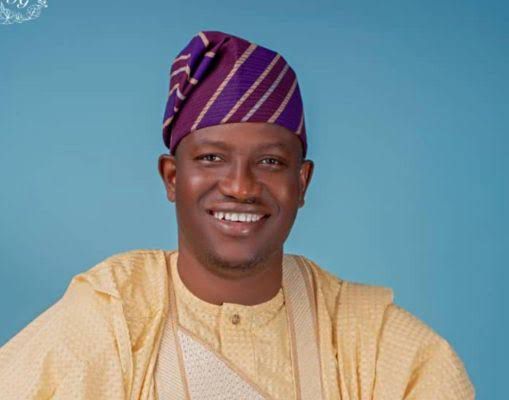
In Nigeria today, access to quality education is almost a privilege. A child needs fairly comfortable parents or good relatives to attend good schools and enjoy a high-standard education.
However, at Odi-Olowo/Ojuwoye Local Council Development Area (LCDA), one ordinary leader is doing extraordinary things. Honourable Rasaq Olushola Ajala, chairman of this LCDA, is proving that visionary leadership can rewrite destinies. His administration has placed education at the forefront, driven by one unshakable, deeply personal conviction: that the children of nobody can become somebody.
“Our investment in education is to make sure that the children of nobody can become somebody,” he declares. “Because failure to do that may turn some of the children of the people at the lowest level of the economic ladder, who cannot afford private tuition fees, into bandits, terrorists, and what have you.”
Honourable Ajala, therefore, began his revolution in education with scholarships on merit, not connections.
Every year, the LCDA purchases 250 GCE forms for indigent but brilliant students. This is not a token gesture but a transparent process that puts merit above favouritism. “You don’t need to know the chairman. You don’t need to know any member of the government before you can benefit,” Ajala explains. “It’s the Nigerian Union of Teachers that will set the exams, supervise them, and mark them.”
Eighty per cent of beneficiaries are selected strictly on merit, while the remaining 20% are given to community stakeholders to ensure inclusiveness. This system has de-emphasised nepotism and empowered deserving students who otherwise might have been overlooked.

While some big states still struggle with supporting undergraduates with annual bursaries, Odi-Olowo/Ojuwoye LCDA does so steadily, and the chairman speaks about it with evident joy.
For him, education doesn’t stop after secondary school. His administration has consistently awarded bursaries to undergraduates. “As of the last count, we gave bursary awards to over 700 undergraduates,” he says. “This is something that we have been doing every year, and we are happy to sustain it.”
The support helps ease the burden of tuition fees and living costs, enabling young people to stay in school and focus on their studies, he said.
Free ICT training for a digital future
In today’s world, digital literacy is non-negotiable. Recognising this, the council established two modern ICT centres, one in Monat and another in Mushin. “Most of the knowledge in private schools is 3D-based knowledge, and that is the era we are in now,” Ajala observes. “For the students of public schools to be globally competitive, I think we must be intentional in investing in ICT infrastructure so they can also benefit.”
These centres offer professional ICT courses valued at up to ₦800,000 per participant, absolutely free. Over 5,000 students and graduates have already been trained, and over 3,000 have graduated, equipping them with skills that make them employable in a highly competitive job market.
Primary schools upgrade
His commitment goes beyond programmes. It extends to infrastructure. “Among all the primary schools within our local government, there are no schools where we have not established our footprint,” he points out. “Some we have constructed classrooms, some needed toilet facilities, some fences, and some libraries.”
This comprehensive improvement followed a needs assessment conducted with school leadership to ensure each intervention directly addressed pressing gaps.
Although secondary schools are officially outside the local government’s purview, Ajala has not hesitated to support them. “The students going to these schools are residing within our local government,” he notes. “Hence, we support them with capacity-building programs, provided boreholes, generators, and financial support for inter-house sports.”
Free student transportation
This is another barrier the administration has tackled head-on. “Our study showed that an average family spends ₦500 every day to take their children to school,” Ajala explains. “As a government that is responsible and responsive, we decided to purchase two brand new 56-seater buses.”
These buses transport students to and from school at no cost and are also available for excursions and education-related activities during holidays.
Engaging the youth during long vacations
Determined to keep young people constructively engaged during school breaks, Ajala’s team organises free ICT programs during long vacations. “After all, there is a saying that an idle mind is the devil’s workshop,” he says. “Some of these programs go for as high as ₦400,000, but our children receive them free of charge.”
This strategy prevents youth restiveness and empowers them with skills for life, he stressed.
No question, Ajala’s vision is a quest to create a generation prepared to compete. His overarching goal is clear and deeply personal: “So that the children of our gatemen do not end up becoming the gatemen of our children,” he emphasises. “We must be deliberate in ensuring that all our young people, regardless of their background, have access to quality education.”
Indeed, education is the bedrock of any thriving society. In Odi-Olowo/Ojuwoye LCDA, Honourable Razaq Olushola Ajala is demonstrating that when a government dares to prioritise education, it doesn’t just build classrooms. It builds futures.
Now that the seeds of transformation have been sown in Odi-Olowo/Ojuwoye LCDA, the harvest promises a generation ready to compete and to take its rightful place in the world.
Williams, an ICT Specialist, wrote in from Ilupeju, Lagos.

