 Follow Us on Google News
 Follow Us on Google Discover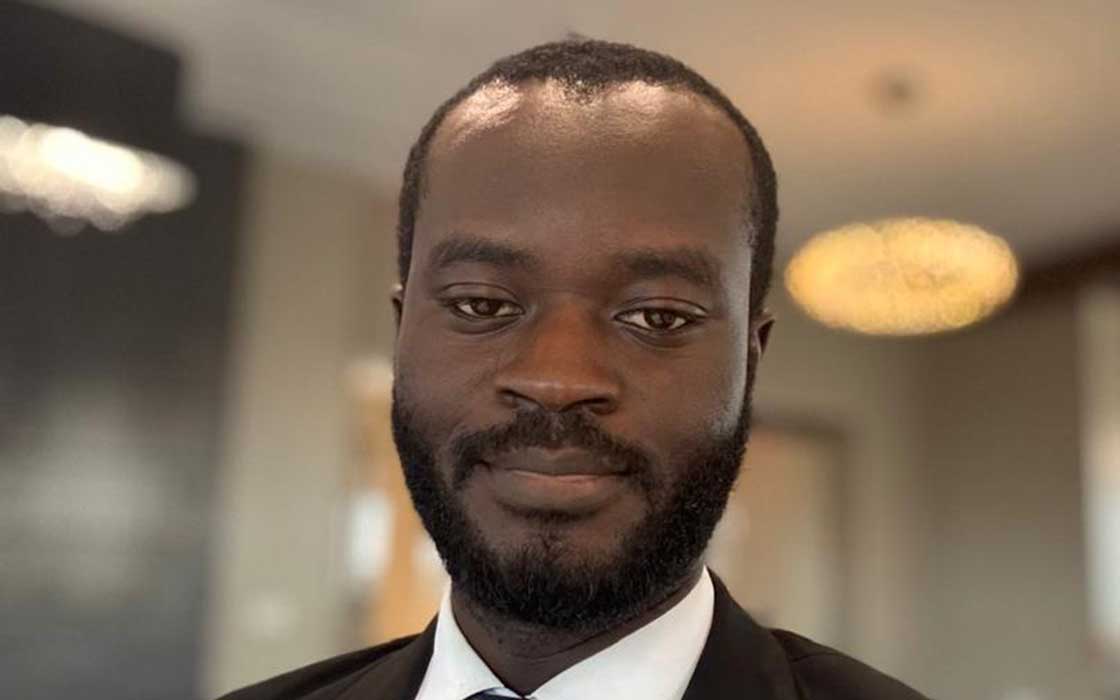
Before international audiences began taking notice of Sultan Alaaya Adebayo’s growing footprint in comparative and international business law, his work was already reshaping how institutions in Nigeria interpreted risk, structured transactions, and engaged with law as a tool for reform. From high-stakes litigation to policy-sensitive consulting, Adebayo spent the last several years executing some of the most complex legal transformations behind the scenes, delivering results that outlast headlines and outpace convention.
With a foundation in common and Islamic law, Adebayo was called to the Nigerian Bar in 2019. But it wasn’t long before he moved beyond conventional legal practice and began steering multi-dimensional engagements that bridged business, law, and governance. By the close of 2023, he had already become one of the few legal professionals of his generation to advise on commercial exposure for public enterprises, lead digital transformation of legacy institutions, and litigate cases with long-term impact across multiple judicial levels.
His career began in the corridors of structured finance and legal due diligence, where he reviewed high-value portfolios involving billions of naira in development funds, energy financing, and SME support. In these roles, Adebayo was responsible for ensuring that the legal architecture of each transaction was not just enforceable but sustainable. His work helped solidify the operational integrity of critical loan programs and funding arrangements aimed at stabilizing core sectors of Nigeria’s economy during a period marked by global uncertainty.
Transitioning into private legal practice, he joined a respected litigation and advisory firm where he handled several cases, many of which touched on contract enforcement, commercial disputes, and regulatory breaches. Here, Adebayo stood out for his ability to convert complex legal concepts into clear advocacy strategies, earning the trust of clients navigating both domestic and cross-border challenges.
In 2022, he took on managing partner responsibilities at a boutique commercial law firm. The shift to a firm leader reflected not just professional growth but a deeper shift in ambition, from legal execution to systemic problem-solving. That same year, Adebayo was invited to consult for multiple state-owned enterprises undergoing institutional repositioning. His assignments were far from routine: they included a review of multimillion-dollar contractual liabilities in the power sector, strategy design for transforming a public utility into a revenue-generating business, and the revision of legal frameworks guiding performance-based agreements and investment mechanisms.
One of his most impactful projects involved the digital transformation of a national insurance agency. Tasked with modernizing the institution’s legal and operational systems, Adebayo led a public-private collaboration that introduced enterprise automation across critical workflows. The initiative required him to balance legacy policy interpretation with new statutory reforms, providing legal oversight that was as innovative as it was risk-conscious.
While his advisory portfolio grew rapidly, Adebayo remained committed to public education and small business development. He facilitated capacity-building programs for entrepreneurs across North-Central Nigeria, offering hands-on legal and strategic training to help emerging businesses navigate compliance, labor law, and tax obligations. These sessions, delivered outside the spotlight, demonstrated a key element of Adebayo’s professional DNA: the belief that legal knowledge should empower people at every level of the economy.
Colleagues and collaborators often describe him as a “systems thinker”, someone who sees legal challenges not in isolation but as pieces of a larger institutional puzzle. His analytical depth and interdisciplinary fluency have made him a sought-after advisor on complex public-interest projects, particularly where regulatory reform, contract restructuring, and governance modernization intersect.
Now pursuing an advanced legal degree in the United States, Adebayo has not left his roots behind. His current focus builds directly on his earlier work, examining how trade law, investment protocols, and public policy can be harmonized across borders to create more equitable economic systems. But for those who worked alongside him in Nigeria, his trajectory comes as no surprise. Long before he stepped into any global spotlight, Sultan Adebayo had already proven that excellence, when guided by purpose, doesn’t wait to be discovered, it makes itself undeniable.

