 Follow Us on Google News


 Follow Us on Google Discover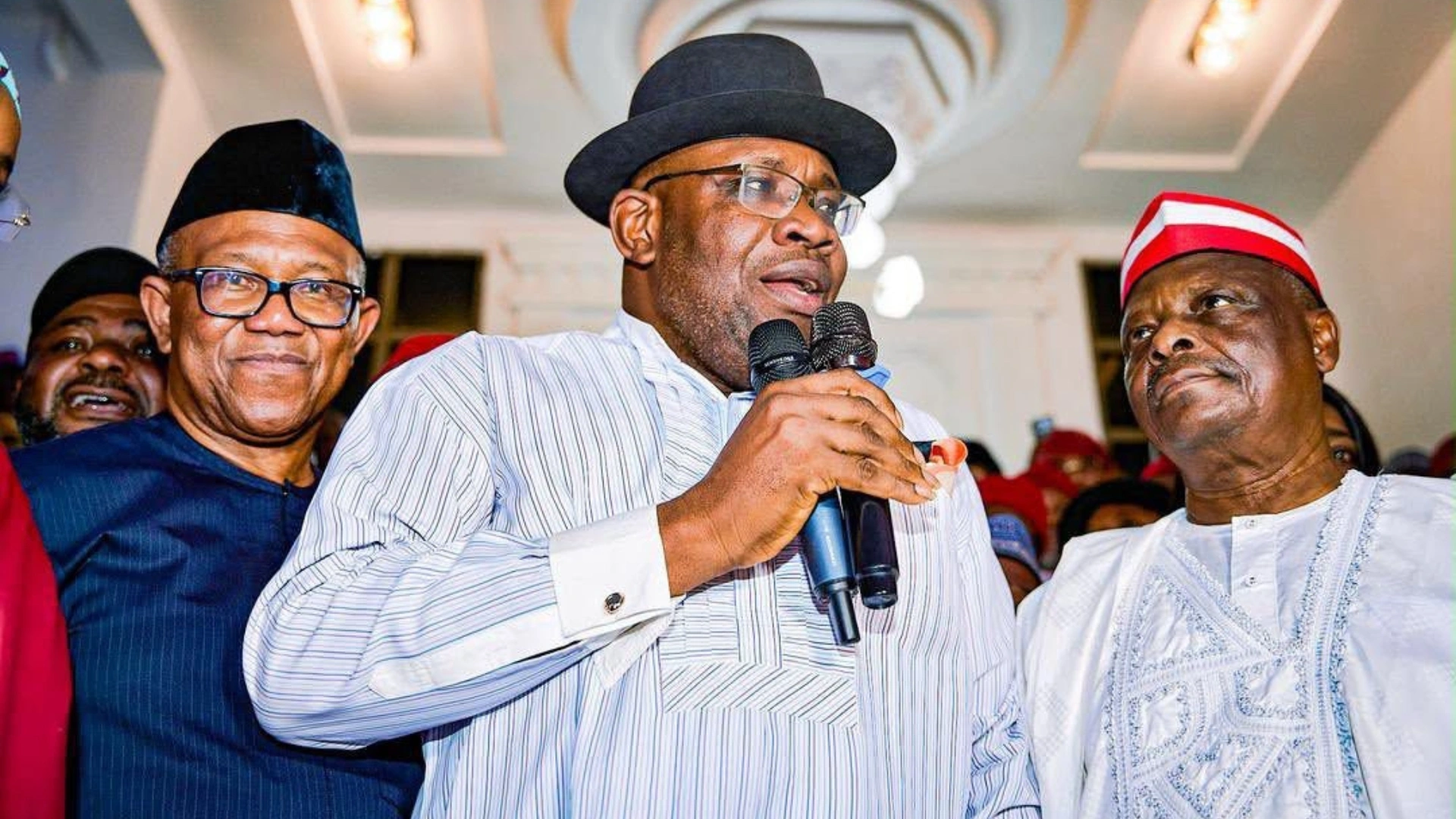
The just-concluded Osun governorship election has renewed concerns over the growing influence of money, federal power and security agencies in Nigeria’s electoral process, National Leader of the National Nigeria Democratic Congress (NDC) and former Bayelsa State Governor, Senator Seriake Dickson, has warned.
Dickson, speaking against the backdrop of the August 15 poll, said the increasing militarisation of elections, vote buying and political intimidation were undermining the credibility of the democratic process and pushing Nigeria’s democracy backwards.
His comments came as Governor Ademola Adeleke secured re-election, defeating his closest challenger, the All Progressives Congress (APC) candidate, Bola Oyebamiji, by more than 66,000 votes.
Speaking in Abuja while hosting former leaders and key operatives of the old Alliance for Democracy (AD), many of whom had not met for nearly three decades, Dickson reflected on the contrast between the political environment of the late 1990s and what he described as the increasingly money-driven nature of contemporary elections.
He recalled that during the formative years of the Fourth Republic, candidates could win elections without deploying huge financial resources, while voters were less inclined to demand money before casting their ballots.
Although he stressed that the meeting did not take any collective position on the Osun election or other contemporary political issues, Dickson said the experience of off-cycle elections such as Osun should compel Nigerians to examine the broader threats confronting the electoral system ahead of the 2027 general elections.

“We are very concerned about the militarisation of states. Not just Osun,” Dickson said.
The former governor, who governed Bayelsa as an opposition leader, said his concerns were shaped by his personal experience with federal security forces during elections in the state.
“I was an opposition governor, the only governor that has led Bayelsa to victory in elections in opposition… And I know what the federal forces did to me in Bayelsa,” he said.
Dickson warned that the deployment of federal security agencies during elections could create an atmosphere of fear and intimidation, particularly in states where opposition parties are challenging the ruling establishment.
“There are genuine concerns, generally, about what state institutions will do or may be used for in the course of the upcoming general elections,” he said.
Osun And The Battle Against Vote Buying
Beyond the deployment of security forces, Dickson expressed concern over the growing monetisation of Nigeria’s electoral politics, describing vote buying as one of the most serious threats to the integrity of elections.
He recalled the political climate of 1998 and 1999, when the old Alliance for Democracy operated with limited resources yet managed to win significant elections.
“We didn’t have money. Voters were not asking for money. Political leaders and politicians were also not giving money. Candidates didn’t have to be billionaires to win elections,” he said.
Dickson recalled that the old AD defeated the Peoples Democratic Party’s presidential candidate and former Head of State, Olusegun Obasanjo, while also winning elections in Bayelsa, Enugu, Kaduna, Adamawa, Niger and other states.
“The Alliance for Democracy, a party that did not have money, won,” he said.
He said the contrast with contemporary elections was troubling, arguing that the growing expectation of financial inducement and the huge resources deployed by political actors were gradually turning elections into contests of financial muscle rather than competing ideas.
‘INEC Is Sometimes Like An Auction’
Dickson also questioned the effectiveness of the Independent National Electoral Commission (INEC), alleging that the electoral process had become vulnerable to financial influence.
“INEC is sometimes like a marketplace, unfortunately, where the highest bidder takes. It’s like an auction field,” he alleged.
He warned that when vote buying, intimidation, heavy security presence and electoral malpractice combine, voters could be denied the freedom to make genuine choices at the ballot box.
“The outcome of elections doesn’t really ennoble the practice of democracy in Nigeria. We are very concerned,” Dickson said.
He lamented that after more than two decades of uninterrupted democratic rule, Nigeria appeared to be experiencing a deterioration rather than an improvement in the quality of elections.
“It’s unfortunate that instead of improving, instead of the quality of elections improving after 20-something years and after about four or five election cycles, it’s unfortunate that we are going backwards,” he said.
According to Dickson, the growing presence of security forces, political thuggery, vote buying and other forms of electoral malpractice represented serious threats to democratic consolidation.
“More militarisation, you have more thugs involved, more electoral malpractices,” he said.
Old AD Leaders Reopen Political Conversation
Dickson said the Abuja gathering was primarily a reunion of former political allies who had worked together during the early years of Nigeria’s Fourth Republic.
“Today, we are meeting as old allies, old operatives, old guards of the Alliance for Democracy of old,” he said.
He said he also used the occasion to formally notify the former AD leaders about the new political party established by some members of their old political family, although no immediate decision was taken on political alignment.
Among those present were former AD leaders and founding figures, including Professor Odenta, the party’s founding National Secretary, Dr. Manzo, and several other former colleagues.
Dickson said he began his political career in the old AD as a founding state chairman and later became the party’s National Legal Adviser.
The reunion also provided an opportunity to honour the sacrifices of politicians who helped lay the foundations of Nigeria’s Fourth Republic.
Participants observed a minute of silence in memory of deceased leaders, colleagues and allies who contributed to the struggle for democracy.
“When the history of this period is written, there are some names and some sacrifices that people have forgotten,” Dickson said.
He said many Nigerians occupying political offices today might not fully appreciate the sacrifices made by the pioneers of the democratic movement.
Despite the strong concerns expressed about the state of Nigeria’s democracy, Dickson emphasised that the meeting did not produce any collective decision on current political developments or the 2027 elections.
“For today, we have not taken any broad decisions along those themes. Today was just an opportunity for us to rekindle old friendships, rebuild old networks and alliances,” he said.
He disclosed that the group would reconvene for wider consultations on the future of Nigeria’s democracy and the challenges confronting the electoral system.
“They will, in no distant time, gather all of us again to have conversations that are necessary and appropriate in the circumstances of our nation’s democracy,” he said.
As political parties assess the lessons of the Osun election and begin preparations for 2027, Dickson’s warning places two issues at the centre of the debate: whether Nigerian voters can exercise their franchise without intimidation or financial inducement, and whether political contestants can compete without the overwhelming influence of federal power and state machinery.

