 Follow Us on Google News
 Follow Us on Google Discover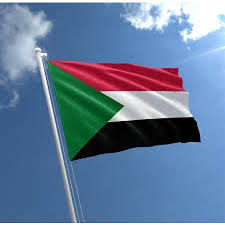
The Embassy of the Republic of the Sudan in Abuja has dismissed claims that President Abdel Fattah Al-Burhan officially recognised Egyptian sovereignty over the disputed Halayeb, Shalateen, and Abu Ramad triangle.
The government insisted that the territory remained part of Sudan’s internationally recognised borders and that no communication or directive had been made by any official Sudanese body to relinquish sovereignty over the area.
Responding to claims by an article published in The Guardian, the Sudanese embassy in Nigeria clarified that at no point has President Al-Burhan or any government institution ceded the territory.
The report had claimed that French outlet Reseau International reported that “army Chief, Abdel Fattah al-Burhan, who has held power since the 2021 coup, formally acknowledged Egyptian sovereignty over the disputed border triangle of Halayeb, Shalateen, and Abu Ramad.”
The report stated that Egyptian President Abdel Fattah al-Sisi had reached an understanding with al-Burhan in an earlier meeting, affirming the area’s inclusion within Egypt’s borders.
It also claimed that on May 11, Sudan’s Sovereignty Council sent a letter to the National Border Commission requesting that maps be amended to reflect the territory as Egyptian during border demarcation talks with Saudi Arabia, effectively ending a decades-long dispute.
But the statement by the embassy noted that any suggestion of such is unfounded and unsupported by credible evidence.
“The said territory remains part of Sudan’s internationally recognised borders, and at no point has President Al-Burhan or any official Sudanese body relinquished sovereignty over it.
“Furthermore, the article references an alleged communication from the Sovereignty Council to the Border Commission suggesting map alterations in favour of Egypt. This claim is unfounded and has not been substantiated by any documentation or official statement. Such sensitive matters should not be reported without clear, verifiable evidence,” the statement added.
The mission also clarified that Al-Burhan is the President of the Transitional Sovereignty Council of Sudan, having assumed the role on April 11, 2019, following the December 2018 revolution, and was formally inaugurated as chairman in August of the same year under the Constitutional Declaration.
The embassy raised concerns that there was an omission of crucial facts in narratives surrounding the ongoing conflict, including official positions of the African Union Peace and Security Council, the United Nations Security Council, and several allied nations condemning the Rapid Support Forces (RSF) and its allies for attempts to establish a parallel government.
It further alleged that the RSF has deployed foreign mercenaries, including Colombian fighters, in attacks on civilian populations in cities such as El Fasher.
“Equally concerning is the omission of credible reports on the RSF’s use of foreign mercenaries, including Colombian fighters, in brutal assaults against civilian populations in cities such as El Fasher.
“Instead, the piece disproportionately features claims and opinions from individuals linked to the armed rebellion, while failing to reflect the positions of the legitimate Sudanese Government or accredited institutions such as the Embassy.
“This imbalance undermines the objectivity and depth that are the hallmarks of responsible journalism, particularly when reporting on issues as grave as national sovereignty, peace, and security,” the mission stated.

