 Follow Us on Google News
 Follow Us on Google Discover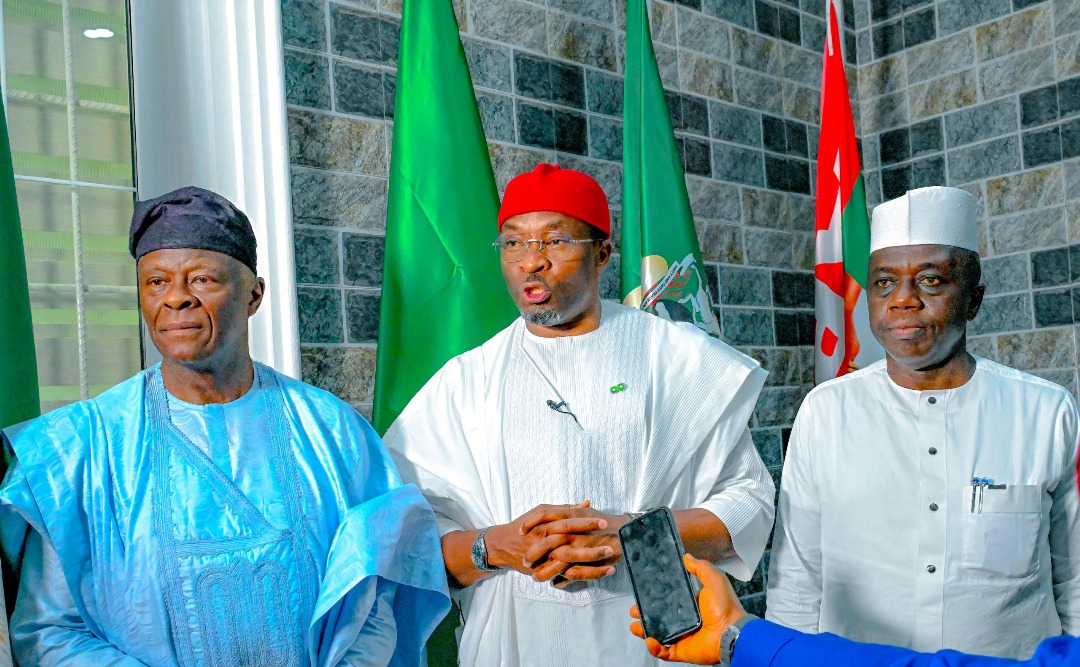
A palpable sense of tension permeated the air as they trickled into the compound. Aggression stamped on their faces. Their countenances were etched with the weight of prolonged pecuniary neglect. They had emerged from a street protest, looking more agitated and pugnacious for any eventuality. Months of unpaid fees for jobs done had ignited a cauldron of discontent, threatening to boil over into unbridled acrimony between them and the federal government. They looked determined, uncouth, and unguided in both their utterances and actions, clearly depicting the old aphorism that “a hungry man is an angry man.” In fact, showdown was the only word appropriate to define both their mood and intent.
Yet, through the deft facilitation of a visionary mediator, the atmospherics underwent a spontaneous, profound metamorphosis.
Those were the members of the All Indigenous Contractors Association of Nigeria (AICAN), who decried their months of unpaid remuneration after project implementation. They had been invited to a meeting with the government stakeholders to find an immediate solution to the impasse.
The date was Thursday, September 4, 2025, and venue was Asokoro, Abuja.
Feelers at the meeting submitted that, at first, they had resolved to boycott any meeting that would be called, citing the failure of the previous ones to lift their confidence in the officials.
But on hearing that the intervention was coming at the instance of the House of Representatives, with the Deputy Speaker, Rt. Hon. Benjamin Okezie Kalu, PhD, CFR, presiding, the members, led by their National President, Comrade Jackson Ifeanyi Nwosu, and the secretary, Babatunde Shehu, who were at the time holding a peaceful protest at the main entrance of the Federal Ministry of Finance headquarters in Abuja, decided to give the meeting a shot.

Top government officials present at the meeting included the Minister of Finance, Wale Edun, and the Accountant-General of the Federation, Shamshudeen Ogunjimi, amongst others.
As the meeting got underway, with the Deputy Speaker Kalu giving a profound background and amplifying its solution-driven nature, one could read the minds of the contractors. And just as expected, their National President, when called upon to speak, furiously stammered into a cul-de-sac, insisting on their payment or nothing.
His insistence found favour with his members, who received it with the chants of “Injury to One, Injury to All.” This got the atmosphere even more tense.
At that juncture, every eye gaze shifted to Kalu, who himself clearly understood the situation. To calm the already frayed nerves, the Deputy Speaker adopted a high-pitched native intelligence quotient, activated his legal and legislative acumen, putting empathy and diplomacy to work. In fact, tact, mien, and administrative finesse were at their lavish peak.
Exercising astute statesmanship, Kalu, an elected representative, chose the popular route, pitching his tent with the people while skilfully affording the government negotiators a dignified way forward to facilitate a mutually beneficial outcome.
His intermittent anecdotal narratives paid off as he gave more opportunities to the individual contractors outside their leadership to ventilate their feelings. Where he needed to beg and appeal, he wasted no time doing so. This, in no small measure, placated the people and the officials who commended his wisdom.
Perhaps the best time during the meeting was when Kalu, working as the mediator, called on the Accountant-General to also speak to the issue of payment protocols and processes, touching on their accounting jargon, amongst which was “finalisation.”
The outcome of the explanation and the confirmation that funds to offset the debts have been “uploaded” and are currently available at the Central Bank of Nigeria (CBN) gladdened the hearts of the contractors, who later agreed with Kalu’s suggestion that a batch-by-batch formula was most suitable to clear the backlogs.
In that poignant vignette, one could witness the transformative power of diplomacy in action.
By the time Ogunjimi said that payment had been initiated at the appropriate quarters, except for the public holiday on Friday, which would potentially delay it till Monday for them to start receiving bank alerts, smiles started beaming on their faces.
Of course, the meeting, which began at about 3 p.m., ended at about 7 p.m., lasting well over four hours.
But as the marathon drew to a close, it was not in doubt to everyone present that a remarkable transformation had taken place. Kalu’s diplomatic efforts had yielded a mutually beneficial accord, one that did not only address the concerns of the contractors and the government representatives but also revitalised a sense of trust and cooperation.
What had appeared like an irate assembly of men at the beginning later gave way to understanding and empathy in a manner that was aglow with renewed hope and optimism. The apparent indignation and frustration of the contractors suddenly disappeared. In the end, what seemed like an atmosphere of a fiery confrontation gave way to smiles and expressions of gratitude.
Leaving the meeting, Nwosu and the entirety of the membership of the Association of Indigenous Contractors of Nigeria expressed satisfaction with the resolutions reached, commending the Deputy Speaker for his intervention and pledging to discontinue the protest.
In his remarks thereafter, Kalu applauded all parties, announcing the date of a follow-up meeting to evaluate disbursements and report progress.
He said: “First of all, I want to thank the Speaker of the House of Representatives, Rt. Hon. Tajudeen Abass, PhD, GCON, the leadership of the House for finding me worthy to be the Chairman of Budget Implementation Committee of the House. We met yesterday, cut down our holidays to be able to reconvene and look into these all-important matters.
“We met on Wednesday with the Finance Minister, Minister of Budget and Planning, as well as the Accountant-General of the Federation, and we sat down for about four hours with representatives that cut across all the zonal caucuses of the House, including representatives of the Appropriation and Finance Committees of the House. Those are the core members of this new committee whose job is to make sure that in the implementation of the budget, the right things are done. And one of them happens to be the issue of non-payment of contractors.
“They explained to us yesterday, and today, we saw the protest and asked them to come, let’s have a conversation. I want to thank President Bola Ahmed Tinubu, GCFR, for appointing these gentlemen to occupy the positions they occupy. They have shown humility in service. They have shown dedication. They have shown diligence in the way this matter has been handled, and as a parliament, we are happy with the way they came yesterday, and all we discussed yesterday, they started implementing from today—the ability to engage with the people.
“They came in their hundreds. As you noticed, they are just leaving here now. Once again, we had over four hours of engagement, and they left here smiling because we got a strategy in place. We got their concerns sorted out, and the implementation timeline was drawn, and all of them were happy. We are going to come back on the 21st of this month to review what we’ve done so far, how we’ve ticked the boxes, what needs to be done, and the way forward.
“They are going to be focusing on the ones we have chosen now, especially from February to May 2025. Those backlogs; they are looking into uploading them, and I am sure this will stimulate the economy once more and help to strengthen so many areas of our country’s economy once the contractors receive their money. I want to thank the members of the association who put themselves together and were willing to communicate through dialogue, and this is the Nigeria we are proud of.”
Lending his voice also, the Minister of Finance, Edun, commended the Deputy Speaker for his intervention, assuring that the payment will commence next week.
“Under the leadership of Rt. Hon. Benjamin Kalu, we did hold a marathon meeting today where all the issues were discussed, a timeline was put in place, and a way forward was mapped out, and all parties at the end of it left knowing that contractors would be paid for jobs done, and we have an orderly and systematic way of dealing with the backlogs which had approved overtime.
“Once again, we commend the leadership of the House of Representatives and the contractors for their willingness to sit down and dialogue. The Accountant-General of the Federation made some commitments which helped us to chart the way forward.
“We had a peaceful solution. A timeline was put in place, and everyone accepted that there are steps that need to be taken—approvals, finalisation, and orderly procedure for payments. After Friday’s holiday, the Central Bank will open again on Monday, and payments will commence immediately,” he said.
The Accountant-General of the Federation, Ogunjimi, corroborated the position of the Minister of Finance.
“This process is ongoing. We’ve been paying contractors, and we will continue to pay. From Monday, payments will start dropping,” he said.
Kalu’s timely and cautious intervention ultimately showcased the transformative power of adept diplomacy and the boundless potential for resolution that lies within the realm of constructive dialogue. It lends credence to the fact that all the challenges of governance in the country can honestly be addressed with the right tone and strategy to deepen democracy and foster more economic development. Indeed, it is better to “jaw, jaw” than to “war, war.”
Eze, a public affairs analyst who observed the proceedings of the meeting, wrote this piece from Abuja.

