 Follow Us on Google News


 Follow Us on Google Discover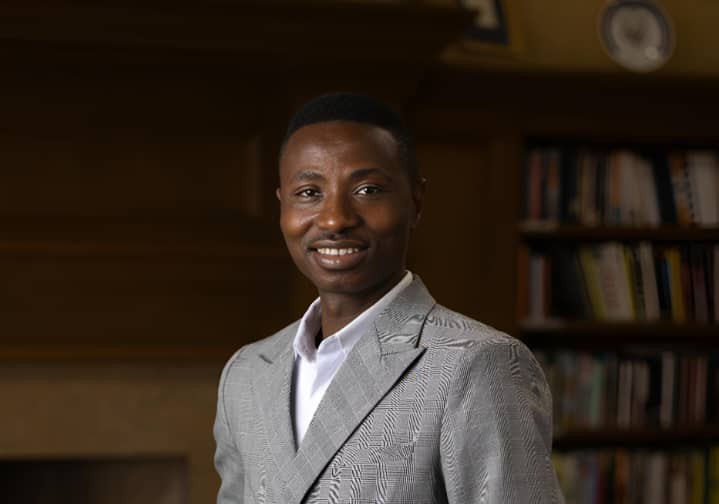
In an age defined by mass cross-border migration, security concerns, and shifting geopolitical dynamics, few voices have emerged with clarity and authority. In this interview with The Guardian, Oladotun Awosusi, an internationally renowned scholar and policy analyst who has distinguished himself as one of the leading experts on migration and border diplomacy, offers insights into the core of global stability.
Currently serving as a Research Fellow at the University of Arkansas Clinton School of Public Service, United States, Awosusi is not just analysing the complexities of migration and border diplomacy; he is shaping how governments and institutions around the world approach them. His cutting-edge research work has already earned recognition at the highest levels, including the World Social Science Association Honourable Mention Paper Award he received in 2023 at the World Social Science Conference in Tempe, United States, as well as the Best Community-Engaged Research Award by the Clinton School of Public Service, United States, earlier this year.
With a forthcoming book, Nigeria’s Border Diplomacy: Power and Hegemony in Africa, he is poised to redefine how policymakers, students, and researchers across the world understand the intersections of border diplomacy and geopolitics. His book specifically explores how a state, powerful or not, can leverage the geostrategic advantage of the five border domains (borderland, airspace, maritime, cyberspace, and outer space) to drive its national aspirations, including security. His book builds on a long track record of publishing extensively cited articles on migration, regionalism, and border security challenges in the globalised world.
Driven by a mission to bridge global divides, Awosusi consistently pursues critical questions that matter not only to academics but to policymakers and local communities at the forefront of migration crises and border insecurities. His research illuminates how diplomacy can replace contestation, coercion, and resistance at the borders, enhancing national security without undermining human security, and how nations can craft strategies that are both just and effective. This was the focus of his PhD research at the University of Fort Hare, South Africa.
“Migration is beyond (im)mobility,” Awosusi asserts. “It is about the future of nation-states, their workforce, security, and humanity. An explanation of borders is premised on understanding the very dynamics of the global community.”
Awosusi’s journey is a testament to resilience, intellectual prowess, and an unwavering commitment to addressing global challenges. At the University of Arkansas Clinton School, he is engaged in cutting-edge projects that explore how states can reconcile national demands (i.e., security) with humanitarian responsibilities. His research dissects the complexities of borders (virtual and physical), diplomacy, and security, as well as the future of international migration landscapes.

For Awosusi, the research endeavour is both personal and professional. “Every border tells a story,” he reflects. “Some are stories of exclusion and tension. Others, if handled with foresight, can be stories of resilience and collaboration. My research focuses on rewriting those narratives as they relate to migration, border diplomacy, and security.”
As he continues to engage in evidence-based research, deliver lectures, and advise on critical issues of global migration and border diplomacy, Awosusi is well-positioned to advance scholarship beyond academic relevance, contributing to societal transformation.

