 Follow Us on Google News
 Follow Us on Google Discover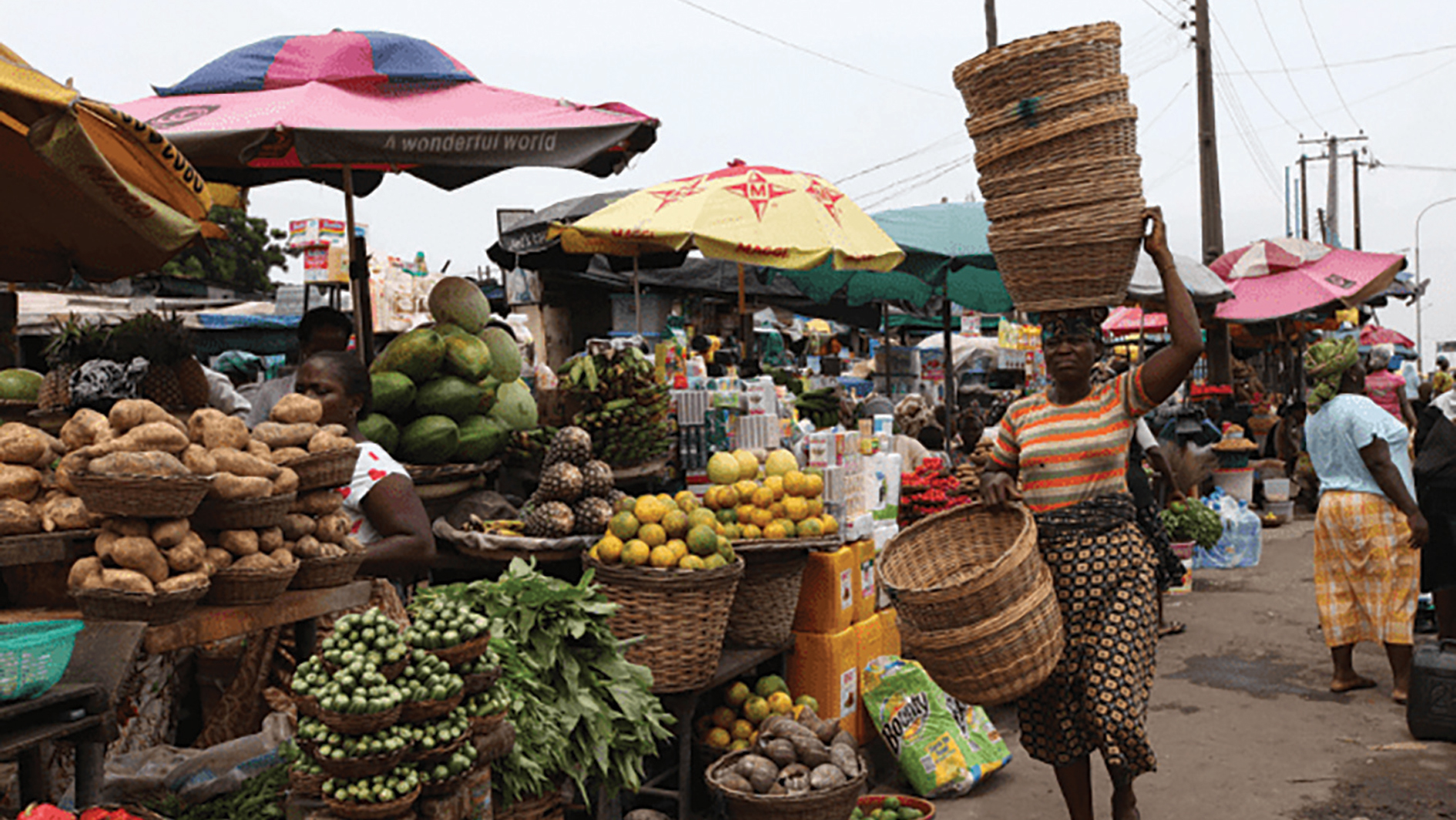
With the recent surge of the inflation rate from 15.69 per cent to 16.06 per cent in April 2026, the highest since last November, BERTRAM NWANNEKANMA and ENIOLA DANIEL report that many households are adopting diverse strategies to stay afloat in the face of dire cost-of-living conditions.
Among other things, domestic structural failures and a cocktail of geopolitical shocks pushed the country’s yearly inflation rate to a new high of 16.06 per cent in April 2026.
The National Bureau of Statistics (NBS), in data it released, confirmed that this upward shift, the highest level recorded since November 2025, is linked to the March fuel price shock driven by the war in the Middle East.
In essence, while core inflation, which strips out volatile agricultural and energy prices, actually eased slightly to 15.86 per cent, the prices of food are soaring entirely out of the ordinary citizen’s reach, and this development is worsened by the rising cost of farm input, widespread insecurity in food-producing corridors, as well as flooding in some regions.
All these developments are shaping how Nigerians eat, even as they force a stark divergence from the baseline metrics of basic human welfare.
According to the NBS Cost of Healthy Diet (CoHD) indicator, the daily cost for an adult to maintain a nutritious diet rose to N1,513 – a 12.4 per cent increase year-on-year.

The largest component of the inflation basket, quickened for the third month to 16.06 per cent in April, with increases across key staples, including millet, yam flour, ginger, beef, garri, tubers, and pepper.
Additional upward pressure came mostly from restaurants and hotels (27.9 per cent vs 25.2 per cent) and health (18.9 per cent vs 20.1 per cent).
Every month, the CPI index advanced by 2.13 per cent, after a 4.18 per cent jump recorded in the prior month.
As many households adopt a survival instinct to grapple with the high inflation rate, as essential commodities continue to soar beyond reach, others are forced to discard premium products for cheaper alternatives or buy goods in smaller quantities.
Local grains, once considered secondary staples, are now more popular as the prices of maize- and wheat-based products continue to soar.
Many more households have also adopted home gardening, growing vegetables in their backyards to reduce their reliance on expensive market produce.
From everyday consumers to local vendors, the impact is widespread, while the coping mechanisms differ. Obviously, the reality on the ground contrasts with the national average CoHD, which increased by 3.76 per cent per adult per day compared to the N1,458 recorded in January 2026.
As of February 2026, the CoHD was 12.4 per cent higher than the February 2025 figure, rising from N1,346 to N1,513.
The food groups that have driven the year-on-year increase in CoHD are animal source foods, followed by fruits, then oils and fats, and lastly vegetables.
However, the price of starchy staples decreased year on year.
According to the report, animal-source foods were the most expensive food group recommendation in February, accounting for 39 per cent of the total CoHD and providing 13 per cent of the total calories.
It noted that fruits and vegetables were the most expensive food groups, per calorie.
“They accounted for 16 per cent and 14 per cent, respectively, of the total CoHD while providing only seven per cent and five per cent of total calories in the Healthy Diet Basket. Legumes, nuts and seeds were the least-expensive food group on average, at seven per cent of the total cost.”
The report also said that the CoHD had risen faster than general inflation and food inflation.
“However, the CoHD and the food Consumer Price Index (CPI) are not directly comparable. The CoHD includes fewer items and is measured in naira per day, while the food CPI is a weighted index.”
The NBS said the policy implications of these results would foster collaboration among a wide range of stakeholders, such as policymakers, researchers, and civil society actors focused on food security.
But despite all these explanations, Nigerians insist that the amount (N1, 513) was insufficient for a balanced diet, citing the inflated food prices.
Consumers like Bola Hassan, a mother of three, find it difficult to fill their kitchen with foodstuffs due to high food prices.
But to cope with the high price of essential items, she adopted creative strategies, such as slashing budgets and limiting purchases.
“I used to buy a kilo of rice every week years back, but now I can’t afford to buy half. We’re eating more cassava and cocoyam because they’re more affordable,” she explained.
Hassan’s story is touching, as she now eats only once or twice a day to make sure her children are satisfied.
With a crate of eggs going for N6,000, a kilo of chicken selling for N5,500 to N6,500 (depending on the area), the cheapest brand of spaghetti going for N900, and 25 litres of groundnut oil going for N80,000, many Nigerians simply cannot afford a healthy meal.
An economist and Chief Executive Officer of Economic Associates (EA), Dr Ayo Teriba, emphasised that the removal of petrol subsidies led to higher transportation costs and the resultant increase in the prices of food and services.
Teriba, who is the Coordinator of the Technical Working Group (TWG) on Financial Sector and Capital Markets on National Development Plans MTNDP 2021-25, said that from May 29, 2023, to November 2024, the cost of reform was reflected in accelerated inflation and worsening hardship.
According to him, there is no debate that prices have worsened for 18 months because inflation rose to 35 per cent. “Rice, beans, yams, garri and others went up until November 2025, and the key inflation driver was the exchange rate, which became volatile, the parallel market widened, and the exchange rate moved from N450 to N1,900. Life was worth it, and people came out to protest the cost of living.
“The price of everything rose, but things began to improve from November 2024 for another 18 months until May 2026, except March 2025, March and April 2026. So, if inflation has descended from 35 per cent to 15 per cent today, why will anyone deny that things have eased?
“Prices cannot rise if the naira appreciates. Devaluation is needed for inflation to accelerate. Where the National Bureau of Statistics (NBS) is getting its increment every month since December beats me. Has the price of rice or beans moved up from N70,000?
When asked if retailers should be blamed for the price increase, he said: “You have to address the part of the country where the price is up, and you have to address the fact that the petrol price that was N740 until February is now nearly doubled, which will affect retailers based on their distance from the port. Increased fuel cost increases transport costs, and it must be reflected in retail cost.”
Speaking on factors affecting Nigerians’ intake of a balanced diet, the Chief Executive Officer, Centre for the Promotion of Private Enterprise (CPPE), Dr Muda Yusuf, noted the need for the government to tackle insecurity in addressing food inflation.
According to him, prices rise when supply is constrained, while agricultural productivity has been affected by insecurity.
“The second thing is to support agriculture with much cheaper input. Farmers are complaining about the cost of input. Fertilisers, pesticides, machinery, and other inputs are unaffordable for many farmers.
“The third point is finance; we don’t have adequate financing for agriculture. We also need to encourage more commercial agriculture. Most of those who are in farming today are smallholder farmers.
“We must encourage mechanised farming, which will impact the output. Most of the country is doing well in agriculture, with a high contribution from commercial agriculture. We have many farmers in Nigeria, but most still use hoes and cutlasses.
“Cost of transportation; import duty to bring in some of the input, raw materials and machinery is still high, and they contribute to inflation, so the government should look into that.
Speaking on the amount required to eat a healthy diet, Yusuf said: “The price of some goods has reduced, and a bag of rice is sold for N60,000, but most of the prices are still high, and the income of the people has not really gone up, and that’s why there is an outcry.
“The cost of transportation is still high, while income has not gone up. Tomatoes and peppers are still high. I don’t know how many people can afford a balanced diet now. So many people cannot afford to buy meat. It is difficult for many people to eat protein.”
For the Convener, Strap and Safe Child Foundation, Mrs Bolanle Edwards, the NBS on the increasing cost of a healthy diet in Nigeria is indeed alarming.
Mrs Edwards said her family is presently adopting sustainable measures to cope with inflation, including meal planning, prioritising essential items, and allocating resources accordingly.
“We’re mindful of food waste and creatively repurpose leftovers. We’ve incorporated affordable protein sources, such as plant-based options and fish, and we invest in non-perishable items during sales or discounts.
“To make ends meet, we’re also exploring growing our own herbs and vegetables, cutting back on discretionary spending, and diversifying into multiple income streams,” she said.
While these measures help, she stressed that policymakers must address the root causes of inflation and ensure affordable food prices for all Nigerians.
For food vendors and small businesses, the challenge is even greater as the rising cost of basic ingredients has forced many vendors to innovate.
Some are sourcing locally produced alternatives, while others are reducing portion sizes or tweaking recipes to include more affordable components.
Even popular street food vendors have adjusted, with fewer offerings or substituting pricier ingredients with cheaper ones.
John Nwafor, who owns a small restaurant at Esa Oke, Osun State, lamented how food prices have affected and almost ruined his business.
“I had to adjust my menu to stay afloat. We’ve stopped serving beef regularly because it’s just too expensive. Now, we offer more fish and chicken dishes, and even then, the portions are smaller,” he said.
Local farmers and producers are also feeling the pinch. With the cost of fertilisers, seeds, and transportation rising, many are finding it difficult to maintain their output without increasing prices. Those who supply directly to markets are trying to negotiate better deals or are banding together in cooperatives to reduce costs.
A cosmetic store owner at Megida Bus stop, Ayobo, Michael Ozobiara, also shared his experience, saying: “N1,513 cannot get me a nutritious meal in a day. Most mornings, I do not eat, but I always eat in the afternoon, and when I do, I spend up to N2000. The food will be nutritious, but barely enough to eat.
However, a Lagos-based management expert, David Johnson, accused Nigerians of wasting golden opportunities and mismanaging their fortunes.
Johnson said: “First, we have to understand the global recession; secondly, I don’t think Nigerians are kind to themselves. We easily forget records. At one point in this country, we had everything and didn’t know what to do with it. We were so wasteful when the new democratic order came.”
Advising on coping mechanisms, he said: “We must fasten our belts and be more disciplined. We must rethink our priorities. If bread is no longer for the poor man, then we must rethink. If you are a poor person and you want to eat bread, then it’s unfortunate. Go and get the alternative. This is a question of time; nothing is permanent.
“We should be grateful that this country is so blessed that we grow almost everything, but go to the market and see how Nigerians are being wicked to themselves. Why will four pieces of tomatoes be sold for N1000?
“We cut costs by reducing the cost of living. I don’t eat all I wish to eat; I eat what I can manage, and I am better off with it, and it’s healthier.”

