 Follow Us on Google News


 Follow Us on Google Discover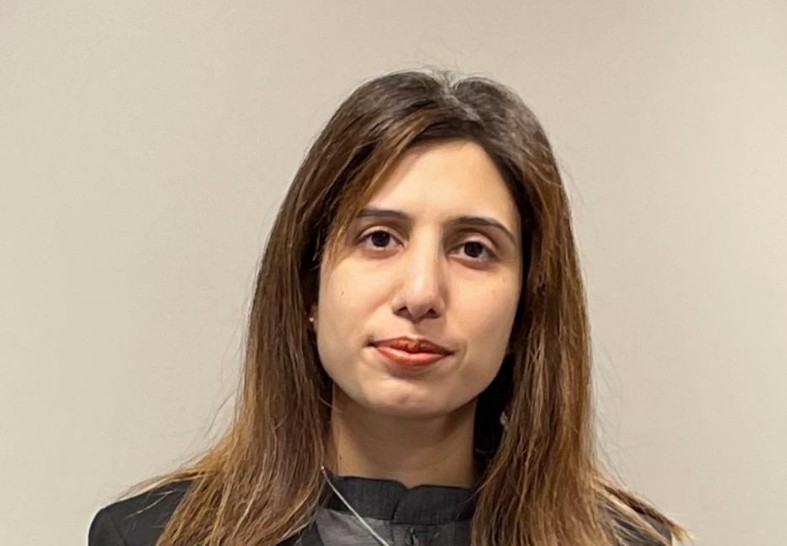
At the Department of Chemistry and Chemical Engineering, Lahore University of Management Sciences (LUMS), Sunniya Iftikhar is contributing to the frontier of materials science through her research on organic semiconducting polymers. As a researcher, her work focuses on creating smarter, more efficient materials for use in energy conversion and biomedical technologies.
Her recent studies explore the synthesis of regioregular organic semiconducting polymers (OSPs) using Grignard Metathesis polymerisation. Through side-chain engineering and molecular design, she has developed donor–acceptor conjugates with properties suited to next-generation solar and biophotovoltaic devices.
“Our goal is to design molecules that can both harvest and utilise energy more effectively,” she added. “We are working to make organic electronics not just efficient, but also adaptable to medical and environmental applications.”
Beyond laboratory synthesis, Iftikhar has extended her expertise to organic–inorganic hybrid materials, combining the flexibility of polymer chemistry with the durability of metallic components. Her experiments have produced prototypes for low-cost photovoltaic cells capable of maintaining stability under variable light conditions. She also explores electrocatalytic reactions, an area that holds promise for green hydrogen generation and other clean-energy technologies.
Faculty supervisors at LUMS describe her research as “precisely the kind of innovation that pushes the boundary between chemistry and engineering.” They note that her understanding of both molecular design and device fabrication has strengthened interdisciplinary collaboration within the department.
Iftikhar’s findings have appeared in peer-reviewed scientific journals, reflecting the recognition of her work within the broader research community. She has also contributed to the drafting of competitive research proposals that secured institutional and external funding for further development of energy materials.

For her, the laboratory is a place where science meets purpose.
“We are no longer studying materials just for their properties,” she said. “We are designing them for how they can improve lives, whether that is through cleaner energy, better sensors, or sustainable devices.”
Her pursuit of precision and innovation embodies the growing momentum of Pakistan’s research landscape, where young scientists like Iftikhar are demonstrating that locally driven research can yield globally relevant solutions.

