 Follow Us on Google News


 Follow Us on Google Discover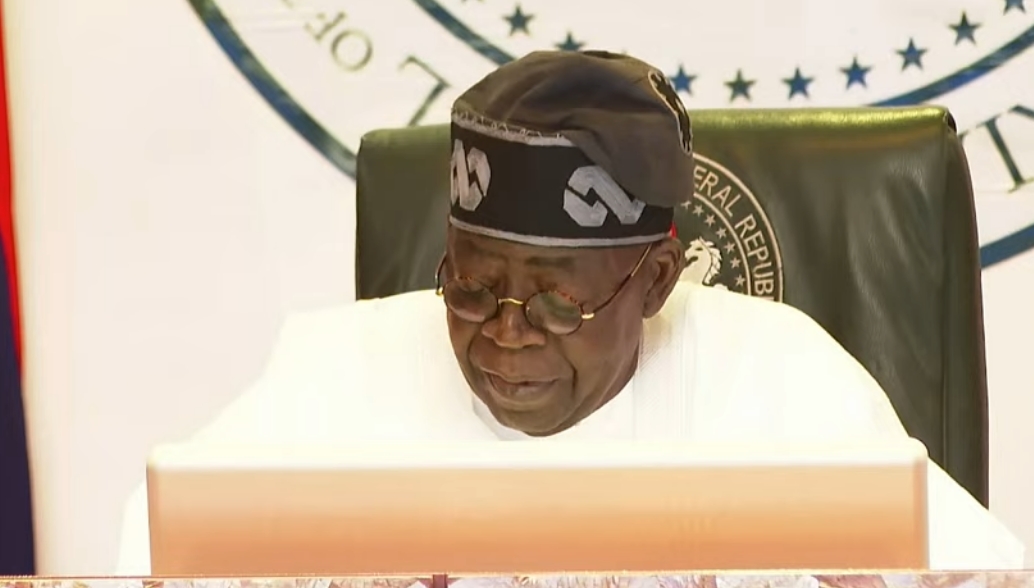
President Tinubu’s nationwide security emergency to contain the steady drift into total chaos, was better late than never. It had been expected since the eight years of Muhammadu Buhari. An emergency declaration is an admission that there is trouble in the land, with the central authority unable to call the shots.
To restore law and order, drastic measures must be taken, including disruptions that must make everybody uncomfortable. The idea is that within a timeframe, the emergency should reset the system for law and order to return.
The emergency statement of Mr President did not give away so much. One hopes that it is intentional, so as not to arm the enemy with critical information to the detriment of the country. But let it be said that a nation-wide security emergency of the magnitude citizens expected cannot afford to be limp, or be treated with the same lethargy as the one proclaimed on food insecurity, which at the end of the day, was more about importing rice to share rather than growing rice. Let this emergency restore hope and recover all territories from bandits in a matter of weeks. That is the expectation.
Going a little into recent history, the countrywas thrown into an emergency since the days Boko Haram insurgents declared war in Borno State, around 2008/09. The disaster has multiplied across the geo-political zones, and now poses significant threat to the country’s sovereignty and integrity.
Millions of citizens have been sacked from their homes and are now squatting in emergency make-shift camps. Their homes and means of doing business have been plundered. Some can’t trace their ways back home. Others cannot go back home because terrorists have renamed and occupied their ancestral homes.
Responses by governments to the insurgency- /terrorism have been varied, depending on the intensity and the political environment. Under President Umaru Yar’Adua, when insurgency broke, he ordered soldiers to smoke them out. Yar’Adua’s personality wasn’t encumbered by politics or sentiments of religion. The man’s political orientation and philosophy didn’t involve bargaining with dissidents and their sponsors for political gains. He put his foot down and smashed the terrorists.

But that singular military campaign by the Federal Government was not sufficient to comprehensively rout the insurgents and their philosophy. Some Boko Haram disciples had fled to the outskirts of Borno to regroup, following the killing of their leader, Mohammed Yusuf. The situation Yar’Adua confronted required a relentless follow-up, which didn’t happen because the man was distracted by health issues. But he dealt with it in the manner of an emergency, even without declaring it as such.
During President Jonathan’s era, he was distracted and limited by politics. Where Yar’Adua had no allegiance to service, Jonathan was reminded that he was more of a place-holder in the Presidency. If he needed to contest the Presidency in 2011, he must court the political establishment in the North, which at the time had not made up its mind about the disastrous nature of Boko Haram.
He was even told by some that he could not deploy lethal force on the insurgents who were declared as assets of the North. Where intelligence and cooperation were needed from the state government that originally incubated Boko Haram, Jonathan got repudiation. He was eventually blackmailed for being clueless and unable to defend citizens from the insurgents, particularly in the spectacular failure to rescue the Chibok schoolgirls. The outrage was global and Jonathan paid for it.
At the time, the political opposition had no sympathy for Jonathan. He had no support from them. In 2013, President Jonathan imposed limited emergency in three states that were mostly affected by the insurgency- Borno, Adamawa and Yobe; and charged the military to take “all necessary action to put an end to the impunity of insurgents and terrorists.” He also ordered more troops to be sent to the North-east.
In that limited emergency, Jonathan was unable to exercise the full powers of the Commander-in-Chief, apparently for fear of political backlash.. He rather allowed politicians (governors and members of the legislatures) in the states to remain in their posts. Prior to the declaration, the Nigeria Governors’ Forum (NGF), had warned President Jonathan against emergency rule declaration.
The point is that, the politicians did not form a consensus on a united front to deal with the insurgency. They were working at cross-purposes. That weakened the hand of Jonathan to inflict maximum damage on the trouble-makers.
His limited emergency couldn’t achieve much because he didn’t have the nerve to go the whole hog.
To a reasonable extent, politics did interfere with insurgency containment. The opposition was bent on exploiting it for political gain. They went to the United States to garner support against Jonathan and that helped a great deal in seeing them win the elections of 2015. They promised that they had the capacity to end it in six months, touting Buhari’s war experience.
Despite the promises, the management of Boko Haram under Gen. Buhari was a disaster. Under him, the insurgents multiplied and spread to the North-west and North-central. In eight years, Buhari did not consider imposing a state of emergency despite the escalation of terrorism. In May, 2021, Buhari placed a no-flight zone on Zamfara, and restated the ban on mining activities. The ban did not affect contiguous states, as such, the ban was weak. Illegal mining and banditry continued unchecked.
Buhari was largely indifferent, particular on the menace of killer Fulani herders who were on rampage across the country. In 2014 and 2018, Fulani Militia, also known as armed herdsmen, were ranked as the fourth deadliest terrorist group in the world’s Global Terrorism Index, based on the number of killings linked to them. The group was accused of involvement in terrorism and banditry. Some advocated that the group be declared a terrorist organisation.
Buhari told victims of the Fulani militia terrorism to learn to live in peace with their neighbours. The implication was that it is the victims that were troublesome. But he was hard on foot soldiers of the Indigenous People of Biafra (IPOB). He deployed an occupation army to perpetually lay siege to the South-east, more like an emergency declaration. Buhari’s management style escalated unrest and killings in the zone.
In February 2021, following the abduction of students and teachers at Government Science School, Kagara, Niger State, and the escalation of terrorism in North-west and North-central, the Senate urged President Buhari to, as a matter of urgency, declare a state of emergency to contain the situation.
The Senate also demanded of the President, to consider and implement the recommendations of the Senate Ad-Hoc Committee on Nigeria’s Security Challenges, dated March 17, 2020, as well as the Senate Resolutions therefrom, as a holistic response to the insecurity. Buhari was dry-eyed.
Perhaps, if politicians had thought more of the survival of the country, than in their selfish ambition for power, Boko Haram would not become the monster it is today, in addition to the deadly partners it has invited to prey on the country. It is important that President Tinubu reviews this history to gain hindsight and wisdom on how to rescue Nigeria from total collapse. It would help him, perhaps, to reconsider why politicians would prefer to destroy their country because of elections.
Senator Orji Uzor Kalu, representing Abia North, has repeated that politicians are responsible for the upsurge in terrorism. According to him, whenever elections are near, politicians do things to undermine one another. He said that was what they did during the Jonathan regime. As regime-serving as his theories are, the Department of State Security (DSS), has a duty to debrief the Senator. His insight might be useful to unravel those that are working behind the scene.
A careful reading of President Tinubu’s emergency declaration is important so that all citizens could join hands to make it work. The President said: “My fellow Nigerians, this is a national emergency, and we are responding by deploying more boots on the ground, especially in security-challenged areas. The times require all handson deck. As Nigerians, we should all get involved in securing our nation.”
This intervention is one’s small way of getting involved in how to make the emergency successful. To start with, let’s pray this emergency is not a mere paper declaration. Just like that of Jonathan, President Tinubu’s emergency appears carefully crafted not to disturb the political structures in affected states. The danger in that is that, you cannot have two commanders in one crisis zone.
The recent Kebbi experience, where Governor Nasir Idris, alleged sabotage in troops withdrawal 45 minutes before the abduction at Government Day Secondary School, Maga, is a case study. Who calls the shot in a state of emergency, the governor or the troop commander? Such deliberate gray areas inputted an emergency script could appear as a political strategy, but could hamstring the effective field deployments.
There is no timeline in President Tinubu’s nation-wide emergency. Is this emergency going to be like that of Rivers State, which ran a course of six months, during which Abuja was brokering the ceasefire, or for how long? Putting a timeline will help to measure the gains and put everybody under pressure to deliver.
There are no restrictions in movement, which is a key strategy to enforce an emergency. Are the terrorists to continue to traverse states with ease, with no curfew in place? What about their access to logistics and supplies, won’t there be restrictions on how they refuel and re-arm, from location to location?
What should have been the most significant aspect of the declaration is the call to end open grazing and surrender illegal weapons. But the delivery was wimpish, more like an appeal, than an emergency order. Let President Tinubu not pander to regional and political biases that were deployed to harass Jonathan.
Those pleading amnesty and attempting to equate the havoc caused by jihadists and terrorists with the Niger Delta militancy should ask themselves what the terrorists and their foreign collaborators bring to the table. Are they demanding amnesty for the foreign terrorists as well?
Let Tinubu not forfeit this momentum!

