 Follow Us on Google News
 Follow Us on Google Discover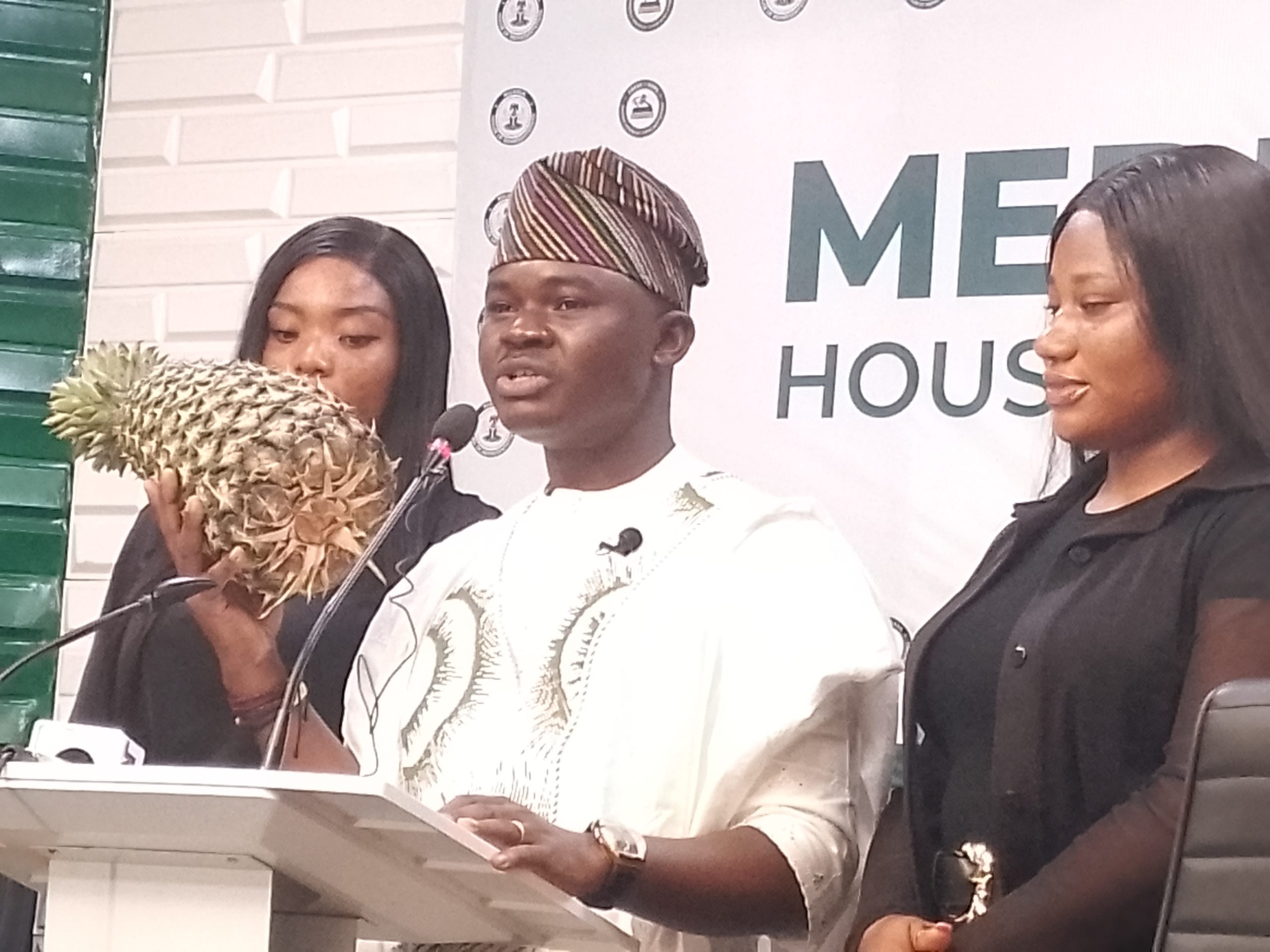
Nigeria loses an estimated $9–$10 billion every year to post-harvest losses, a crisis that threatens food security, weakens the economy, and wipes out nearly half of the nation’s agricultural output.
This revelation was made on Monday by the Chief Executive Officer of Davidorlah Nigeria Limited, Mr. Segun Alabi, during a press conference held at the National Assembly Complex in Abuja.
Alabi warned that unless urgent and coordinated measures are taken, the massive losses will continue to cripple Nigeria’s agricultural sector despite its enormous potential.
He said Davidorlah Nigeria Limited—an agritech company focused on pineapple farming, concentrate production, and waste-to-wealth innovation—is ready to support national efforts aimed at curbing post-harvest wastage. He added that Davidorlah Farms, the company’s flagship subsidiary, remains the largest pineapple farm estate in West Africa.
Alabi disclosed that Nigeria loses between 30 per cent and 50 per cent of its agricultural produce annually due to poor handling, inadequate storage, inefficient transportation systems, and limited processing capacity. “These losses undermine farmers’ livelihoods, reduce food availability, weaken our export prospects, and ultimately slow down national economic growth,” he said.
The CEO outlined several strategies to reduce post-harvest losses, including investing in modern storage and processing facilities, such as cold chains, silos, and local processing hubs, to extend the shelf life of perishable goods.

He noted that poor rural roads and weak logistics systems often damage produce before it reaches consumers, adding that training farmers on improved harvesting and handling practices is essential to reducing waste at the source. He also highlighted the benefits of technologies such as solar dryers, mobile processing units, and low-cost preservation systems.
Alabi urged lawmakers to champion policies that encourage agro-processing and reward waste-reduction initiatives across the value chain.
According to him, reducing agricultural waste will boost marketable output, increase farmers’ incomes, enhance export potential, improve food security, and strengthen agriculture’s contribution to Nigeria’s GDP.
He explained that large-scale waste-reduction initiatives would create thousands of jobs in logistics, processing, storage management, technology manufacturing, and rural enterprise development.
He added that minimising agricultural waste reduces environmental pressure, curbs greenhouse gas emissions, and enhances soil health through recycling and composting.
Highlighting opportunities in turning waste into wealth, Alabi pointed to the production of animal feed, bioenergy, bioplastics, and organic fertilisers—value-added industries capable of generating significant new revenue and driving innovation.
Alabi called on policymakers, investors, and stakeholders to act decisively. “The billions we lose annually to post-harvest waste represent both a crisis and an opportunity,” he said. “With the right investments, innovations, and policies, Nigeria can turn agricultural waste into wealth, create jobs, protect the environment, and build a stronger, more prosperous future.”
The CEO also noted that by-products from pineapple and other agro-waste hold the potential to help address Nigeria’s electricity and unemployment challenges. He revealed that research conducted in collaboration with national biotechnology experts shows that agricultural waste can be converted into gas and used to generate electricity.
“Electricity is one of the easiest problems to solve when the right ideas and environment exist,” he said. “Our upcoming factory will deploy these technologies, and once operational, it will demonstrate how agricultural by-products can power industries and communities. With this, our electricity problem can be significantly reduced.”
Alabi expressed confidence that providing the right policy support, infrastructure, and research environment would allow Nigeria’s homegrown innovations to thrive. “There are many ideas in this country, but the environment must support them,” he said. “When we create the right environment, Nigeria will not need to depend on external solutions.”

