 Follow Us on Google News
 Follow Us on Google Discover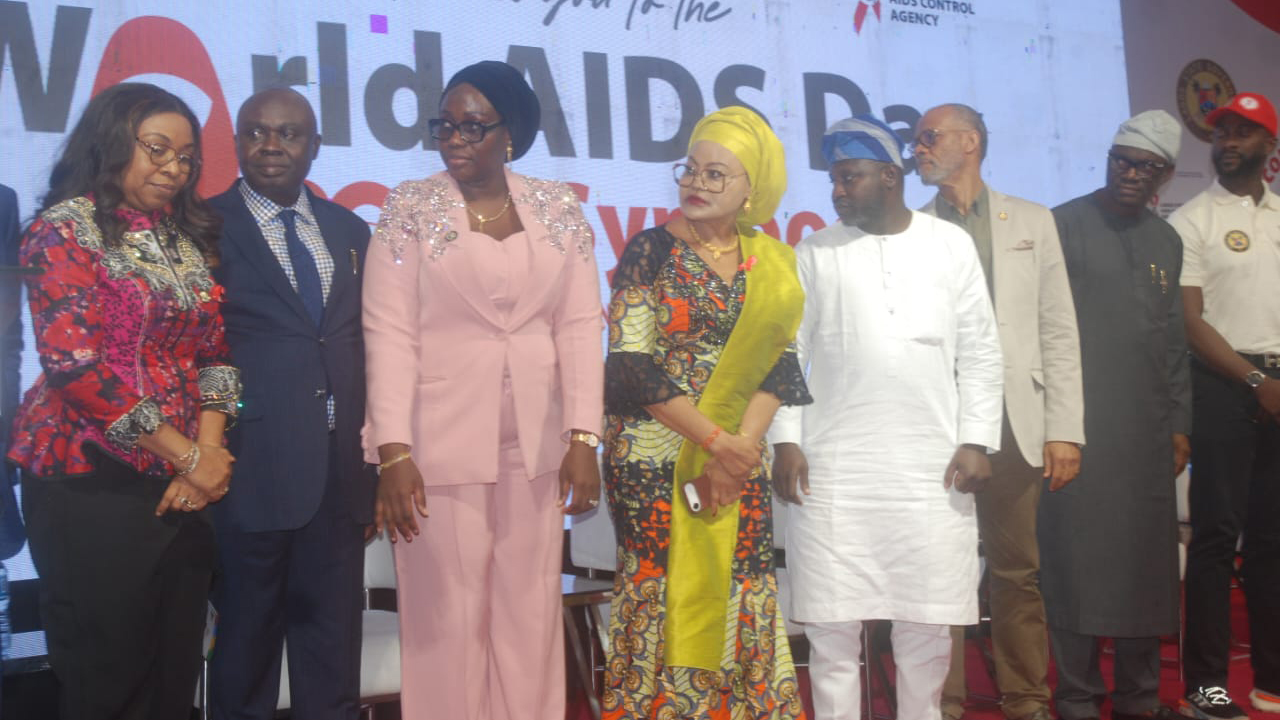
‘LASG records 9,467 new HIV cases in nine months’
Lagos State Governor, Babajide Sanwo-Olu, has revealed that between January and September 2025, the state recorded 9,467 new Human Immunodeficiency Virus (HIV) cases.
Sanwo-Olu, while delivering an address, yesterday, at the 2025 World AIDS Day symposium, organised by Lagos State AIDS Control Agency (LSACA), themed “Overcoming disruptions: Sustaining Nigeria’s HIV Response,” noted that the new number of infections is a wake-up call, as it means that prevention must be stronger, stigma must be challenged, and access must be uninterrupted, no matter what happens beyond Nigeria’s borders.
The governor, who was represented by the Secretary to the State Government (SSG), Abimbola Salu-Hundeyin, maintained that the state government under his watch would bring the HIV epidemic to the barest minimum.
“Earlier this year, the stop work order issued by the United States Government brought significant disruption to community-based HIV services across the country — and Lagos was not exempted. Testing stalled.
“Counselling paused. Home-based follow-up was interrupted. Psychosocial support systems were strained. Many people lost contact with the services they relied on for life, stability, and dignity.

“These disruptions were not abstract. They were personal. They were real. They were felt in homes, in communities, and especially in the hearts of people living with HIV.
“But Lagos did not stop. We did not stop!
“Our health workers did not stop. Our community networks did not stop. Lagos State AIDS Control Agency did not stop. Slowly but steadily, outreach services resumed. Clients were re-engaged. Individuals who had fallen out of care were brought back into the fold,” he said.
Sanwo-Olu further said that to protect the future, the state must build stronger, more independent systems that could withstand any external shock, revealing that Lagos is preparing for HIV vaccine deployment in 2026.
“We will begin the trainings, engagements, budget planning, and procurement readiness required to ensure the state can roll out an approved vaccine quickly, equitably, and safely when they become globally available.
“Lagos has begun to take steps toward domestic procurement of antiretroviral medicines. We are firm on our resolve that donor dependence cannot and shall not be the foundation of our future. Therefore, we have chosen to build and have started building a state-led sustainable system that ensures consistent access to treatment for all, especially in moments of global uncertainty,” the governor stated.
In her welcome address, Chief Executive Officer of LSACA, Dr Folakemi Animashaun, noted that World AIDS Day remains one of the most important observances on the global public health calendar, a moment to reflect on the collective journey, assess progress, unite voices, and recommit to achieving a future where HIV is no longer a barrier to growth and development.
She noted that this year’s theme could not be more fitting, as the HIV response continues to evolve amid multiple disruptions, economic constraints, pandemics, misinformation, shrinking donor funding, shifting demographics, and new socio-cultural dynamics.

