 Follow Us on Google News
 Follow Us on Google Discover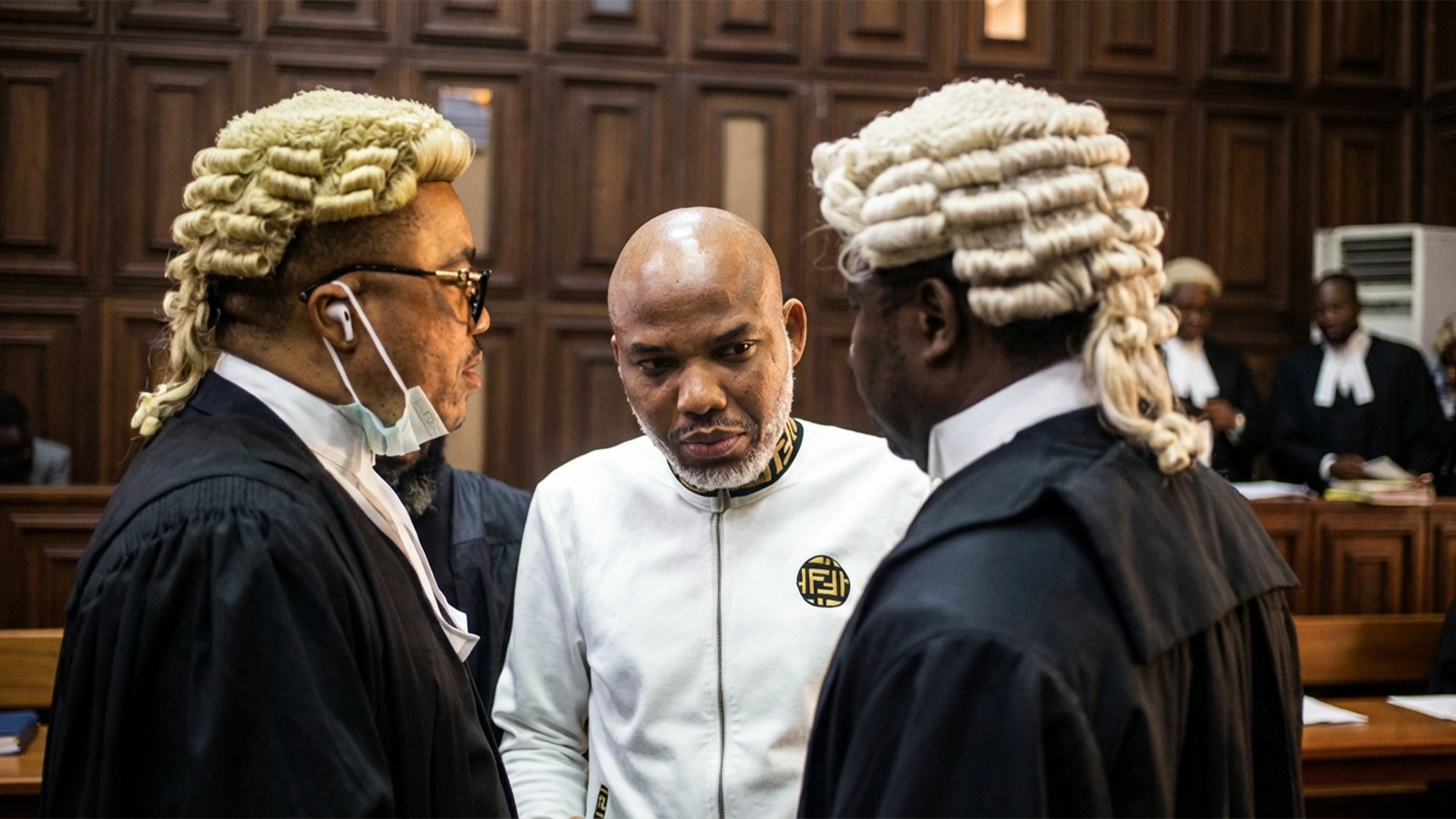
While following the final trial of Nnamdi Kanu, the most consequential defendant in Nigerian political jurisprudence in recent times, I felt a swell of grief. Each criminal act attributed to him under the banner of the Indigenous People of Biafra (IPOB) and the analysis presented by Justice James Omotosho quickened my heartbeat, not only because it exposed the depth of Kanu’s excesses, but also because the consequences of his actions undermined the wider historical Igbo grievance.
The fact remains that Kanu upended lives. No honest person who lived through the last few years in the South-East can pretend otherwise. Under his influence, entire communities were pushed into terror. A region once regarded as one of the country’s most peaceful and economically vibrant zones was transformed into a theatre of violence, fear, and internal displacement.
His rhetoric, amplified across broadcast and digital platforms, inspired and produced a generation of individuals who enforced his authority with bullets, machetes, and a ruthless policing of dissent. Towns were ransacked, villages emptied, and ghost settlements multiplied as natives fled the coercive intimidation of men operating under the Eastern Security Network (ESN), the armed wing of IPOB that he established in response to marauding Fulani herdsmen.
ESN operatives enforced sit-at-home orders through violence and entrenched a climate of fear in which ordinary people became collateral victims of a political agitation that had veered catastrophically off course. By the time Kanu appeared to grasp the scale of the monster he had unleashed, following his rendition from Kenya and years of detention, it was far too late. The dynamics had spiralled into a labyrinth of actors, criminal interests, and ungoverned forces far beyond his control.
In this sense, the gravity of his actions warrants the full weight of legal accountability. As the world saw through the televised proceedings, he is a man tormented by personal demons and one who became a destructive force in the lives of others. He rejected experienced legal counsel, insulted his own representatives, and carried himself with a misplaced sense of divinity. It is unsurprising that the court chose to broadcast his conviction. The decision was likely intended to expose his arrogance and lack of remorse, both of which he displayed through repeated unruly outbursts that ultimately forced the judge to expel him from the courtroom.
The verdict on him therefore offers closure, however small, to many families whose lives were torn apart. It also creates an opening for eastern governors, traditional institutions, and civic actors to reclaim public space and begin the arduous work of repairing a social fabric that has been shredded over the years. Whether they possess the will or moral courage to rise to this moment remains uncertain. But the urgency of principled and courageous leadership in the region is no longer a matter of debate.

Yet even as Kanu bears responsibility for the devastation wrought under his watch, another question forces itself into the centre of the national conversation. Who will judge the Nigerian state for its own crimes, crimes older, deeper, and far more structurally consequential than anything Nnamdi Kanu could ever have imagined?
To ask this is to confront the national question and the historical disorder that shapes the present. Before doing so, however, it is necessary to rebut the revisionist elements of the judicial narrative advanced by the prosecution, even if Kanu himself, through his reckless utterances, made it easier to weave him into their claims. Some aspects of the judgment are historically dishonest, particularly the attempt to fold him into unrelated episodes of national unrest such as the destruction of courts in Lagos during the EndSARS protests.
Nigerians remember clearly what happened in October 2020. Peaceful protesters were infiltrated by state-linked thugs ferried in government buses. These agents provocateur attacked demonstrators across major protest grounds in Lagos, vandalised property, and manufactured the pretext for chaos. Journalists were cut down by police fire. And when narrative manipulation faltered, the state embraced naked violence, deploying the military against unarmed citizens. That the state now tries to re-narrate this episode under the shadow of Kanu’s trial is not only an attempt to launder its own bloodletting but also a calculated effort to keep the Igbo ethnic group fixed as the default national scapegoat.
To allow this manipulation is to forget that the Nigerian state has been the single most consistent actor in the production of insecurity. The seeds of IPOB’s radicalisation were not planted by Kanu alone. They were nurtured by decades of marginalisation, the unhealed wounds of the civil war, constitutional arrangements that entrench regional inequalities, and a federal system that offers citizenship in name but not in substance. When the state ceases to function as a guarantor of collective welfare, counter-identities emerge as alternative spaces of meaning, security, and dignity.
Yet it is important to recall that before IPOB’s descent into violence, it operated primarily as a non-violent movement expressing grievances that had accumulated for decades. The late Muhammadu Buhari administration’s reaction, marked by vicious military raids on peaceful gatherings, arrests of unarmed supporters, and coercive shows of force such as Operation Python Dance, sharply escalated tensions and deepened the feeling of siege across the South-East.
In 2017, soldiers invaded Kanu’s family home in Afaraukwu, Abia State, an operation during which deaths and injuries were reported, and which prompted him to flee the country. To cap it all, the decision later that year to designate IPOB a terrorist group, without any plausible evidence beyond political sentiment, while well-documented Fulani militia groups and bandit formations continued to commit mass atrocities without equal federal pressure, further fuelled the perception that some citizens are permanently marked as suspects in the eyes of the Nigerian state.
To be continued tomorrow.
Ibeh, a development advocate and social critic whose work interrogates power, public policy, and the political economy, wrote from Lagos.

