 Follow Us on Google News
 Follow Us on Google Discover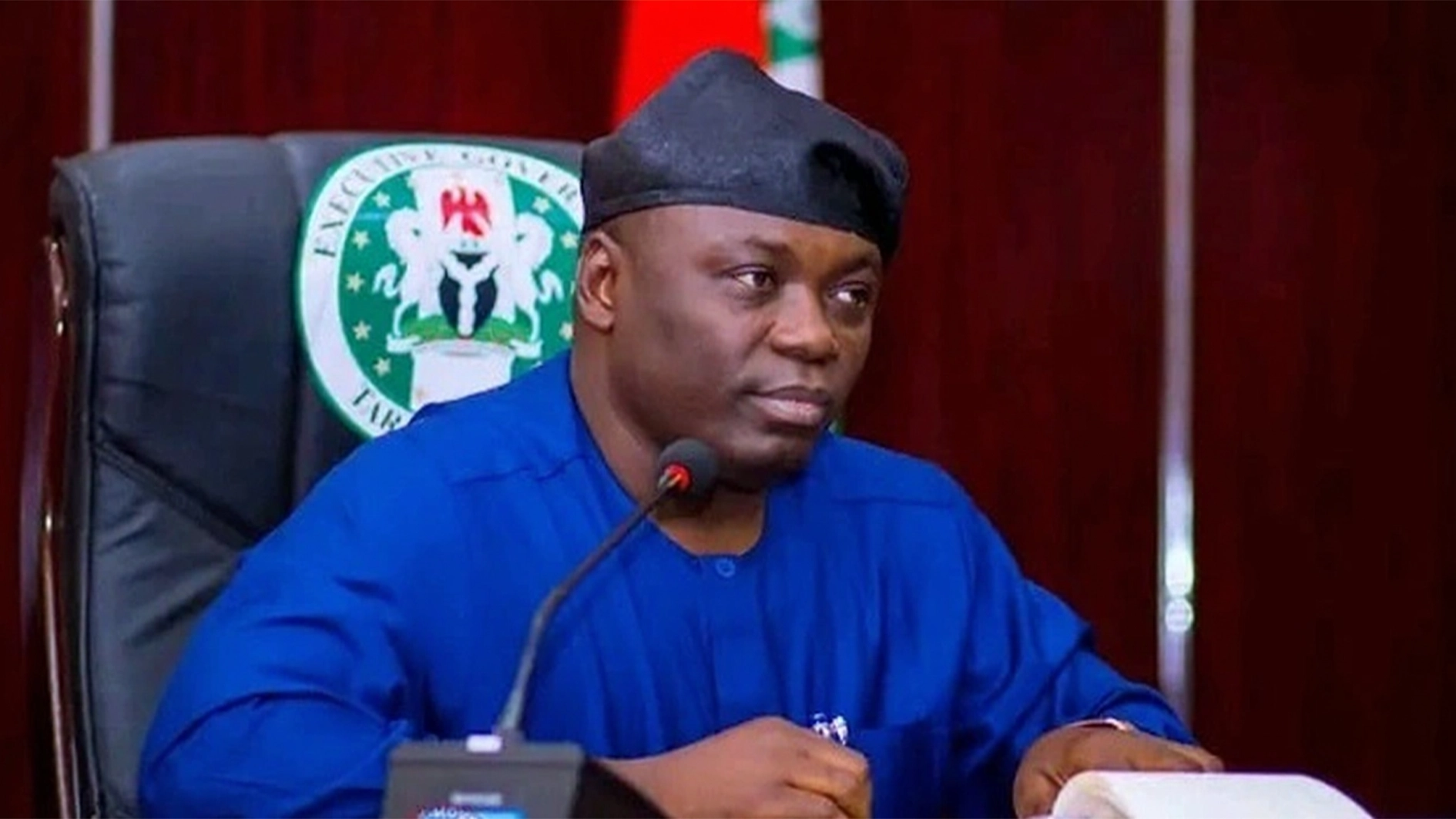
Taraba State Governor, Agbu Kefas’ defection from the embattled Peoples Democratic Party (PDP) to the ruling All Progressives Congress (APC) has opened new possibilities, especially for opposition politics in the borderline North-East state, CHARLES AKPEJI reports.
After initial guesses and pussyfooting, blamed on the abduction of some 25 schoolgirls in Kebbi State, the Taraba State governor, Agbu Kefas, recently sneaked leaders of the Hospital Ward chapter of the All Progressives Congress (APC) in Wukari Local Government Area into the Government House, where he performed a quiet ritual marking his entry into the ruling party.
Talks about the governor’s ejection from, and entry into, the APC have been making the rounds in the state and beyond like an ashen smoke that refuses to die. There were denials that such a move was being contemplated, just as the governor continued to frolic with former colleagues in the PDP.
But matters began to make better sense shortly after the Local Government Councils poll, which was cleared by the PDP, when, in a dramatic manner, the winners turned coat, announcing their mass entry into the APC. Those who refused to be surprised by the sudden about-face by the winners claimed that there was no way such an earth-shaking decision could have been taken without the knowledge and say-so of the Chief Executive of the state.
It was the defection of the elected council officials that helped many Tarabans to make sense of the whirling defection stories about the state governor. The hide-and-seek continued until two months ago, when the correct position came from the horse’s mouth. Governor Kefas confessed his intention to join the APC but deferred the date of official entry.
That waiting continued until the November19 date was chosen for the Taraba helmsman to be officially received into the ruling party. But, as fate would have it, another period of suspense was to ensue following the abduction of some 25 schoolgirls from Kebbi State. A statement from the Government House announced that the governor had suspended the defection ceremony until the schoolgirls were recovered.
There was nothing to confirm the impression that the governor’s conditional entry was intended to delay his official defection or serve as a way of pressuring the APC-led Federal Government to go after the abductors of the schoolgirls.
However, some persons in the Taraba State Government told journalists that Governor Kefas’s position underscored his preference for performance over politics, stressing that the governor felt it would be improper to go drumming and dancing for political defection when some young Nigerians had been stolen by enemies of society.
Whatever the real intent, the schoolchildren were reunited with their parents barely one week after their abduction. That good news, in turn, reversed pressure on the governor to make good his promise of formal entry into the APC.
Sly sail
It was a calm Sunday in Jalingo, away from the spectacle that often accompanies political realignments in Nigeria. But something momentous was set to take place. Governor Kefas executed a move that may well redefine Taraba State’s political future.
In a modest corner of the Government House, surrounded by a handful of party officials rather than cheering crowds, the governor formally registered as a member of the All ProgressivesCongress (APC), thereby bringing to a close weeks of speculation about his own version of gubernatorial defection and sealing his exit from the Peoples Democratic Party (PDP).
There were no drums, no canopies, no elaborate speeches. Instead, the moment unfolded with deliberate restraint. Executives of the APC from Hospital Ward in Wukari Local Government Area quietly carried out the registration, handing Kefas his membership card in an exercise heavy with symbolism.
That simple document and the records spoke volumes: Governor Kefas crossed a decisive threshold. He had, with that simple exercise, positioned himself as the leader of the APC in Taraba State, in line with the party’s convention.
From leading the incumbent party to heading what was hitherto an opposition platform, the governor’s subdued tone was intentional, even when some members of his abandoned platform claimed that the coldness was a mixture of regret and quiet apprehension about what the future holds for him in the APC.
Recall that an earlier plan to roll out an elaborate grand defection ceremony on November 19 was shelved by the governor himself. Kefas had said that the mood of the nation, particularly the abduction of schoolgirls in Kebbi State, demanded reflection rather than celebration.
“This registration is not about fanfare,” the governor explained shortly after the exercise. “I have already written to the party at the ward level, and today’s exercise is simply to fulfil the basic requirements. Even if the official ceremony had taken place, this step would still have been necessary.”
On hand to witness the registration were key figures of the party’s state structure, including the APC State Secretary, Fidelis Francis, whose presence lent institutional weight to the event. Francis described Kefas’s entry into the party as both timely and strategic, assuring that the APC leadership was united behind him.
“The State Chairman, Alhaji Ibrahim Tukur El-Sudi, and the entire executive are ready to give the governor all the cooperation he needs,” Francis said. “Our goal is to reposition the APC for relevance and electoral success in Taraba.”
Scapegoating PDP crisis
BUT what could be described as the defining moment came when Umaru Tanko, chairman of the APC in Hospital Ward, formally presented the membership card to the governor. As applause rippled through the small gathering, it was a quiet acknowledgement that, even without pageantry, something significant had just occurred.
Yet, while the registration itself was low-key, its implications were anything but subdued.
It would be recalled that barely 24 hours before Kefas’s anticipated defection became public knowledge, the political ground beneath Taraba shifted dramatically. All 16 members of the Taraba State House of Assembly resigned from the party for which they won their election, the PDP, and crossed over to the APC in a single, sweeping move.
The mass defection was announced during plenary by Speaker John Kizito Bonzina, while reading letters from each lawmaker declaring the intent to exit the PDP.
Citing Section 109 of the Constitution, the Speaker, John Kizito Bonzina, noted that the governor’s actions were justified by deep divisions within the PDP, pointing to a protracted leadership crisis at the national level and the emergence of rival factions, which he said had plunged the party into confusion.
For many of the lawmakers who spoke with The Guardian, the decision was framed as a matter of political survival. Jethro Yakubu, who represents Wukari I, warned that the crisis threatening the PDP “has the potential to expunge the party from the country.”
Others, including Musa Chul of Gassol I and Nelson Len of Nguroje, echoed similar sentiments, saying that they consulted their constituents before concluding that their future lay with the ruling party.
At the end of the day, the message was unmistakable: Taraba’s political architecture had been redrawn. With the defections, both the Executive arm and the 24-member state legislature turned blue, becoming an entirely APC-controlled subnational entity—a development unprecedented in the state’s recent history.
Former Speaker Abel Peter Diah, a long-standing member of the APC, welcomed the governor into the party, describing his move as an alignment with the vision of President Bola Ahmed Tinubu’s Renewed Hope Agenda.
Diah said that Taraba stands to gain more by aligning its political leadership with that of the centre.
Despite those lofty optimisms, not everyone is convinced that the growing tide of defections is an unqualified blessing for the APC. For instance, former Senate Leader, Ali Ndume, sounded a note of caution, warning that the ruling party may be risking internal implosion by promiscuously absorbing defectors en masse.
Ndume, who contested the leadership of the 9th Senate against his fellow North-East senator, Dr Ahmad Lawan, dismissed many of the defectors as “political lightweights,” projecting that the APC risks becoming “overloaded with mostly empty cargo.”
Forerunners
Apart from the defection of the governor and the entire PDP membership in the State House of Assembly, as well as the entire State Executive Council and all appointed aides, the 16 Local Government Council chairmen became forerunners when they resigned from the PDP shortly after the council elections, which took place on Saturday, November 8, 2025.
The chairmen, who unanimously resolved to align with the ruling APC, said their decision was driven by the need to solidarise with Governor Kefas, who, they hinted, was expected to formally defect to the APC in due course.
Their disclosure, contained in a statement issued by the former ALGON Chairman, who was at the time the chairman of Jalingo Local Government Council, Dr Aminu Jauro Hassan, on behalf of the council executives, hinged their resignation on the need to fully align with the governor’s political direction. They noted that such solidarity would strengthen and propel the governor’s “Moving Forward Agenda for Taraba State.”
The council chairmen also reaffirmed their loyalty and commitment to Governor Kefas, commending his leadership style, peace-building efforts, and dedication to the state’s transformation.
The seismic political shift, which came just hours after the 16 PDP members of the Taraba State House of Assembly also abandoned the PDP for the APC, further deepened the wave of defections sweeping across the state’s political sphere.
For now, however, the mood in Taraba’s APC camp is one of quiet confidence. Governor Kefas’s registration, as simple and restrained as it turned out, deeply concretised the consequential beginning of a new political chapter in Taraba State.
But whether it delivers stability and development, or merely reshuffles old rivalries under a new banner, remains a question only time and the ballot box will answer.

