 Follow Us on Google News


 Follow Us on Google Discover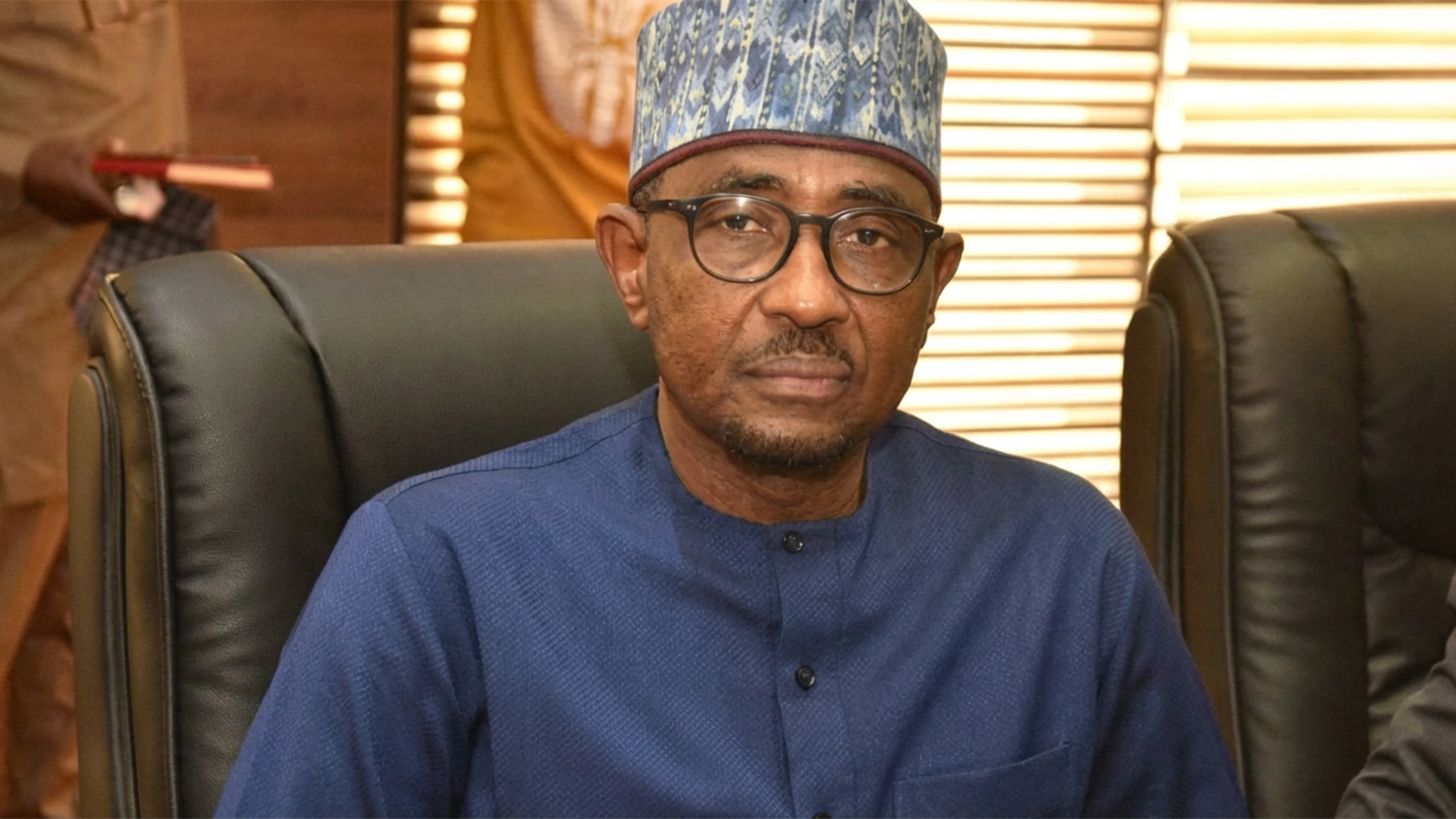
• Hurried replacement unsettles stakeholders
• Dispute threatens Nigeria’s resource sovereignty, says Agbakoba
President Bola Tinubu, yesterday, held a meeting with the Chief Executive Officer of Nigerian Midstream and Downstream Petroleum Regulatory Authority (NMDPRA), Farouk Ahmed, at the Presidential Villa, Abuja, against the backdrop of escalating allegations by industrialist, Aliko Dangote.
After the meeting, Tinubu forwarded to the Senate the names of two nominees to head Nigeria’s key petroleum regulatory agencies, following the resignation of Farouk and the Chief Executive of Nigerian Upstream Petroleum Regulatory Commission (NUPRC), Gbenga Komolafe.
Meanwhile, legal luminaryand Senior Partner at Olisa Agbakoba Legal (OAL), Dr Olisa Agbakoba(SAN), has raised concerns over the ongoing standoff between Dangote Petroleum Refinery and NMDPRA, warning that the dispute transcends commercial disagreement and strikes at the heart of Nigeria’s governance over its hydrocarbon resources.
Farouk and Komolafe were appointed in 2021 by the late President Muhammadu Buhari to lead the twin regulators established under the Petroleum Industry Act (PIA).
In separate letters to the Senate, Tinubu requested the confirmation of Oritsemeyiwa Eyesan as Chief Executive Officer of the NUPRC and Saidu Mohammed as Chief Executive Officer of the NMDPRA, urging the upper chamber to expedite consideration of the nominations.

The two nominees are seasoned professionals with decades of experience across Nigeria’s oil and gas value chain.
Ms Eyesan, an Economics graduate of the University of Benin (UNIBEN), spent nearly 33 years with the Nigerian National Petroleum Company Limited (NNPCL) and its subsidiaries. She retired in 2024 after serving as Executive Vice President, Upstream (2023-2024), and previously held the position of Group General Manager, Corporate Planning and Strategy, between 2019 and 2023.
Her career spans upstream operations, strategic planning and policy coordination within Nigeria’s national oil company.
Mohammed, born in 1957 in Gombe State, is a Chemical Engineering graduate of Ahmadu Bello University (ABU), Zaria, Class of 1981. He was announced on Tuesday as an independent Non-Executive Director at Seplat Energy.
Ahmed and Dangote have, in recent days, been locked in a public dispute over Nigeria’s downstream petroleum regulation and the future of domestic refining.
On Sunday, Africa’s richest man and Chairman of Dangote Industries Limited accused the NMDPRA of economic sabotage, alleging that regulatory actions were undermining local refining capacity in Nigeria.
During a briefing at the Dangote Petroleum Refinery, he claimed that the continued issuance of import licences for petroleum products was frustrating domestic refiners and entrenching dependence on imports.
Dangote further alleged that the NMDPRA was colluding with international traders and oil importers to the detriment of local operators, a charge the regulator has yet to publicly address.
The businessman also raised personal allegations against the NMDPRA chief, claiming that Ahmed was living beyond his legitimate means.
He alleged that four of Ahmed’s children attend secondary schools in Switzerland at costs running into millions of dollars, arguing that such expenditure raised questions about potential conflicts of interest and the integrity of regulatory oversight in the downstream petroleum sector.
On Monday, Dangote escalated the claims, accusing Ahmed of corruption and misappropriation of public funds, and providing estimates of the costs allegedly incurred on his children’s education abroad.
He claimed that about $5 million was spent on secondary education and upkeep over six years, with additional $2 million on tertiary education, including an alleged $210,000 for a 2025 Harvard MBA programme for one of his children.
The controversy deepened on Tuesday when Dangote, through his lawyer, Ogwu Onoja (SAN), submitted a petition to the Independent Corrupt Practices and Other Related Offences Commission (ICPC), calling for Ahmed’s arrest, investigation and prosecution.
The petition, addressed to ICPC Chairman, Musa Aliyu, alleged that Ahmed “spent without evidence of lawful means of income amounting to over $7 million for the education of his four children” in Switzerland, and reportedly included the names of the children, the schools attended and specific figures for verification.
Ahmed, who arrived the Presidential Villa about 5.30pm, left the President’s office after less than 30 minutes and declined to speak with journalists as he exited the State House, offering no comment on the allegations or the outcome of his meeting with Tinubu.
IN a statement released through OAL’s Energy and Natural Resource Practice Group, jointly signed by Partner and Head of Government Affairs at OAL, Collins Okeke, and Agbakoba, described it as a national paradox: “The paradox is striking: Nigeria now has a $20 billion refinery, one of the world’s largest, yet we continue importing petroleum products. A private investor has built the refining capacity our nation desperately needs, but faces systematic undermining from the very regulatory authority whose mandate is to support such investments. When government policy actively frustrates transformative local investment, we must question whether our economic strategy serves national interest or perpetuates dependency.”
Agbakoba said the dispute underscores the broader debate between two approaches to petroleum governance. He explained that Nigeria operates under “Contract Oil”, where petroleum is treated merely as a commodity for export and value addition externalised, leading to continued import dependency. In contrast, he pointed to Saudi Arabia’s model of “Development Oil”, which prioritises local capacity and which enabled the Kingdom to build “over 500 vessels in its maritime fleet, comprehensive downstream capacity including world-class refineries, and absolute control over the petroleum value chain.” He noted that Nigeria remains without such infrastructure despite being Africa’s largest oil producer.
On constitutional grounds, Agbakoba cited Section 44(3), which mandates that oil and gas resources “shall vest in the Government of the Federation and shall be managed” for the welfare and security of Nigerians. He warned that the ongoing situation, where domestic refineries struggle for crude feedstock while import licences continue to be issued, reflects a “fundamental failure of this constitutional responsibility.”
He urged all stakeholders to recognise the profound implications of the dispute and work towardsa resolution that serves Nigeria’s constitutional obligations, development imperatives and long-term national interest.
ENERGY analysts express confusion on whether the resignations were directly linked to Dangote’s allegations or merely coincidental.
Energy Law analyst at the University of Lagos, Prof. Dayo Ayoade, noted that while serious allegations were levelled against the NMDPRA leadership, none were made against NUPRC or its chief executive.
“There are no allegations against Komolafe but only against NMDPRA. So, it is a very interesting coincidence that both resigned at the same time for no official reason,” he said.
According to him, the Petroleum Industry Act permits regulators to resign at will.
He, however, warned that resignation should not replace accountability. “Very serious allegations have been made against Ahmed. Rather than dealing with those pressing issues, the issue has not been addressed and he has resigned. Is resignation equivalent to a full and fair investigation? I don’t think so. These are matters for law enforcement.”
But Energy Analyst, Dr Ayodele Oni, said: “I think the resignations are coincidental with the Dangote accusations and were probably already in the works prior to now, as their replacements have been chosen already and so swiftly. It may well be that the accusations were the last straw, but I believe the replacement of both men was already in the works.”
The experts, however, mentioned that as the Senate considers the President’s nominees, attention will now turn to whether the government will allow ongoing investigations to run their course and whether the new leadership can restore confidence in the regulatory process.

