 Follow Us on Google News


 Follow Us on Google Discover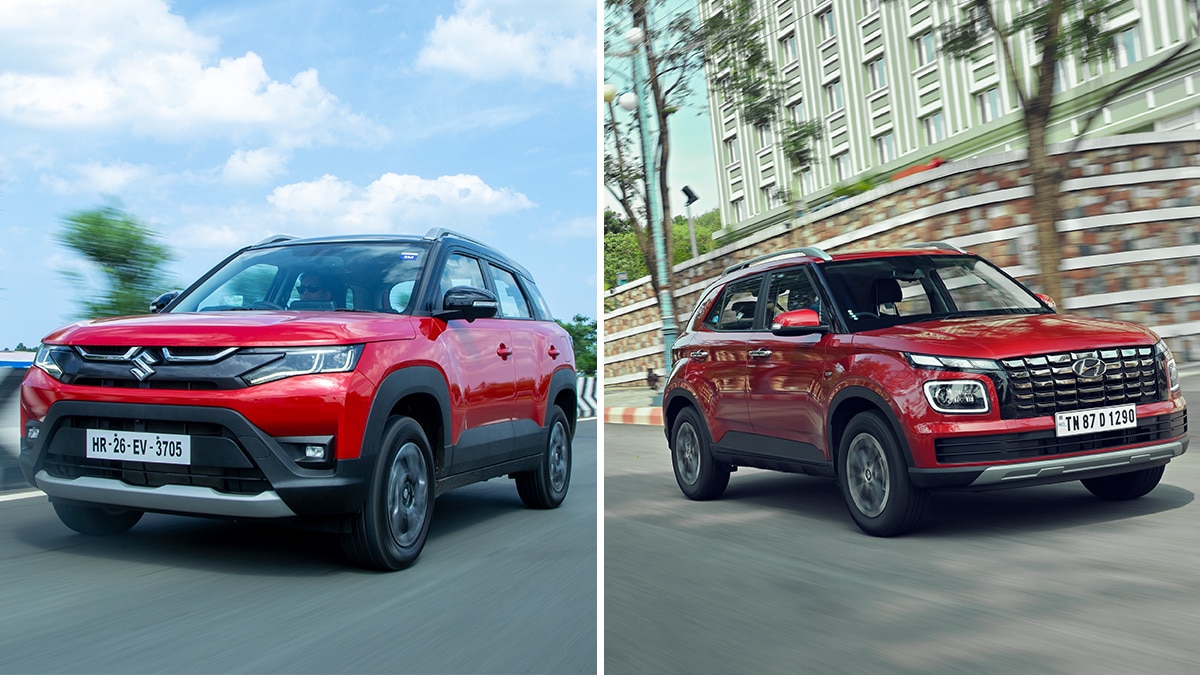
The Indian SUV market has never been more competitive, with options catering to every type of buyer — from city commuters to family adventurers. Two of the most talked-about models in 2025 are the Maruti Suzuki Victoris, a newly launched mid-size SUV, and the Hyundai Venue, a stylish and tech-packed compact SUV.
While the Venue continues to appeal to urban buyers with its youthful charm and technology, the Victoris steps in as a larger, more versatile SUV that blends practicality with sophistication. Let’s compare the two to see how they differ in design, performance, comfort, and value.
Design and Dimensions
The Maruti Suzuki Victoris makes a strong first impression with its chiselled design language. It features bold-cut LED DRLs and headlamps, a full-width connected LED tail-lamp, and 17-inch aero-cut alloy wheels that accentuate its wide stance. The overall length of 4,360 mm and width of 1,795 mm make it noticeably larger than the Hyundai Venue, giving it a more dominant road presence.
The Hyundai Venue, on the other hand, maintains its compact SUV proportions with a bold and modern front fascia. Its dark chrome grille, quad-beam LED headlamps, and R16 diamond-cut alloys lend it a sporty character. Measuring 3,995 mm in length and 1,800 mm in width, it’s perfect for city manoeuvrability, while still exuding a premium design appeal.
Interiors and Comfort
Inside, the Maruti Suzuki Victoris feels luxurious and spacious. The dual-tone interiors, featuring silver or champagne gold accents, plush leatherette seats, and a three-level dashboard with precision stitching, create a high-end cabin ambience. Premium features, such as a panoramic sunroof, 64-colour ambient lighting, and ventilated front seats, add to the comfort.
In contrast, the Hyundai Venue focuses on contemporary styling with a dual-tone (Dark Navy & Dove Grey) interior theme, leatherette seats, and ambient lighting. The new model also adds a dual 12.3-inch curved panoramic display, combining infotainment and digital instrumentation. With practical touches like 60:40 split seats, rear AC vents, and reclining rear seats, it maximises cabin utility.

Performance and Powertrains
The Maruti Suzuki Victoris comes with multiple powertrain options to cater to diverse buyers:
- 5L K15C petrol (103.06 PS, 139 Nm) with 5MT/6AT options.
- 5L M15D Strong Hybrid (92.45 PS, 141 Nm electric assist) paired with an e-CVT for smooth efficiency.
- 5L K15C CNG (87.8 PS) for eco-conscious users.
- Optional AllGrip AWD system in top variants.
Fuel efficiency is a key highlight:
- 65 km/l (Hybrid)
- 18 km/l (Petrol MT)
- 02 km/kg (CNG)
Meanwhile, the Hyundai Venue offers three proven engines:
- 2L Kappa Petrol (83 PS, 114.7 Nm) — 5MT.
- 0L Turbo GDi Petrol (120 PS, 172 Nm) — 6MT / 7-DCT.
- 5L CRDi Diesel (116 PS, 250 Nm) — 6MT / 6AT.
The Venue also features three drive modes (Eco, Normal, Sport) and four traction modes (Sand, Mud, Snow, and Snow) for a more dynamic experience.
Technology and Infotainment
The Victoris boasts a cutting-edge infotainment suite, featuring a 25.65 cm SmartPlay Pro X touchscreen, an Infinity by Harman 8-speaker system with Dolby Atmos, and Alexa Auto voice AI integration. Connectivity is enhanced through Suzuki Connect telematics, which offers over 60 smart features, including remote controls, real-time vehicle data, and emergency alerts.
The Hyundai Venue offers equally impressive tech. Its ccNC navigation system, powered by NVIDIA, integrates a 12.3-inch touchscreen and a 12.3-inch digital driver display for seamless control. The Bose 8-speaker premium system, wireless Android Auto/Apple CarPlay, and OTA updates add futuristic functionality.
Safety
Safety is an area where both SUVs perform admirably.
The Maruti Suzuki Victoris is built on the Suzuki TECT platform and comes equipped with:
- 6 airbags (standard)
- Level 2 ADAS features such as Forward Collision Warning, Lane Keep Assist, and Adaptive Cruise Control
- 360° HD view camera, TPMS, and Hill Hold Control
The Hyundai Venue offers 6 airbags, all-wheel disc brakes, and Level 2 ADAS (SmartSense) with 16 safety functions, including FCA (Forward Collision Avoidance), LKA (Lane Keeping Assist), and Smart Cruise Control.
Practicality and Space
The Victoris, being a mid-size SUV, features a longer wheelbase (2,600 mm) and a higher stance, resulting in more cabin and boot space. It offers 60:40 split rear seats, a powered tailgate, and ample legroom for long journeys.
The Venue, while compact, makes clever use of space. It has a 375-litre boot, rear armrest with cupholders, and reclining rear seats, making it ideal for smaller families or solo commuters.
Final Thoughts
The Maruti Suzuki Victoris and Hyundai Venue represent two distinct interpretations of the modern SUV.
- Choose the Victoris if you want a larger, more feature-loaded mid-size SUV with hybrid efficiency, panoramic comfort, and premium sophistication.
- Opt for the Venue if you prefer a compact, tech-savvy SUV that’s easy to drive in the city but still packed with advanced features and strong engine options.
In the end, practicality meets premium design in both — but how you define “premium” depends on what you value most: space and hybrid technology (Victoris) or connectivity and performance (Venue).

