 Follow Us on Google News


 Follow Us on Google Discover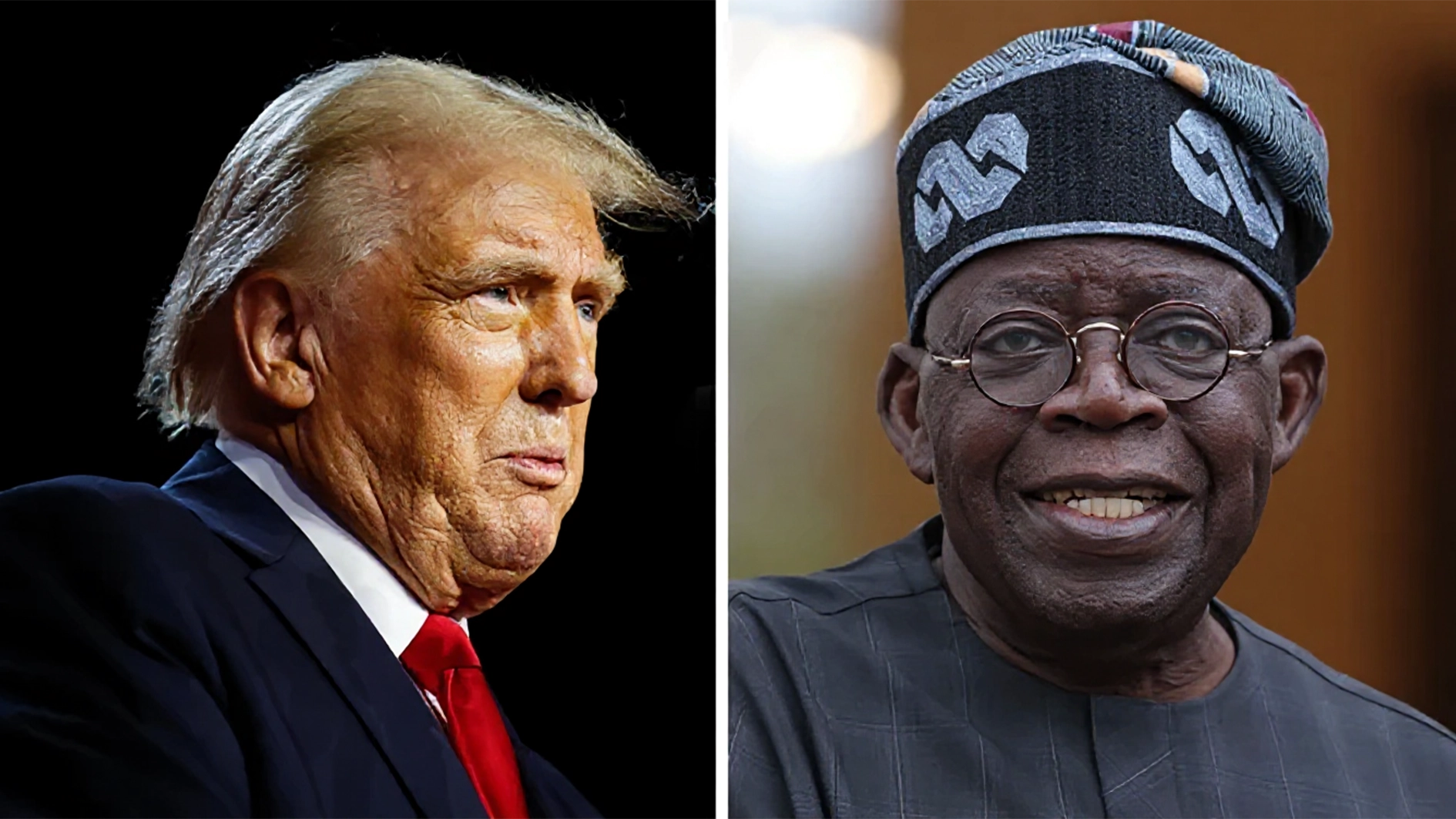
• Airstrikes: Jabo Isn’t Bandits, Terrorists’ Location –Security Expert
• Partnering U.S. Surest Way To Defeat Insurgents – Okoh
• PDP Urges FG To Improve Communication
• Strikes On Terrorists, Enclaves Timely, Inevitable – Afenifere
• Action Sparks Legal, Sovereignty Debate
As United States of America’s warplanes pounded suspected Islamic State positions in Sokoto State on Christmas Day, President Donald Trump framed the strikes as a decisive blow against militants “viciously killing, primarily innocent Christians,” a narrative that has animated his administration’s foreign policy on Nigeria.
On the surface, the Christmas Day strikes against Islamic State elements in Sokoto State read like a dramatic escalation in the global war on terror, a powerful intervention justified by President Donald Trump as a response to escalating attacks on Christians.
But for many Nigerians, the story is not simply about bombs and battlefields; it is about competing narratives and national dignity.
Nigerian government, while cooperating militarily with Washington, has repeatedly argued that the country’s security crisis defies simplistic religious categorisation, with violence touching both Christian and Muslim communities and rooted in decades-long insurgency and criminal networks.
The Federal Government’s robust diplomatic efforts in sending delegation to Washington to publicly contest the Christian genocide narrative and the Country of Particular Concern label reflect a broader struggle to assert control over how the world understands its turmoil. Yet even as diplomacy continues, the U.S. government’s steadfast narrative choice underscores deeper ideological and strategic fractures in how two nations view terrorism, human rights, and the stories they tell about each other. However, a political analyst, Tobi Adetunji, urged the Nigerian government to address its internal security challenges before focusing on the narrative promoted by foreign actors regarding attacks on Christians.

Adetunji said the focus should first be on Nigeria’s own response to insecurity, noting that external narratives often reflect weaknesses in the country’s handling of the situation
“Whether they are pushing for political gain or not, we need to first of all address our own internal issues. Every insecurity challenge a nation faces is first internal. Before it escalates to the international community, we must position ourselves to manage it effectively,” he said.
He added that the U.S. and other international actors may interpret Nigeria’s internal weaknesses as justification to intervene. “Even though it may be for political gain, the question we should ask is why we allow it to balloon to the point where the United States of America feels ready to come to our aid. This is actually depicted as a weakness,” he said.
The analyst also expressed scepticism that diplomatic engagements between Nigerian representatives and U.S. officials have been sufficient to change perceptions. “I’m not aware of any public reports detailing discussions between the Nigerian envoy and the U.S. government. It seems probable that the United States may not be convinced enough by the facts presented.”
He argued that while many attacks appear targeted against Christians, the broader issue is Nigeria’s overall security situation. “At the broad level, it is not actually a Christian genocide. Christian-targeted violence is just a subset of a bigger picture, which is the security problem. Security affects everyone Christian and Muslim alike and has spillover effects on the economy and society as a whole,” he said.
He stressed the need for a comprehensive and proactive approach to tackling insecurity. “Before we start blaming external actors, we must first nip the security challenges in the bud. That is very important.”
Also, the presenter of the Pan-African podcast Panel 54, Ndu Okoh, called for stronger military partnership with the United States to combat escalating violence by Boko Haram and other groups threatening Nigeria’s sovereignty.
Okoh argued that collaboration with the U.S. offers the shortest path to securing the country against threats that undermine national progress, destroy families, and endanger the Nigerian way of life.
“By partnering the U.S., we can defeat these groups who seek to destroy lives, livelihoods and our way of life,” she said.
Okoh cited figures from the National Human Rights Commission (NHRC), noting that more people were killed by insurgents in the first half of 2025 than in the entirety of 2024.
“The scale of violence, death, destruction, and kidnappings across this country has become commonplace,” she added.
She accused the insurgents of using propaganda to portray themselves as champions of ordinary people, while their actions reveal a self-serving agenda. Left unchecked, Okoh warned, these terrorist groups would persist in their indiscriminate campaign of violence, with ordinary citizens bearing the brunt despite the militants’ claims to represent them.
While praising the courage, bravery and commitment of Nigeria’s military and security forces in confronting the rising threat, Okoh stressed U.S. support as essential to bolster their efforts.
“U.S. support can and will make a critical difference in destroying these groups,” she said. “The U.S. military is the most formidable in the world, with a proven track record across Africa of partnering governments to defeat insurgencies that threaten people’s lives and livelihoods. The U.S. recognises that the terrorist challenge facing Nigeria is not isolated but a transnational threat spanning the globe.”
Beyond training and technology, Okoh highlighted that U.S. involvement would bring added value through emphasis on professionalism, civilian oversight and respect for human rights.
A lawyer, Chinwike Ezebube described terrorism as an international crime that often attracts responses beyond the borders of affected states.
“Terrorism is a global crime, and there is always the possibility that actions against it are justified under the doctrine of necessity. International law and conventions are largely influenced by developed countries, to the extent that whatever aligns with their interests often finds legal backing,” Ezebube said.
He noted that global precedents, including recent geopolitical tensions involving the United States, Iran and Israel, show that counterterrorism actions are frequently defended through international legal interpretations.
“Once it has to do with terrorism, the world sees it as a global crime. Any country with a specific interest may intervene to dislodge such threats. If you assess this action strictly from local laws, it may appear illegal. But when viewed through international conventions, the picture changes,” he said.
Ezebube argued that the U.S. strike could be considered justified given the global impact of terrorism, insisting that it may not necessarily amount to a breach of Nigeria’s territorial integrity.
“For me, since what they are trying to curb has a global effect, it may not be seen as breaching Nigerian territorial integrity. The objective is to address a crime that affects the international community,” he stated.
However, he acknowledged that the issue becomes more complex when viewed from the standpoint of Nigeria’s sovereignty as an independent state.
“If you look at it from the angle of Nigeria’s independence and local political interests, you may think that the action amounts to a breach. Nigeria is a sovereign nation, and any foreign military action within its territory raises legitimate concerns,” he said.
He added that previous international positions on intervention in Nigeria, including arguments around humanitarian crises and genocide prevention, could also be used to justify such actions.
“When you juxtapose this with earlier calls for intervention in Nigeria on humanitarian grounds, you find arguments that may sustain this action,” he explained.
According to Ezebube, opinions on the strike ultimately depend on perspective and the interests being protected.
His words: “It depends on the angle and the interest one is trying to preserve. One way or the other, it can be justified because the end is seen to justify the means.”
The strike he said may appear questionable under Nigerian local law and political considerations, it could still be defended under international law.
“When measured by international law, it may not be a breach. But when measured by local law and political interest, some will argue that what was done is wrong.”
Another lawyer, Evans Ufeli, cautioned that any foreign military strike on Nigerian soil without the consent of the Federal Government constitutes a violation of Nigeria’s sovereignty and may attract international sanctions.
Ufeli said international law, particularly, the United Nations Charter, strictly protects the territorial integrity of sovereign states.
“The sovereignty of Nigeria is not supposed to be penetrated by any other country other than Nigeria itself. If there is consent from the Nigerian government, then there is no legal implication. But if there is no consent, it means that sovereignty has been violated,” he said.
He noted that such a violation would not only undermine Nigeria’s territorial integrity but could also have consequences under international law.
“It is a kind of caution to the sovereignty and integrity of Nigeria, and that should come with sanction,” he added.
Ufeli further stressed that even where consent is granted, military operations must comply with international humanitarian law, particularly the principles enshrined in the Geneva Conventions.
“By international humanitarian law, even if Nigeria gives consent, the target must be definite and precise. According to the Geneva Convention, if they hit a civilian target, that is a violation,” Ufeli said.
He explained that the rule of precision requires armed forces to clearly identify and strike only legitimate enemy targets, warning that errors in targeting are not excusable under international law.
“The target of the enemy is to identify the enemy. There should be nothing like mistaken bombing or mistaken target. It has to be the enemy,” Ufeli said.
According to him, where civilians are harmed owing to failure to distinguish between combatants and non-combatants, such action carries serious legal implications.
“If there is a fusion or a mix of both the enemy and civilians, it has a legal implication, and that implication is a violation of the Geneva Convention,” he stated.
Ufeli noted that the Geneva Convention, which comprises four core protocols, clearly outlines the conduct of parties during armed conflict.
“Under armed conflict like this, it is supposed to be the enemy against the army or the forces. So, even if you have consent, you can still violate the rights of the public if you miss the target,” he added.
He called for strict adherence to international legal standards in all counterterrorism and military operations to protect civilian lives and uphold Nigeria’s sovereignty.
Also, a senior lawyer, Mr. Akeem Aponmade in his reaction said, rules of engagement for a true collaboration against terrorism must be well laid out. He said: “I see the bombing of ISWAP positions in Sokoto State as a face-saving action by both the United States and the Nigerian government. You will recall that President Donald Trump had threatened a solo action against Nigeria on the allegation of a Christian genocide in this country.
“The Nigerian government pushed back on this and its diplomatic efforts paid off by cutting off support for President Trump’s position from American key allies. In fact, no nation had uttered any support until yesterday when the ICC-indicted Prime Minister of Israel repeated the same allegation in his message to Christians.
“The implication was that the US would have committed military aggression against Nigeria if it had taken a solo military action in any part of this country, an indefensible violation of international law. This would have been heavily condemned by the international community and it would have injured American reputation globally more than you could have imagined because Nigeria is not a small global player either and its effect on American economic interests would have been very serious too.”
According to him, with the bombing, which the Nigerian government claimed was a joint action, and this seemed to have been confirmed by the US War Secretary, the US has avoided committing a violation of international law.
“The Nigerian government too, needing all the help it can get, can claim it is fighting terrorists jointly with the US. It is a win-win situation. Don’t forget that if America wanted to do it solo, not minding the consequences, no one could stop them.
“My advice is that the rules of engagement for a true collaboration against terrorism must be well laid out. For instance, who takes responsibility for civilian casualties? Is the duration of American involvement agreed upon? Who picks the targets? And so on. It is upon such agreement that the Nigerian government would not be seen as having surrendered the country’s sovereignty to America.”
He, therefore, appealed to Nigerians who wish to see the country liberated from terrorists to support this joint action, which seems to have been born out of circumstances, because it presents us with an opportunity to get rid of those fighting the peace of our fatherland.
Also, Dr Yemi Omode said that USA cannot invade Nigeria without Nigeria’s clearance.
He said it is not in doubt that Nigeria and the USA have diplomatic and international relationships. “This must have resulted in military cooperation between the two countries in laying to rest the issue of incessant killings in Nigeria.
“The reported airstrike in Sokoto State some hours ago would not have happened without Nigeria’s permission and involvement. I say this with all due respect that USA cannot invade Nigeria without Nigeria’s clearance. In international law cooperation can exist in all aspects of life so far it does not affect the sovereignty of the countries involved.”
Professor Babafemi Badejo, a former Deputy Special Representative of the UN Secretary General for Somalia, said: “The Nigerian government owes a responsibility to protect all Nigerians.”
The author of several books, including a best seller on politics in Kenya as well as why peace has been elusive in Somalia, and a former Professor of Political Science and International Relations at Chrisland University, Abeokuta, said the Boxing Day hit on Sokoto State in the Northwest of Nigeria by the United States forces raises a number of problems, the main one being sovereignty. However, the concept of sovereignty has not been static.
Under international law, it is agreed that sovereignty is not an abstract concept. In the main, it is the responsibility of each state to protect its citizens. It is obvious that the Nigerian State, given leadership deficit, has been found wanting on the discharge of its sovereign responsibility in many parts of Nigeria. Terrorists of whatever nomenclature have been killing Nigerians at will.
“It is allowed under international law for a State that is unable to undertake its responsibility to protect its citizens to seek assistance on many fronts, including training and collaboration in armed intervention. In actual fact, States agreed under soft international law in 2005 at the UN General Assembly, and under the Constitutive Act of the African Union before then, that when a State is unable or unwilling to protect its citizens, other States or a coalition of the willing can intervene and protect civilians even if the State with the responsibility objects. Thus, many Nigerians will agree that the recent pressures from the US President and the US government on President Bola Ahmed Tinubu to protect Nigerian citizens is a welcomed development.
“In the instance of what happened in Nigeria overnight of December 25-26, 2025, the Nigerian Foreign Minister has clarified that Nigeria was in collaboration especially with the US in seeking to degrade the capacity of Terrorists to continue making life impossible for civilians. The claim is that intelligence showed imminent gathering to attack Nigerians during the Christmas and New Year festivities. With time, we may know more about this claim. We may also have video footage and knowledge of collateral damage that do accompany situations of this sort. However, the fact is that even those whom their sympathisers euphemistically call bandits, but the Nigerian government recently properly designated all as Terrorists, have been claiming Nigerian lives as well as undermining the power of the Nigerian State to protect civilians.
“Personally, I will not worry about whether the Terrorists who were hit overnight of Boxing Day were Lakurawa, ISIL, ISWAP, or in what State they were hit, etc. What’s important is the need to have a rebuilding towards the respect for the right to life in Nigeria. By the same token, the fact the Terrorists have been hitting Christians, Muslims, and other faiths in Nigeria has been established. I will not waste time over whether the US government places emphasis on Christians. Any intervention to degrade the capacity of Terrorists will save the lives of Nigerians irrespective of faith.
“My emphasis is on degrading as opposed to eradicating Terrorism in Nigeria. I am not exactly sure if Bombs from the air alone will eradicate Terrorism. But it could also play its role. The government of President Tinubu has the challenge of demonstrating that it is very serious in fighting all criminal groups involved in mass killings of Nigerians, including all the Terrorists and those financing them.
“Many Nigerians are losing trust and confidence in the ability and political will of the Nigerian government to degrade terrorism. This is not the best time to dwell on so much technicalities and theories. What is needed now is adequate political will, urgency and swiftness in responding with actions that will degrade, de-motivate and dis-arm the many terrorists groups, a combined on as needed application of kinetic and non-kinetic approaches to stamp out impunity and put financiers of terrorism away so that the value of life can once again be respected in Nigeria.”
All means necessary are required to radically reduce terrorism and boost security in Nigeria.
President Donald Trump is not the problem for Nigeria. Whatever may be his motivation and the framing, we should appreciate his stated desire to degrade Terrorists. Nigerian rulers since military rule have been putting sovereignty at bay as all sorts of Terrorists reduced the power of the Nigerian State to protect helpless civilians, as Nigerian governments only focused on looting national patrimony a.k.a., corruption. The higher the level of corruption, the less the level of the rule of law, all of which results in insecurities of all sorts.
Depending on how best the Nigerian government exhibits leadership and seriousness, and less of propaganda, the problem may grow bigger. Supporters of terrorism (funders/investors and sympathisers for various reasons) are expected to fight back as they have been doing for almost two decades as they use the insecurities to undermine the Nigerian State and cart away national patrimony in many parts of Nigeria.
However, Northern Islamic cleric, Sheikh Ahmad Gumi has called on President Bola Tinubu’s administration to immediately halt all military cooperation with the United States, following military action against terrorists operating in the North West region.
Gumi gave the advice to severe military cooperation with US on Friday in a statement posted on his Facebook page, following reported U.S. airstrikes in Northwestern Nigeria.
His counsel further followed an announcement by U.S. President Donald Trump, who confirmed that American forces carried out “deadly” and successful military strikes in Nigeria on Thursday night.
The Nigerian government, through the Ministry of Foreign Affairs, later confirmed the claim, stating that the airstrikes against the terrorists were precise and targeted the criminals’ hideouts.
Gumi warned that American involvement could worsen Nigeria’s security challenges and undermine national sovereignty. He argued that while Islam permits the fight against terrorism, such actions should only be carried out by what he described as ‘clean hands,’ contending that the United States lacks the moral authority to lead such efforts due to its global military record.
According to the Islamic cleric, Nigeria made a mistake by allowing foreign powers to play a role in its counter-terrorism operations.
He insisted that “terrorists do not truly fight terrorists” and that such interventions often result in civilian casualties and hidden political motives.
Gumi further warned that allowing Nigeria to become a theater of war would attract anti-U.S. forces into the country, further destabilizing the region.
He also cautioned that U.S. involvement—particularly under the claim of protecting Christians—could polarize the country along religious lines.
The cleric argued that airstrikes alone cannot defeat terrorism, stressing that effective counter-terrorism requires strong ground operations.
He noted that Nigeria has enough personnel to carry out these operations if they are properly organised.
Also commenting, the Peoples Democratic Party (PDP) has faulted the Federal Government’s handling of public communication following a reported United States military strike on terrorist assets in Nigeria, urging authorities to adopt a more transparent and proactive approach in matters of national security.
In a statement issued on Friday by its National Publicity Secretary, Comrade Ini Ememobong, the opposition party expressed concern that Nigerians first learned of the operation through verified social media platforms of the U.S. President Donald Trump and other American officials, long before the Ministry of Foreign Affairs issued what it described as a “vague and passive” confirmation of the government’s awareness and cooperation.
While acknowledging the importance of international collaboration in combating terrorism and other transnational crimes, the PDP said it was disturbed by a communication framework that allows foreign governments to announce security operations conducted on Nigerian soil ahead of the country’s own authorities.
According to the party, such an “inverted communication approach” neither serves the interest of the Federal Government nor reassures Nigerians, particularly against the backdrop of past reports that U.S. military forces had operated within Nigeria without the explicit permission or knowledge of the government.
“The Federal Government should have been the first to break the news in order to properly sensitise the Nigerian populace, rather than waiting to confirm information already circulating in the public domain,” the PDP stated.
“Any delay gives the impression that the authorities were either unprepared or taken unawares, just like the rest of the citizens.”
The party stressed that effective communication is a critical component of national security management, especially in a country grappling with persistent insecurity.
It warned that poor information management could erode public confidence and fuel speculation at sensitive moments.
Beyond communication concerns, the PDP called on the Federal Government to ensure that any defence agreement with the United States prioritises joint operations that promote intelligence sharing and capacity building for Nigerian security forces.
Such collaboration, the party argued, would enable knowledge transfer and experiential learning necessary for Nigeria to sustainably address its security challenges, rather than relying on what it termed “fully externally-led precision attacks.”
The statement urged the government to leverage international partnerships to strengthen domestic capabilities, insisting that long-term solutions to insecurity must be rooted in Nigerian-led strategies, supported by transparent engagement with citizens.
The pan-Yoruba socio-political organisation, Afenifere, said it gave full support to the air strikes. While describing the military action purportedly carried out with the approval of the Nigerian government as timely, the foremost Yoruba group emphasised that the operation will in no small measure restore safety and normalcy in communities that have for a while been terrorised.
Afenifere, in a statement issued by its National Organising Secretary, Abagun Kole Omololu, which was made available to The Guardian, stressed that the coordinated military response was a decisive and necessary step to confront years of relentless insecurity and widespread abductions.
The statement comes hours after the official confirmation from the Defence Headquarters that the strikes, targeting terrorist enclaves were carried out with the explicit approval of the federal government.
According to the group, the alleged failure to tackle terrorists headlong in their strongholds over the years had created a vacuum necessitating external as well as capable partnership, stressing that the involvement of the United States is a logical development given the prolonged security challenges.
The statement read in parts: “The recent confirmation by the Defence Headquarters that the joint air strikes conducted by Nigerian and United States military forces against ISIS terrorist elements in Northwest Nigeria were executed with the approval of the appropriate Federal Government authorities is both timely and necessary.
“Afenifere unequivocally supports this decisive action, which comes after years of relentless insecurity that has held communities hostage and undermined the very fabric of the nation.
“At this critical juncture, the involvement of the United States in the ongoing counter-terrorism operations deserves recognition, not condemnation. For far too long, innocent Nigerians have been subjected to relentless attacks, abductions and wanton destruction of property, while insufficient measures were taken to decisively confront these terrorist enclaves.
“The vacuum created by decades of ineffective governance has, regrettably, invited the intervention of capable partners who understand the urgency of the situation. Afenifere wishes to stress that true sovereignty is measured not by rhetoric but by the capacity to protect citizens, enforce the rule of law and secure the nation’s borders.
“The lives of Nigerians and the preservation of national peace must always take precedence over political sentiment or populist critique. The swift and coordinated military response demonstrates the Federal Government’s commitment to restoring safety and stability to affected regions.”
With Afenifere asserting that the sovereignty of any country is defined by its ability to protect the citizenry, the group maintained that the preservation of Nigerian lives and national peace must supersede political rhetoric or populist criticism.
Calling for national unity, Afenifere urged citizens, political leaders, and civil society to support the ongoing operations and also appealed for solidarity among the people.
“We call upon all citizens, political leaders, and civil society actors to resist any temptation to undermine these efforts with misplaced criticism.
Meanwhile, a security expert, Dr. Kabir Adamu has expressed surprised that the U. S. air strike against ISIS elements in the North West was carried on Jabo in Tambuwal Local Council of Sokoto State.
Adamu, the Managing Director of Beacon Security Limited, argued that the town is not among the known 80 bandits/terrorists’ locations in the country. “l mean, I’m surprised about the choice of Jabo, which is a town in Sokoto State. And then more importantly, as you know, I have a company called Beacon Security and Intelligence Limited. We monitor security developments across Nigeria.
“So, I know where all the terrorist groups are located. I know where all the bandit groups are located. And I know that Jabo is not a location where you have either terrorists or bandit groups.
“So, I was a bit surprised with the choice of Jabo. Why not Sambisa Forest? Why not where Bello Turji is in Zamfara State? Why not where Dogugidi in parts of Kebbi State? Why not where ISWAP or Mamuda or Lakurawa are located? Why Jabo?
“We have about 80 (bandits/terrorists location) of them. And we know their location. To map them out, when you intend to target them, target them specifically. If it was Bello Turji that was attacked, I mean, all of us would be happy. We know he’s a known bandit commander. And there are so many other bandit commanders. Why not them? Why Jabo?”
He, however, said he was not surprised about the strikes as the Nigerian delegation which visited America, earlier may have reached some form of agreement with U.S. authorities.
“I wasn’t surprised after the delegation that visited the United States, when you look at the membership of the delegation, the Attorney-General was part of it. So, we know that some form of agreement was signed with the United States.
“And we also know that recently there have been surveillance missions, ISR, intelligence, surveillance, and reconnaissance missions by the United States in Nigeria.”
On the claimed by the Federal Government that the U.S. and Nigerian forces jointly carried the strikes, Kabir expressed doubt, saying that Nigeria “just mentioned that for convenience purposes.”
He asked: “Are they saying, for instance, that the Nigerian military had air assets that it deployed? If that is the case, why didn’t they deploy them before the Americans spoke?
“Honestly, there are so many questions. It doesn’t add up. I mean, yes, maybe they provided the intelligence, like the minister said. But I don’t think they carried it together. Together would mean Nigerian air assets and American air assets deployed. I don’t think that’s what happened.”
He said there was no civilian casualty in the strikes as he had reached out to the traditional ruler of Jabo town to inquire if there were. Kabir urged the Federal Government to educate the populace on what to do during airstrikes not to expose them to dangers.
“Some of the images I’m seeing at the moment show, after the bomb, show civilians gathered around where the bomb occurred. So imagine if there was a follow-up bombing. How many people would die? So I think there is a need for that public awareness to teach citizens what to do to avoid exposure to damage. We don’t want civilian casualties. We want the real bandits and terrorists to be killed.”
Sharing his perspective on the strikes, a U.S. based Nigerian Counter-Terrorism expert, Dr. Dolapo Oyedokun, noted that the United States has special interest in terminating terrorists.
Oyedokun said the strike “came in fast, sweet and surprising like President Trump promised,” adding it is a perfect Christmas gift.
“And From the response of the Nigerian Foreign Affairs Ministry, it seems to be calculated joint efforts with the US. This is the kind of news Nigerians have been waiting for and we hope to see more.
“The next few weeks will be interesting. We are going to see the terrorists sympathisers showing their faces online and in news commentaries,” he said.
The Director General of Human Rights Writers Association of Nigeria (HURIWA), Comrade Emmanuel Onwubiko, described the strike as a justified and long-overdue response to years of unchecked terrorism that has claimed thousands of innocent lives across religious and ethnic lines.
According to the rights activist, millions of patriotic, peace-loving, and law-abiding Nigerians have welcomed the action, seeing it as a necessary intervention against terrorist groups that have overwhelmed Nigeria’s security capacity.
While stressing that the violence has not been directed solely at Christians, he noted that Christian communities have borne a devastating share of the attacks.
Catholic priests, pentecostal pastors, and worshippers have repeatedly been targeted and killed. Entire communities in Plateau, Benue, Southern Kaduna, Taraba, Gombe, and parts of Sokoto states have endured relentless bloodshed, with Hausa communities in the North, Muslims and Christians alike, also suffering heavy casualties.
For many Nigerians, the intervention under Donald Trump is therefore viewed as both justified and necessary.
The United States, the activist argued, did not threaten Nigeria or its citizens but rather terrorist groups that have terrorised communities and eroded public safety. That distinction, he said, is critical.
He expressed concern over what he described as the Nigerian government’s initial hesitation toward the prospect of U.S. military action, noting that many citizens interpreted it as misplaced sensitivity toward terrorists rather than solidarity with victims.
Also weighing in, Colonel Timothy Antigha (rtd), former spokesman of the Multinational Joint Task Force (MNJTF) in N’Djamena, Chad, argued that the airstrikes against IS-affiliated terrorists in Sokoto State were the culmination of extensive intelligence, surveillance, and reconnaissance operations by U.S. air assets and were fully justified.
According to him, IS-linked groups have terrorised Nigeria for nearly two decades, costing tens of thousands of lives and destroying property worth billions of naira.
From the standpoint of Nigeria’s sustainability as a viable geopolitical entity, he said, external support, based on mutual agreement, had become imperative.
Antigha further pointed to the Sahel’s emergence as a new epicentre of international terrorism, warning that extremist groups are deliberately seeking to undermine democracies across the sub-region and plunge nearly 400 million people in 16 countries into chaos.
Any credible coalition to confront the menace, he said, should therefore be welcomed.
Offering a more analytical perspective, security scholar, Muhammad A. Bello, Fellow of the Security Institute (FSI) and member of the Society for Peace Studies and Practice (MSPSP), described the strike he codenamed the “Barkini Signal”, as a critical moment in Nigeria’s evolving security architecture.
Bello said the reported zero-casualty outcome of the strike signalled a high-precision, intelligence-driven cooperation between Nigeria and the United States, rather than indiscriminate warfare.
From what he termed a “Synthetic Functionalist” perspective, he argued that security is not merely the absence of violence but the presence of calculable order.
He noted that traditional, manual warfare is increasingly giving way to precision “searchlight” operations.
However, for such operations to deliver lasting peace, he stressed the need to anchor them in community trust and credible local intelligence, what he described as the synergy between security agencies and grassroots information.
Looking ahead to 2027, Bello called for a “Third Force” of intelligence in the Northwest, built around a Data, Research, and Policy Synthesis (DREPS) framework that bridges kinetic operations with sustainable peace-building.
“The miracle of our security will not be found in the volume of explosions,” he said, “but in the stillness of a society that no longer fears the drone, because it understands the logic of its own protection.”

