 Follow Us on Google News


 Follow Us on Google Discover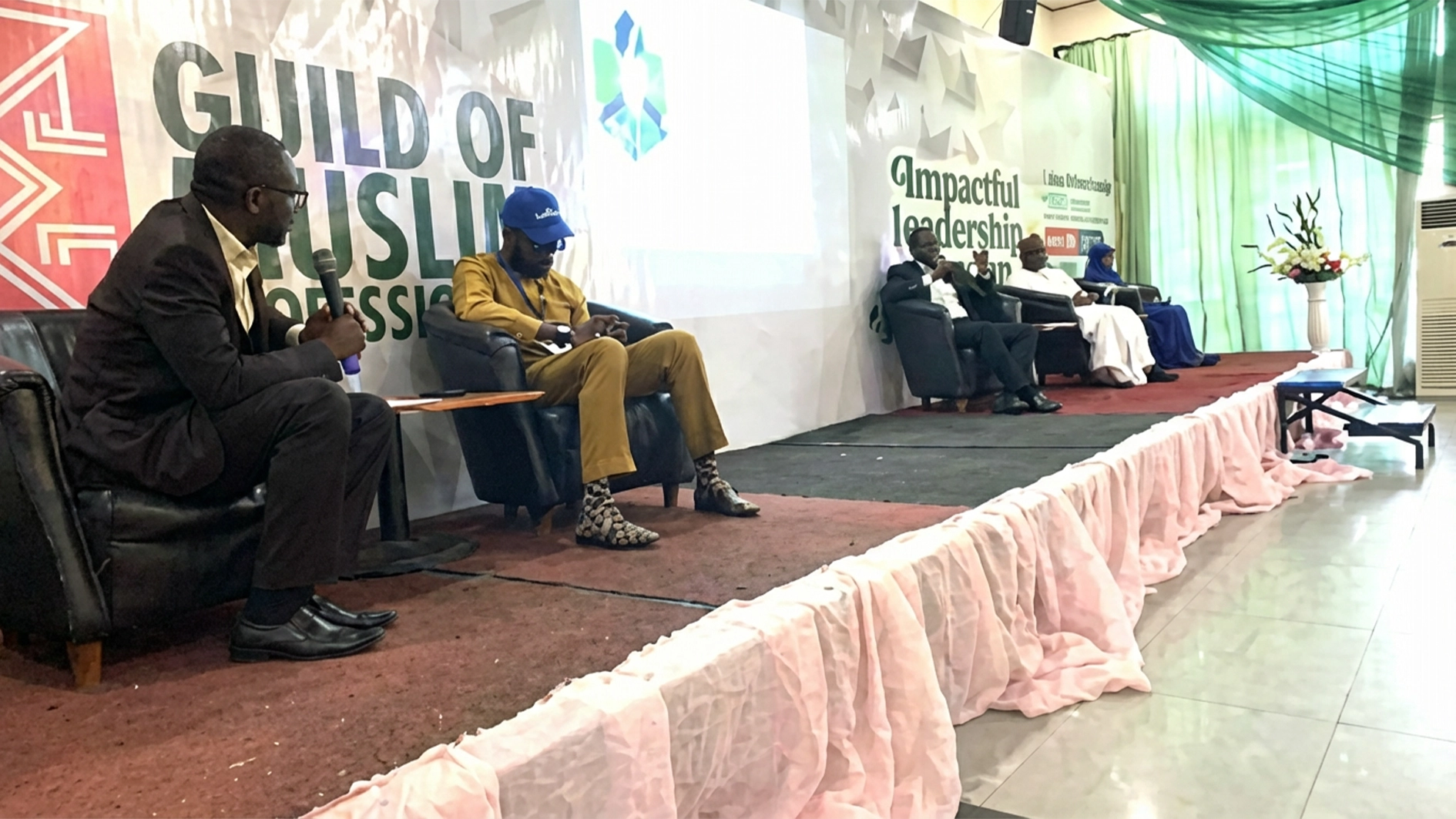
In an era defined by rapid technological disruption and shifting economic paradigms, the traditional structures of Nigerian education and finance must undergo a radical transformation to ensure national survival.
This was the central message at the Guild of Muslim Professionals (GMP) Convention themed “Resilient Professionals, Resilient Nation”.
A Professor of Journalism and Communication Studies at the University of Lagos, Ismail Ibraheem, delivered a sobering assessment of the Nigerian ivory tower, recalling a student who dismissed formal education as a scam in favour of the booming tech sector.
Ibraheem warned that universities risk becoming museums if they do not adapt. “Students don’t want to come to class anymore because it doesn’t have any meaning to them,” Ibraheem noted, pointing to the millions who pivoted to Coursera during the pandemic.
He said the entry of foreign university branches into the Nigerian market would create a survival of the fittest scenario.
“We need to act fast, or our local institutions will suffer. Foreign universities have the resources and funds to establish standards that will see them oversubscribed,” he said.

Sharing a personal anecdote from 2011, Ibraheem described how he saved a disengaged New Media class by moving the lectures onto Facebook, the very platform distracting his students. “A resilient professional must be adaptable,” he urged.
He implored professionals to be resilient wherever they find themselves. “Resilient professionals create resilient institutions, and those institutions build a resilient nation.”
The Director, Nuga Business School, Dr. Jubril Salaudeen, who critiqued the current approach to Shariah-compliant product development, argued that many Muslim entrepreneurs fail because they design products in isolation.
“There is a challenge of us sitting in the comfort of our houses, assuming a product is enough for households and SMEs,” Salaudeen said.
He advocated for a user-centric model where innovation leads and Shariah compliance follows as a rigorous review process.
“Carry your faith along, but do not allow Shariah advisers to lead the innovation. Develop your product first, then give it to them to remove the non-compliant elements,” he advised.
He further stressed that resilience in business requires the patience to listen to customer grievances rather than retreating into technicalities.
The Chief Financial Officer at MTN Nigeria, Mr. Modupe Kadri, offered a macroeconomic perspective on resilience, calling for a fundamental shift in Nigeria’s financial DNA. He advocated for a transition from a debt culture to a partnership culture.
“What is affecting our businesses is that we are not ready to share; we want to do it all alone,” Kadri remarked.
He proposed institutionalising financial literacy as a public good, drawing parallels to the Sukuk model and the potential of Zakat (almsgiving) and Waqf (endowment) to stabilize communities.
Kadri’s vision for a moral economy architecture, positioned Shariah-compliant finance not just as a religious preference, but as a pragmatic alternative for a struggling nation. “A resilient nation is built only when finance secures people, and not the other way around,” he observed.

